


Mozambican ports connect the Southern African hinterland
September 17, 2024 Mozambique


Dário Viegas, managing director of MozRail e Terminais, talks to The Energy Year about developing logistics solutions for the Maputo and Limpopo corridors that allow for more cost-effective supply chains and Mozambique’s potential to become a regional logistics hub. MozRail is a Mozambican company that develops and manages logistics infrastructure, operates and manages railways and offers integrated end-to-end solutions.
How does MozRail position itself to compete in Mozambique’s logistics sector?
Our management team has a combined expertise in developing and implementing large-scale projects in the mining and logistics sector, and a strong background in operations, corporate finance and governance. The facility we operate dates back to the 1960s and once served as a hub for landlocked countries in the region. Cargoes such as chrome would be received, containerised and shipped out via the port of Maputo, supporting regional trade.
We secured a 10-year concession in November 2022 to revitalise the Maputo terminal. It was a significant undertaking, requiring an overhaul of legal frameworks and customs procedures. While we currently provide logistics services from our facility in Maputo to importers and exporters in Mozambique, South Africa and Zimbabwe, our sights are set on providing more integrated logistics solutions with the development of greenfield and brownfield infrastructure.
Our plans for the central and northern regions will drive increased volumes to Nacala using the state-of-the-art Nacala Logistics Corridor and the refurbished Port of Nacala and serve the Democratic Republic of the Congo, Zambia and northern Zimbabwe, offering similar integrated services on a larger scale.
Our core objective is to drive more volumes to the Port of Maputo by using existing infrastructure and reducing the need for investment, offering a differentiated solution to the current model and taking a constructive approach to the development of terminals outside the port.
Unlike other, smaller Mozambican terminals with specialised functions, our 18-hectare facility has the potential to greatly benefit the port, increasing volumes with minimal investment in infrastructure through the migration from road to rail, which is a more sustainable solution.
We envision the Port of Maputo as a value-adding hub, not just a gateway, where cargo is processed and serviced, creating a ripple effect that will stimulate the Mozambican economy.
What differentiates MozRail from other logistics operators?
Our end-to-end services and customer-centric mindset set us apart. We understand the economics of logistics and the global trends in this sector and can offer fresh and honest end-to-end solutions. We are driven by customer satisfaction and our work is all about streamlining processes for our customers and ensuring the smooth flow of their logistics operations.
We believe that ports are part of a larger ecosystem where logistics activities are not concentrated in the ports but performed in their vicinity, allowing them to expand far beyond their natural limitations to facilitate trade and drive sustainable growth in all industrial sectors.
How will MozRail secure equipment for the terminal?
Our procurement process will identify the best purchase or leasing strategy depending on several factors. Our current concession is for 10 years and renewable, and we will mobilise assets according to our operational requirements.
Which specific markets are you targeting?
Our primary focus is on South African and Zimbabwean minerals, which represent significant transit and export volumes, but also on Mozambique’s industrial and agricultural sectors, where growth is currently shallow but expected to improve significantly in the next few years.
LNG projects, while exciting for Mozambique’s growth, fall outside our immediate area of operation as they are located far in the north. However, if Mozambique starts exporting LNG to neighbouring countries such as Malawi and Zambia, we could transport gas via rail tankers using the Nacala Logistics Corridor. With investment and the integrator facilities we are planning, Nacala can become a gas hub.
What advantages can rail offer to the mining sector compared to other modes of transport?
Rail offers significant advantages over road transportation. First, costs come down immediately as a single rail car can carry more than a truck and a half. In the southern region, a typical train can accommodate around 90 wagons, effectively removing more than 100 trucks from the road. In the north, along the Nacala corridor, trains are capable of hauling 120 heavily laden wagons and can carry approximately 7,200 tonnes in a single trip.
Existing investments in trucking capacity will create inertia, but we are confident that the efficiency and cost savings offered by rail will ultimately win over the market.
What growth do you envision for the logistics sector in Mozambique and MozRail?
The future of logistics in Mozambique is bright, as the country serves as a gateway for landlocked nations, offering them access to international trade. The key lies in our positioning and the value-added services we can provide. Many customers seek a one-stop shop and we can provide that as an integrator.
Currently, the export process involves costly port storage, and our solutions can eliminate that burden. We want to create a buffer facility where our customers, acting as partners in the facility, can store large quantities at a low cost in a location closer to the port. We have four or five very interested customers and can start immediately once we finalise the agreements. That, in addition to the rail operation we are putting in place to bring commodities from mines to the facility, will create a very large business very quickly.
Read our latest insights on:
-

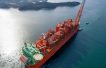
Project highlight: Mozambique LNG
PROJECT HIGHLIGHT -
-

Project highlight: Mozambique’s Central Térmica de Temane
PROJECT HIGHLIGHT
More content from Mozambique



Latest Reports


The Energy Year Oman 2026
The Energy Year Kuwait 2025
The Energy Year Angola 2025
The Energy Year Nigeria 2025
The Energy Year Saudi Arabia 2025
The Energy Year UAE 2025