
A backer and facilitator for Mozambique’s energy projects
October 22, 2024 Mozambique


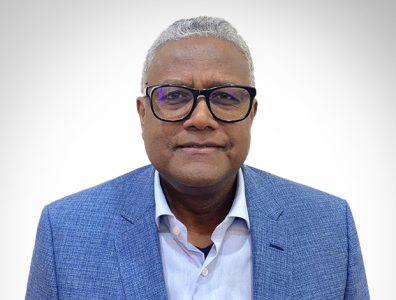
Omar Mitha, chairman of Banco Nacional de Investimento (BNI), talks to The Energy Year about fostering dialogue between Mozambique’s institutions and international investors and the growing importance of wind and solar technologies in the country’s energy mix. BNI is a Mozambican state-owned investment bank that provides long-term financing for social and economic development projects.
How important is the Sasol-BNI USD 5-million fund to stimulate the use of vehicular compressed natural gas (CNG)?
The Sasol-BNI USD 5-million fund is a critical catalyst in advancing the use of CNG in Mozambique. It strategically sets a precedent to advance the use of gas as a direct substitute of fuel in transportation.
Given the fund’s specific terms and conditions, it also sets a learning curve that might pave the way for industrialisation and economic development provided adoption is undertaken based upon a clear strategic path towards this goal. It also means enhancing national energy security while also reducing greenhouse gas emissions and contributing to Mozambique´s climate change mitigation efforts.
On the other hand, we have to recognise the yawning gulf between demand and CNG supply. Given the current challenges, expectations should be scaled back in three core dimensions. One is the mere lack of feed gas availability to this end. Second is the investment required for vehicle conversion, which bears directly on the consumers’ financial capabilities. Third is the requirement for a massive investment in adequate infrastructure to meet a nationwide demand.
BNI also provides ongoing oversight to ensure that funded projects adhere to their proposed plans and deliver expected outcomes. I think that there has been a slow take-off and we should not fall into the delusion of success, even though the future is geared towards energy transition and the ongoing project vindicates the narrative that Mozambique is in a better position to use its gas resources as a transition strategy.
What are the status and improvements regarding financial inclusion in Mozambique?
Financial inclusion seems to be sliding gradually into a world of the past because the rapid development of digital technology for payment services has made extraordinary inroads into the most remote areas.
The expansion of the retail network has been anchored to districts with an underlying economic activity and to large-scale investments that create a vast network of SME suppliers, which together involve direct and indirect employment of thousands of income earners ready to bank.
In addition, the expansion of the power grid network to cover 55% of the population is seen as a bellwether of investments not only in the financial sector but also in agricultural processing, reinforcing the idea that public infrastructure will be required to enable banking coverage.
Regarding regulation, the central bank has established a framework to support financial inclusion, promoting transparency, consumer protection and innovation in financial services. Nevertheless, some challenges prevail and a tremendous public campaign is necessary to tackle financial education in the country.
What is BNI’s role in financing capital-intensive projects across Mozambique’s oil and gas, power generation and renewables sectors?
Our participation in capital-intensive sectors is hampered from the very outset due to capital requirements, in line with the credit risk exposure rules imposed by the central bank. This limitation has given us the opportunity to tilt toward project finance and deal structuring as financial advisors. At the same time, we might accept a marginal exposure in short-term working capital funding along with our partners on a syndicated loan.
BNI has facilitated partnerships between the government and private sector to drive investment in renewable energy projects, ensuring the transfer of technology and expertise. We have been selected as one of the Mozambican banks to participate in projects sponsored by EU entities aimed at supporting financial institutions in the energy sector, specifically renewable energies.
The renewable sector, especially solar, is still dependent on concessional funding and off-take agreements with the state-owned electricity company. The economics have to improve to nudge more private investment in the country, bearing in mind the need for scale and cost-reflective pricing.
Having said this, the big picture is that renewables are gaining ground and hydropower will be the next game-enhancer, building upon Cahora Bassa’s existing power generation, which will strengthen Mozambique as a power hub in light of increasing demand from our neighbours in the SADC region.
This is also a balancing act for the country in terms of its energy mix and the processing of strategic minerals for electric vehicle batteries, an industry that is still at an early stage in building its value chain, as more co-operation between several resource-rich countries stands as a must.
Can you discuss the Matambo photovoltaic project as an example of BNI’s participation in renewable energy projects in the country?
The Matambo Solar PV Plant is a 125 MWp project in Tete Province owned by a Mozambican entity, Hidropower, which will be implemented through an SPV of Hidropower and AMEA Power. A joint development agreement was signed by AMEA Power and Hidropower and witnessed by BNI at the COP28 in Dubai, to jointly implement the project.
Two solar sites of 241 and 159 hectares have been secured and two DUAT [Land Use and Benefit Rights] titles were issued in 2023 by the Governor of Tete. A grid interconnection study is ongoing with consulting company TNEI Services and a flora and vegetation field survey is being conducted by Consultec. MC&A has been appointed as local counsel to assist with the incorporation of the SPV.
How do you assess the Mozambican economy and its improvements in the past few years?
The country’s macroeconomic fate has changed dramatically after the foreign debt debacle in 2016, which prompted a substantial devaluation and was accompanied by natural disasters and a spike in oil prices. It was a confluence of inflationary factors that came as a perfect storm to slow the country’s growth and was compounded three years later by the global pandemic, resulting in a crushing recession in 2020.
As of today, and after several tightening cycles, inflation has been tamed down to below 10%, following slight cuts in interest rates, which coupled with investments in several sectors as well as specific measures to boost investments, resulted in 5.1% GDP growth in 2023.
Investments were made in agriculture and in tourism, to bring the sector back to pre-pandemic levels. In infrastructure, the power sector took a significant share of investments, including the largest power generation plant to be built since independence, in Temane. This is concomitant with the construction of transmission lines.
Which sectors of the Mozambican economy do you see as having the most potential?
Given Mozambique’s geostrategic location, hydro potential, massive gas resources, strategic mine reserves, beach and bush tourism attractions, sprawling cities and youth dividend, the country is becoming a magnet for foreign investment, and this comes at a time when significant reforms intend to remove barriers to investment.
The energy sector is particularly appealing to international investors, with significant natural gas reserves in the Rovuma Basin attracting global interest. Major projects such as Coral Sul FLNG are positioning Mozambique as a key natural gas exporter. Opportunities in renewable energy, such as hydro, solar and wind, are also expanding.
Mozambique’s mining sector offers substantial potential with resources such as coal, titanium, graphite and precious stones. Regulatory reforms and increased activity from multinational companies have made mining more attractive. Strategic investments in infrastructure further enhance Mozambique’s appeal as a destination for energy and mining investments.
How is BNI preparing to participate in renewable energy projects?
BNI’s staff has received intensive training related to renewable energy finance, including commercial structuring, critical financial feasibility factors, credit risk assessment and translating terms and conditions into a term sheet, as well as a database of financiers.
As a reflection of this training, BNI was able to underpin a contract to advise an arrangement that involved an overture to Middle Eastern investors that will provide equity financing of around USD 150 million. As we move forward and look into the long term, capacity-building will help the bank gain market share in clean power generation and forge its identity as a partner in the energy transition process.
Read our latest insights on:
-

Project highlight: Mozambique LNG
PROJECT HIGHLIGHT -

-
Project highlight: Mozambique’s Central Térmica de Temane
PROJECT HIGHLIGHT
More content from Mozambique


Latest Reports



The Energy Year Oman 2026
The Energy Year Kuwait 2025

The Energy Year Angola 2025

The Energy Year Nigeria 2025

The Energy Year Saudi Arabia 2025

The Energy Year UAE 2025