

Green project economics
September 3, 2024 Trinidad and Tobago


Philip Julien, founder and chairman of Kenesjay Green Limited (KGL), talks to The Energy Year about the Caribbean’s potential as a net green hydrogen exporter and how that might come to be. KGL is a Trinidad-based indigenous sustainable energy company that focuses on the development of bankable green energy projects in the Caribbean, which include green hydrogen.
This interview is featured in The Energy Year Trinidad & Tobago 2024
What green energy projects does Kenesjay Green have in the Caribbean, in addition to those in Trinidad and Tobago?
As an example, we have been working in collaboration with the government of the Commonwealth of Dominica to support them in realising their vision of their own green hydrogen economy, through the harnessing of untapped geothermal reserves in their territory.
This is of particular interest to the region because one of the reasons why geothermal projects have not yet happened at scale in the Caribbean is an insufficient electricity demand or the lack of a large enough offtaker. However, the larger the size of a geothermal plant, the better its project economics become as a result of the improved economies of scale.
So if there is an offtake market for green energy that is larger than Dominica’s domestic consumption, the investment in a geothermal plant becomes more attractive. That is what makes green hydrogen and its downstream products so interesting for these geothermal-rich countries, due to the rising global demand for clean energy sources.
In 2023, the government of the Commonwealth of Dominica signed a framework agreement with Kenesjay Green (Dominica) and the Dominica Geothermal Development Company. The Agreement speaks to the further development of Dominica’s geothermal potential through its harnessing and conversion to green energy and green hydrogen derivatives. The agreement is also expected to lead to the incorporation of a joint venture and subsequently special purpose vehicles.
At COP28, we met senior representatives of the government of Saint Kitts and Nevis, who reiterated what they declared in their Parliament a few weeks earlier: that the harnessing of their geothermal reserves is going to be addressed from a federal level, in part due to their intention of exploring green hydrogen possibilities – a decision designed to help accelerate that intention.
What is the significance of the MoU signed between Kenesjay Green and Ansa McAl at COP28?
ANSA McAL and Kenesjay Green are both interested in the development of green energy projects in the region, and the partnership between our companies brings together all of the right ingredients to explore doing just that. ANSA McAL also has a regional footprint in various industries, and are also part of some renewable energy projects in the Caribbean. We see synergies between our organisations, and look forward to exploring them further together.
Why is an integrated energy industry important for the Caribbean?
Fundamentally, a connected source of power throughout the Caribbean is a good concept, as it would add to our regional energy security. For example, if one island is hit by a hurricane but there is a cable connecting it to another island that has the capacity to provide spare electricity, there will remain a source of power to keep important operations running, such as hospitals.
The question that has been asked over the years is: how do we, as a region, make the interconnection work, both economically and logistically? We believe that part of the answer, and indeed the potential game-changer for the Caribbean, is the advent and importance of green hydrogen in the world’s quest to mitigate the growing climate change.
Read our latest insights on:
More content from Trinidad and Tobago





Latest Reports


The Energy Year Oman 2026
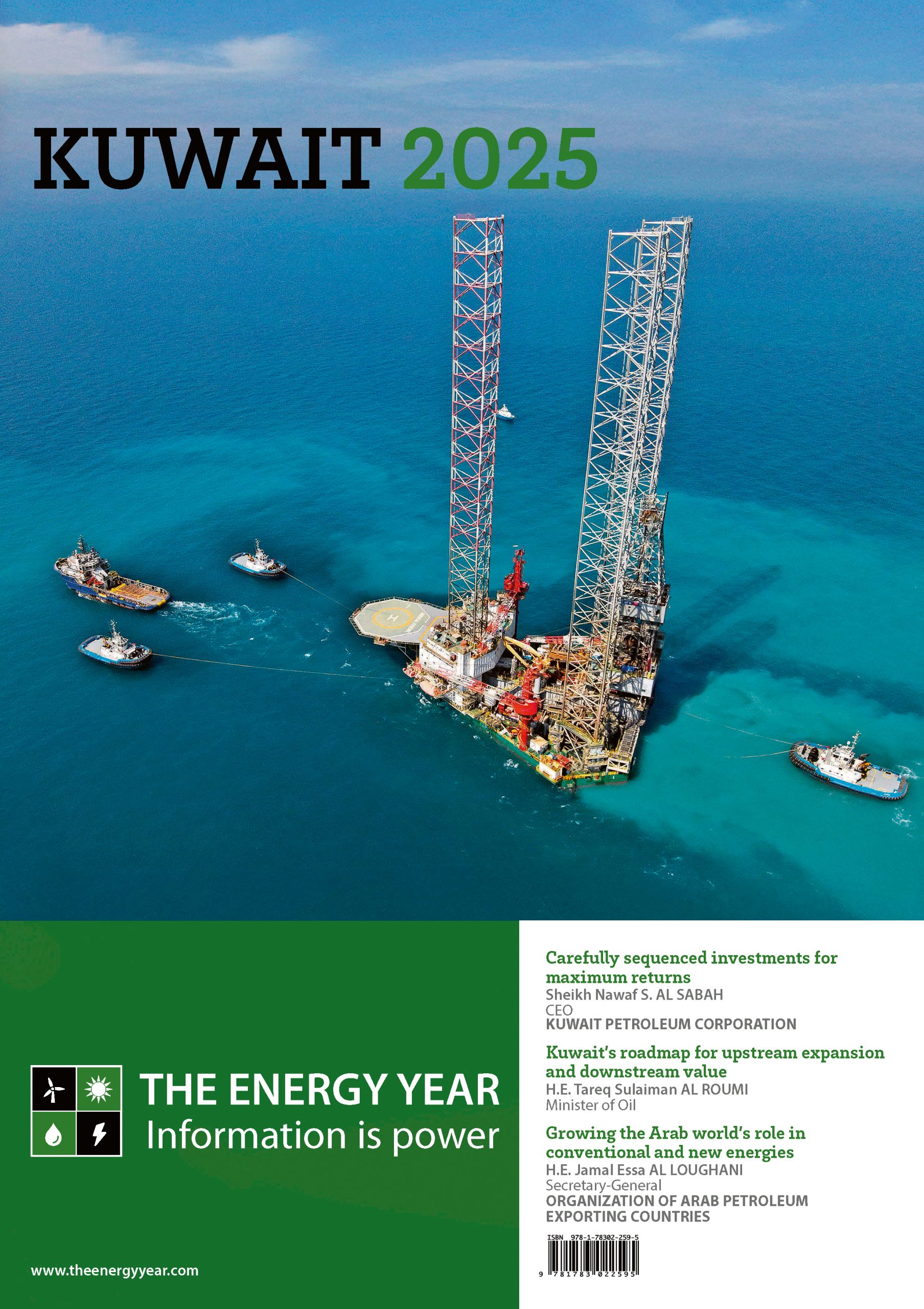
The Energy Year Kuwait 2025
The Energy Year Angola 2025
The Energy Year Nigeria 2025
The Energy Year Saudi Arabia 2025

The Energy Year UAE 2025