
A Nigerian energy company with continental ambitions
December 9, 2024 Nigeria


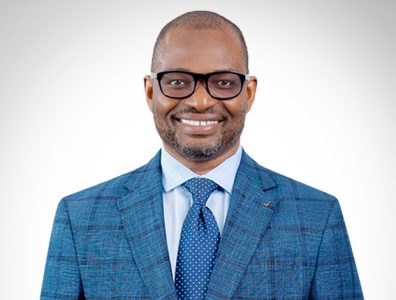
Abiola Lukman Lawal, managing director and CEO of Eterna, talks to The Energy Year about the expected impacts of the Dangote Refinery and how Nigeria’s domestic supply chain and energy security can be improved. Eterna is a sustainable, integrated energy company that manufactures, markets and distributes petroleum products in Nigeria and operates a network of filling stations.
Can you walk us through Eterna’s latest performance and the company’s core priorities?
Eterna has been in business since 1989, and in fiscal year 2023, we recorded USD 107 million in revenue and a gross profit of USD 10 million, which respectively represent a 57% increase and an 87% increase compared to 2022.
As a PLC, a core focus of ours is taking care of our stakeholders. There are six stakeholders that we focus on. The first is our customers because to be successful you must satisfy your clients. Moreover, Eterna is very well known for the reliability of its products and for not surcharging its customers at the pumps.
The second is our staff. We dedicate much effort towards ensuring that we have well-trained, well-qualified and motivated personnel.
The third is represented by our supply-chain partners. The retail business entails a very complex supply chain, from collecting the refined products, to managing their distribution, to then taking them through what is called the “last mile,” which involves a plethora of different players. It is a multifaceted business with tight margins.
The fourth one is our financial partners. Our relationship with them is crucial and has to be based on reciprocal trust. I will give you an example. In 2023, we secured a 15,000-tonne cargo of PMS [premium motor spirit] for about NGN 3 billion [about USD 5 million in 2023]. One year later, that same cargo went up to NGN 11 billion [about USD 7.85 million in 2024], and today (October 2024), with the latest price increase, it is about NGN 18 billion [about USD 10.46 million as of October 2024].
To put it bluntly, it is paramount to have the financial wherewithal and confidence in your partners to ensure that they can back you up with a robust stream of resources.
The fifth is our regulators, NMDPRA [Nigerian Midstream and Downstream Petroleum Regulatory Authority], as they are critical stakeholders in our industry. We must operate professionally with the required licences and standards to ensure we deliver the products according to standards set by the regulators.
Last but not least is our shareholders. They are the residual risk takers, and we have a very solid base led by strategic investors that believe in what we are doing, in our projects and our vision, which sees Eterna not just surviving but thriving in the industry.
What impact do you think that the Dangote Refinery will have on the country’s downstream capabilities and on forex?
The Dangote Refinery is a game changer. It is a massive investment, over USD 20 billion, and has a 650,000-bpd capacity, one of the largest in the world. All players will have to deal with this new reality because Nigeria’s downstream is going global, and downstream players cannot look at the sector as a monolith.
You need to be dynamic if you want to keep pace and thrive in a very competitive industry. This means that you have to implement a strategy that goes product by product to see how you can bring home more market share.
One of the biggest challenges in the country today is forex. We are still experiencing the volatility that has been affecting the naira over the last few years, which seriously complicates business planning.
Talking about opportunities, I believe that domestically producing products should ease the pressure on the forex. In any case, Dangote is very strategic, not just for the downstream business but for the country as a whole.
Two of the key pillars of energy security are resource affordability and reliability, and the same is true of supply-chain security. Products have to be affordable, and their distribution has to be reliable, and both of these factors are going to be significantly improved with local production. Early in 2024, we became one of the official domestic sales distributors of Dangote, and we are very eager to work with the refinery to strengthen the local supply chain by selling petrol, gasoil and jet fuel.
What are some examples of how you think the domestic supply chain and Nigerian energy security can be improved?
PMS is still coming primarily from NNPC, although I think with deregulation that will change. PMS is unique because it affects people’s everyday life, given that it is the masses’ fuel. By contrast, AGO [automotive gas oil] is different since it is deregulated and anybody can import and bring gas oil into the country. There are no price controls, and the same goes for ATK [aviation turbine kerosene].
What is pivotal for Nigeria is to move towards completely deregulating the industry. The questions to address are when is it going to happen and what form will it take. I believe it has already started. You can see it from the price fluctuations, and I think it is only a matter of time before we have a more liberalised system across the whole supply chain.
Going back to energy security, another key aspect that runs in parallel with affordability and reliability is source diversification. Nigeria has traditionally imported petroleum products. Now things are changing. The country has increased its domestic refining capacity with Dangote, and the government is working on the rehabilitation of the country’s other refineries to step up output and utilise them at capacities higher than 30%.
This, coupled with the rise of modular refineries, can provide more local supply and thereby positively impact the balance between demand and supply and enhance our energy security. This is what happened with AGO and is why I support the idea of deregulating as much as possible. I am confident that it will happen with PMS soon as well.
Can you give us an overview of Eterna’s footprint in terms of assets?
We have over 84 service stations spread across 28 states and infrastructure in the downstream sector. We are further expanding our footprint. Then, we already have a coastal tank farm in Apapa Lagos with a capacity of 34 million litres for petroleum products. We are the largest shareholders of the JUHI-2 consortium, which is a Jet A-1 storage and distribution facility with a 15-million-litre capacity at the airport in Lagos.
We are significantly increasing our storage capabilities, which is a strategic decision. If you look at the downstream sector, one of the clearest barriers is product availability, an issue that you can tackle only if you have solid storage capacity.
Having storage capacity is a real competitive advantage in Nigeria. It allows you to cover the last mile and thus be better positioned in the retail segment, which is where we want to grow exponentially. We want to be even closer to our customers, and in a more responsible way as well. To that end, we’re fully solarising at least 30% of our fuel stations by 2030 as part of our ESG and green initiatives.
Where does the company position itself in the aviation business, and what achievement has it accomplished recently in this segment?
Eterna is part of the JUHI-2 [Joint User Hydrant Installation 2] consortium, a major ATK jet-fuel storage facility located at the Murtala Muhammed International Airport in Lagos. We had it commissioned in October 2024, and it is the largest airside jet-fuel depot in the country, with a capacity of 15 million litres.
Eterna is the largest shareholder in the consortium, with a 30% share. The consortium is composed of other key energy operators, such as Masters Energy, Techno Oil, First Deep Water, Ibafon Oil, Quest Oil and Rahamaniyya Oil and Gas.
The facility, which spans 46,000 square metres, has been built to meet the growing demands of the country’s aviation industry, ensuring reliable supply for foreign airlines while also ensuring that domestic ones can have the product at the right quality and price.
I have had a conversation with the Minister of Aviation and Aerospace Development, Festus Kemayo, where we discussed Nigeria’s potential as a critical aviation supply hub in Africa. JUHI-2 is a first big step towards playing a role similar to what Dubai is in the Middle East and takes advantage of Nigeria’s optimal location.
The facility itself is equipped with cutting-edge technology to enhance safety and efficiency, including the latest filtration systems for jet fuel and a discharge system capable of handling four dedicated jet-fuel trucks at the same time. Now we are working to provide the right infrastructure and services to support it. For instance, we want to build a pipeline that will handle the last mile.
What do you identify as the pillars of Eterna’s growth strategy for the future?
We have identified three pillars in our strategy to ensure future growth. The first one is stability. We look to keep doing what we are best at, which is selling gas oil, ATK, LPG and lubricants. We’ll take that as a starting point to increase our footprint.
The second pillar is what we call business process improvement, which is making our processes more efficient and optimised. To do so, technology is key. We are upgrading our ERP [enterprise resource planning] to scale our operations and prepare the company for its next phase of development. In addition, we have already adopted some solutions, such as GPS tracking, E-pumps and truck-tracking devices, to better monitor and streamline our operations.
We are assessing efficiency with respect to the suppliers we have, how we source our products and how we get them through the last mile. Another significant aspect of this pillar is ESG: How can we be greener and at the same time cut our costs? In Abuja, for example, we have a retail station by the airport that has been 100% solar and self-sufficient for the past five years, reducing both the environmental impact and the costs associated with having diesel generators as our primary source of power.
The last pillar is new business ventures. In our portfolio we already feature some key partnerships. To give you an example, we have one of the largest lubricant businesses in West Africa, and this is also thanks to partners such as Castrol. We own a massive blending plant in Sagamu that is capable of producing 15,000 litres of lubricants per day, which creates many employment opportunities for locals as well.
We have commenced discussions with some potential strategic partners to explore new opportunities within the energy space. I never believed that everything has to be done in-house. In fact, the beauty of globalisation shows that you must know what your competitive advantages and strengths are, capitalise on them and then know clearly what you are looking for in a collaboration to find the right partners that can enable you to do what you do even better, adding value to what you offer to customers.
We outsource what we think we need to outsource, but we always make sure that, even if we do not have direct responsibility for an activity, we are accountable.
What are your goals and vision as a full-fledged energy company?
Our vision statement, to be “Africa’s preferred energy provider,” has a twofold meaning. One component is Africa. We want the whole continent to be our natural habitat. We want to be comfortable with the entire landscape. Then, the other dimension of this vision is “energy.” Our key area will be mostly downstream, but there is no doubt that in the long term we will have to diversify our activities to be more competitive.
We definitely want to play a role in the dynamics that will be shaping the energy industry locally, regionally and internationally. More specifically, we are interested in opportunities revolving around power, gas and even the upstream, although we are more concerned with the latter in the long run.
Our goal is to become an integrated energy company, and we need to undergo a transformation to achieve that. I have no doubt that over time we will transition from Eterna to Eterna Energies, in line with the global trend that has seen IOCs doing the same. Eterna has already started this journey and is on the right path.
We have been operating for the past 35 years, and now we are focused on answering the question, “What are the next 35 years going to look like?” to make this transition an even bigger success story. We are excited about this.
Read our latest insights on:
-

-

A new opening for African gas
INTERVIEW -

More content from Nigeria


Latest Reports


The Energy Year Oman 2026
The Energy Year Kuwait 2025
The Energy Year Angola 2025
The Energy Year Nigeria 2025
The Energy Year Saudi Arabia 2025
The Energy Year UAE 2025