
Decarbonisation technologies for the Middle East’s industries
January 16, 2025 UAE
UAE 


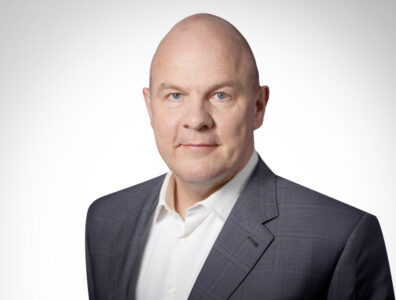
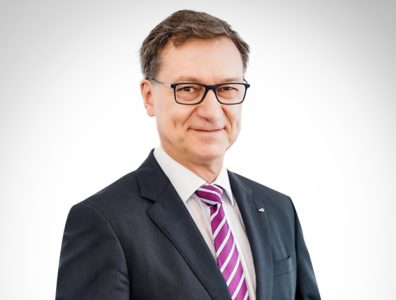
Steffen Richter, managing director and head of the Middle East/Turkey Cluster at Linde Gas, and Uwe Zwiefelhofer, UAE managing director and head of MENA for Linde Engineering Middle East, talk to The Energy Year about the growth of CCS and hydrogen in the UAE. As a leading global industrial gases and engineering company, Linde supports customers on their decarbonisation journey through innovation, strategic partnerships and deep industry expertise.
How are Linde’s efforts to assist the UAE in its decarbonisation drive progressing?
Uwe ZWIEFELHOFER: Linde is working with several petrochemicals and oil and gas companies in the UAE, developing industry-leading projects which are aiming to reduce carbon dioxide emissions.
For example, together with NextChem, we are playing a key role in ADNOC´s Hail and Ghasha project, one of the world’s largest offshore sour gas developments. Linde Engineering will provide its newest adsorption-based carbon capture solution HISORP CC to efficiently capture and purify carbon dioxide for sequestration, thereby significantly reducing greenhouse gas emissions in the production of natural gas and oil. The project is set to capture 1.5 million tonnes per year (tpy) of carbon dioxide and store it underground.
There is a huge ambition in the UAE as well as in Saudi Arabia to decarbonise upstream operations, and Linde is well-positioned to help achieve this.
Steffen RICHTER: In addition to the refining sector, we see great potential for decarbonisation in the carbon-intensive steel manufacturing end markets. We support lowering the carbon footprint of steel mills with a range of innovative technologies and solutions.
What are some of the emerging solutions that you are offering to the Middle East’s energy industry?
SR: Hydrogen and hydrogen derivatives play a big role in decarbonisation, and Linde has a wide variety of technologies to offer in this area. Linde has a strong hydrogen business based on over 100 years of experience and expertise with the hydrogen value chain, from production and distribution to storage. For example, there is our proprietary ammonia and ATR [autothermal reforming] technology for hydrogen generation.
We also have long-standing expertise and experience in carbon management. In Saudi Arabia, we have signed shareholder agreements with Aramco and SLB that will pave the way for one of the world’s biggest industrial-scale CCS hubs to capture and store up to 9 million tpy of carbon dioxide initially.
What are the key elements that the region’s blue ammonia and CCS projects need to succeed?
UZ: The primary challenge is to identify a market for the products. While offtake is always a significant question at the outset, partnership arrangements are equally crucial. Large capital projects in new markets are best developed through partnerships where the parties share common objectives, a unified vision and complementary strengths.
SR: Innovative clean energy projects thrive on collaboration. For example, in the Saudi Arabia CCS project already mentioned, we are working closely with SLB. Linde brings strong expertise in carbon capture, purification and liquefaction to enable carbon dioxide storage, and SLB has expertise in carbon sequestration. We aim to establish similar projects in the UAE and see ample opportunities for collaboration in this field.
How should technology partnerships be structured to be most effective?
UZ: Firstly, it is essential to share common objectives and a vision with your partners. The objective could be to create a business case that aligns with each party’s governance and ESG goals, and the vision could be to support the reduction of global warming. When these elements have been established, we can know that we are all moving in the same direction.
Another crucial criterion is complementary strengths. Each partner in a complex project needs to bring strengths, skills and experience that the others lack, enabling us to cover the full project scope.
Financial soundness is more critical than the availability of funds. There is a common misconception that funds to develop these projects are scarce, but it is not the funds that are lacking; it is the market and the right commercial setup.
How much potential is there in the UAE for CCS projects?
SR: The UAE’s position in CCS development is strong, and consequently new CCS projects are likely to emerge in the near future. The UAE also tends to use carbon dioxide for enhanced oil recovery, a traditional approach where we can provide solutions.
What is the potential for green hydrogen developments to reshape value chains in the UAE?
UZ: The UAE has significant potential to establish a green hydrogen economy. For this, you need renewables, in which the UAE is investing heavily. However, providing renewable power and creating a renewable hydrogen plant are two different things, primarily due to the capacity factor. Some parts of the GCC have a better combinations of solar and wind generation, resulting in higher renewable generation capacity factors and a lower need for additional investments in renewable power. Ultimately, it all comes down to the price of renewable power.
SR: Developments in hydrogen are fundamental. The fuels of the future will need to be molecules that generate as little carbon dioxide as possible. The utilisation of hydrogen in chemical processes, rather than fossil fuels, will drive growth in this area, and hydrogen will also play an important role outside of large-scale industrial processes, such as in transportation.
This year, we have already completed 11 different hydrogen mobility verification tests with different OEMs. Besides producing electrolysers, we are one of the companies that also delivers hydrogen fuel stations, currently the majority of which are in Asia and the United States. In Masdar City, we deployed H2GO, the region’s first mobile green hydrogen refuelling station.
How has Linde Engineering’s involvement in the UAE’s petrochemicals sector evolved over the years?
UZ: We are heavily involved in UAE’s petrochemical sectors, which is where Linde first established its operations in the Middle East. We have a large production base here with the first three crackers, and we are closely involved with the additional development of our existing facilities. There are always expansion works and new developments, especially projects to add extra production capabilities to existing facilities and to improve the efficiency of our assets.
What competitive advantages make Linde a good partner when developing new technologies such as hydrogen?
SR: Fundamentally, the fact that we are an integrated engineering and industrial gas company makes us unique. Unlike EPC contractors who build facilities and then step back, we build plants for ourselves and continuously invest in them. Operators may have extensive experience, but they often lack the opportunity to provide feedback on design. For the plants we supply, the customer can tailor them for specific environments and operating conditions.
Taking hydrogen as an example, we have over 150 production facilities worldwide. All the operational knowledge from these facilities flows to our engineering division. This creates a continuous cycle of improvement that has translated into a technical advantage.
Read our latest insights on:
-

How the UAE is building its future
INTERVIEW -

-

More content from UAE

Latest Reports


The Energy Year Oman 2026
The Energy Year Kuwait 2025
The Energy Year Angola 2025
The Energy Year Nigeria 2025
The Energy Year Saudi Arabia 2025
The Energy Year UAE 2025