
Mainstream Energy expands its footprint in Nigeria
January 20, 2025 Nigeria


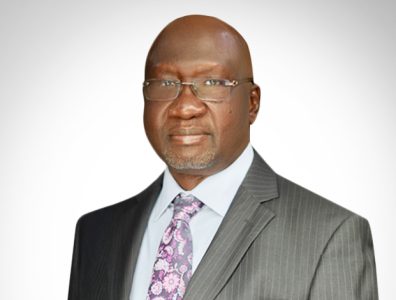
Lamu Audu, managing director of Mainstream Energy Solutions, talks to The Energy Year about the company’s footprint in Nigeria, the domestic contracting system and its challenges and potential solutions. Mainstream Energy Solutions is a power generation company operating the Kainji, Jebba, Zungeru and Kashimbila hydroplants.
Can you provide us with an overview of the company’s footprint in Nigeria and the region?
Mainstream Energy Solutions was licensed as a power generation company in 2011 and acquired the Kainji and Jebba hydroplants through a concession agreement with the federal government (FG) two years later. When we took over those assets, especially Kainji, they had no capacity on the grid at all, and all generating units were out of operation.
Part of our contract with the FG entailed recovering the lost capacities of those plants, which had been without any kind of overhaul for more than 40 years. We recovered the capacity, and this was also reflected in our financial results. We posted NGN 173.628 billion [USD 268.9 million] in revenue in 2023, which was directly proportional to our energy output.
Mainstream is the first private hydro operator in the country and as of today the largest privately owned hydropower generation company in Africa. We have more than 300 employees on our payroll and a strong focus on CSR, allocating 1% of our revenues to four specific fields through our foundation: education, environment, health and local empowerment.
Can you walk us through the structure of the domestic contracting system and what you would identify as its main challenges and potential solutions?
From the beginning, we had a vesting contract with a single-buyer model, with the buyer being the Nigerian Bulk Electricity Trading Company, which is supposed to buy all the capacity that we have, sell it to the distribution companies and then provide us with our revenue.
Over time we realised that the distribution companies are unable to collect because of the aggregate technical commercial and collection losses. The other challenge is that the distribution companies, even for the small amount we can generate, are unable to actually fully utilise that output, meaning that we are left with stranded energy and thus losses in the system. We feel that, as a private company, we cannot make investments while being unable to sell our generated power.
The main offtaker of the power we produce is still the government. The solution we are working on is to have the regulator approve a shift from vesting contracts to bilateral contracts, or at least a scheme that would allow us to sell part of the output, especially the stranded output, to customers with whom we can sign power purchase agreements. In this way we can sell our energy and be paid for it.
The approach from the government and the public sector is different from that of the private sector. What we are trying to do is to say, “Look, you are the bulk trader. We have contracted initially the whole of our capacity to you. Now you are unable to offtake it. Let’s sit down and see what you can actually take and pay for.”
Once we agree on how much they are able to pay, we will then gradually reduce the volume that is contracted to them in order to avoid losses and unpaid invoices and to start selling to parties that can pay. At the end of the day, what we want to have is a completely bilateral market, which is the internationally recognised way of selling energy.
The power sector has to liberalise, and that is the only way you can attract investors. You need to give them the assurance that they can recover whatever investment they made. This is the way forward to incentivise players to come and invest in the sector, ultimately enhancing it both financially and operationally.
What is your assessment of the Nigerian power sector and the role Mainstream plays in it?
According to a study conducted by the International Hydropower Association on the quantum of hydropower energy put into the system globally, Nigeria ranked second in 2023 after China, as we were able to inject 740 MW into the grid, all of which comes from our company. The recent acquisitions of the Zungeru and Kashimbila plants represent a big leap forward for us.
The former in particular was a very competitive bid, but we managed to get way ahead of our competitors both technically and financially because we are the most experienced player in the sector, and we understand how to make business with it.
Regarding our plants, Kainji is Nigeria’s first hydropower plant, commissioned in 1968. It has an installed capacity of 760 MW, and it is currently generating 520 MW. Jebba was commissioned in 1985 and was better managed. When we took over, five of its six generating units were up and running.
They were not really reliable, but Jebba really helped us at the beginning because it worked as our cash cow, allowing us to finance upgrades and renovation for Kainji. Moreover, the unit that was out of operation is now fully recovered, and it is now on the grid, and we are now modernising each unit. The installed capacity of Jebba is 578 MW, and the current generation capacity amounts to 482 MW due to the overhaul and modernisation of Jebba unit 2G5 (which provides 96.4 MW).
What would you say are the advantages of hydropower compared to other power generation means?
Starting a hydropower business is very expensive since the initial capital outlay is significant; however, operating costs are reasonably low because we use water, and the service life of the equipment is usually longer compared to gas and steam plants.
If you maintain the dam and the machines by doing the standard statutory overhaul, you would get over 100 years of operation, and you can really reap benefits over time. Overall, these factors make hydropower a cheaper alternative compared to thermal plants, where you have to pay for gas and there are high maintenance costs. As you know, Nigeria is experiencing severe power shortages and cuts which hamper the further development of the industrial and manufacturing chain.
In Mainstream Energy, we have an expansion plan oriented towards enhancing the structure and resilience of the national power grid, ensuring that we take advantage of the huge potential Nigeria has in hydropower, which amounts to 15 GW of untapped potential.
Once we do that, benefits for the whole industrial chain will follow. You can imagine how expensive it is to either use diesel or install a small gas plant to operate a business, and many of the companies we have contracts with for the supply of hydropower are now expanding their activities. If we can get more players such as us to invest in hydro in Nigeria, that will go a long way. Moreover, most of the domestic thermal plants are suffering due to the lack of gas, both in terms of quantity and quality.
By contrast, our two main plants, Kainji and Jebba, are located on the Niger River, the biggest river in West Africa, guaranteeing us a reasonable annual flow without being really impacted even by the downward trend during the dry season. We are also aided by our Kainji water reservoir, which is 16 billion cubic metres, and we can use it to operate Jebba, as it forms a cascade with Kainji.
How can companies guarantee efficiency in the sector, and can you give us some examples of Mainstream’s modus operandi regarding efficiency?
It is crucial to monitor the inflow of water because that is our fuel. We have two inflow seasons into our reservoir at Kainji, and we have diligently planned and put in place a satellite-based inflow forecasting system that we assess on a daily basis.
We jointly manage it with our consultant Afry, based in Switzerland, and it allows us to have an overview on what to expect and how to plan our maintenance, which we normally do during the draw-down period from April to June. Then, by July or August, most of the machines are ready, and we have a reasonable inflow, and we always operate the Kainji reservoir in consideration of Jebba because the latter’s reservoir capacity is only about a quarter of the former’s reservoir capacity.
This means that if we do not have enough turbine discharge for any reason, we have to complement what is going down to Jebba by opening up the spillway gates at Kainji. However, we try to avoid this as much as possible because each spill is a loss, and we want to fully utilise the water through the turbines at both ends, optimising our energy output.
What are the company’s expansion plans and its strategy for achieving them?
We have decided to invest in distribution. In 2022, we acquired majority shares in Yola Distribution Company, one of the 11 national distribution companies, the structure of which is 60% private, while the remaining 40% belongs to the government. The plan is to have a say in the retail end as well to cushion some of the losses coming from the distribution segment and to channel our power to our company according to our needs.
Our ultimate purpose with this is to become a turnkey power company involved in the whole value chain to the extent that whenever the transmission segment will be privatised, Mainstream will participate because we want to be in charge of where we put our eggs.
We are already moving in that direction by supporting the Transmission Company of Nigeria to ensure that our customers receive reliable, uninterrupted power supplies. In fact, there is a regulation that allows for investment in the transmission infrastructure, and we are heading towards investing. While low voltage, meaning 33 kV and below the distribution voltage level, falls within the jurisdiction of distribution companies, most of our customers are on high voltage, namely 132-kV and 330-kV transmission voltage levels.
We are now investing in these voltage categories to ensure that some of our customers that are not connected to the grid can be connected. Moreover, the financial model to support this endeavour can be through the sale of the power itself, done by slightly increasing the tariffs. Some of our clients have already looked at the benefits and are even willing to invest part of their capital in the transmission, and we are ready to support them through an agreed-upon financial model.
What opportunities do you see ahead for the company, and where do you see Mainstream in the next five years?
A very interesting field for us is variable renewable energy. Hydropower is a key enabler to other alternative sources, solar in particular. One of our plans is to get solar energy into our system, doing it in a hybrid fashion along with hydro, so we won’t need any battery storage. Then, we want to continue expanding the development of hydropower itself, considering the availability of untapped resources in Nigeria.
We are looking with interest at opportunities beyond national borders as well. Currently, we are exploring Benin and Niger and are already in talks with the latter, as the country relies on us for its power supply.
Penetrating neighbouring markets can be challenging due to the lack of funds and the fact that their electricity regulatory framework is not as mature as Nigeria’s, and as a private investor, there is also significant government interference. The lack of transparency is a serious issue for the whole continent.
Regarding our in-country assets, while Jebba does not have room for expansion (apart from the possibility of a solar hybrid), we are now carrying out an expansion programme for Kainji. The plant was designed to host 12 generating units, but only eight were ultimately installed. The civil works to add those extra four have been done. We now just need to sort out the electromechanical part.
In the first phase, we are looking at two 110-MW units. The contract has been awarded, and the job is about 40.8% completed. Then, we are conducting a feasibility study to build a new 350-MW hydropower plant on the Benue River, the second largest river in Nigeria, which is close to the border with Cameroon, but the initial development aspect will take time.
For this undertaking, the funding structure might be an issue, but we are trying to get the FG to engage in a PPP model where we handle all the power-related aspects and the World Bank supports the government since they cannot lend to us directly.
We are currently operating four hydropower plants – Kainji, Jebba, Zungeru and Kashimbila – and we want to go for a fifth one, a new one, while increasing our capacity. At the moment we have around 2 GW in our portfolio. Our medium-term objective is to reach around 3 GW by 2030.
Read our latest insights on:
-

-

A new opening for African gas
INTERVIEW -

More content from Nigeria

Latest Reports


The Energy Year Oman 2026
The Energy Year Kuwait 2025
The Energy Year Angola 2025
The Energy Year Nigeria 2025
The Energy Year Saudi Arabia 2025
The Energy Year UAE 2025