
TotalEnergies Nigeria continues to invest, offshore and onshore
May 6, 2025 Nigeria


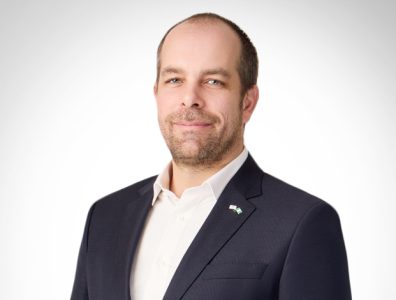
Matthieu Bouyer, managing director of TotalEnergies EP Nigeria, talks to The Energy Year about the company’s ongoing commitment to Nigeria and its support for gas-based industrialisation. In Nigeria, TotalEnergies is active mainly in oil and gas exploration and production, natural gas liquefaction and retail.
This interview is featured in The Energy Year Nigeria 2025
Can you walk us through TotalEnergies Nigeria’s footprint in the country and its position within the current climate of divestments by IOCs?
Nigeria holds a pivotal position in our portfolio. We are the operator for about 20% of the nation’s total oil and gas production, managing output of about 450,000 boepd in 2024. This makes our operations in Nigeria among the largest within TotalEnergies globally.
Over the past decade, we have consistently invested in Nigeria, undertaking several large-scale projects across diverse terrains. Notable examples include the Egina deepwater project, Ikike, the Ofon Phase 2 offshore development and the OML 58 upgrade onshore.
While IOCs have adopted varying strategies, our approach differs significantly. Our focus is on consolidating our footprint across operated facilities in Nigeria, spanning onshore to deep-offshore terrains. We believe in leveraging the resources and talent available to continue creating value from these assets. Unlike some IOCs that have completely divested from onshore and shallow-water operations, we remain actively engaged.
Recently, we announced our exit from Shell Petroleum Development Company (SPDC), divesting 10% of our equity in that joint venture. It’s worth noting that this pertains to a non-operated asset, and we retain our stake in SPDC Gas to sustain our role along Nigeria’s gas value chain, particularly as concerns supplying gas to NLNG.
The divestments by other IOCs have created opportunities for local companies to step in, allowing indigenous players to thrive as these IOCs refocus on deepwater operations. This shift is reshaping Nigeria’s upstream sector, with more indigenous companies onshore and IOCs in deep offshore.
How important is Nigeria in the company’s portfolio, and how would you describe TotalEnergies’ commitment to the country?
Over the past 15 years, we have been the largest investor in the country, contributing approximately 20-25% of Nigeria’s hydrocarbons investment. Our commitment has been continuous and significant.
The current capital expenditure environment is highly competitive. TotalEnergies’ global investments are at USD 16 billion-18 billion annually, with USD 10 billion-11 billion directed toward the upstream. For Nigerian projects to secure funding, they must demonstrate competitiveness in terms of value creation, technical costs and emissions intensity.
So, there is a competition within our portfolio globally. We are prioritising value over volume. This highlights the importance of a pro-investment environment in Nigeria, characterised by competitive fiscal and cost structures.
Today, our commitment is underscored by ongoing developments such as the Ubeta gas project in the OML 58 onshore field in partnership with NNPC, which reached an FID in June 2024.
The 2024 exploration bid round concluded by the Nigerian Upstream Petroleum Regulatory Commission (NUPRC) represents a fresh wave of opportunities, further reshaping the oil and gas landscape. We are thrilled to have secured two deep-offshore blocks in this round and are actively advancing work on them.
Can you provide an overview of TotalEnergies’ efforts to support gas-based industrialisation?
Gas serves as a transition fuel and holds immense untapped potential in Nigeria. The current administration strongly advocates for gas development, and we are proud to align with this vision. Our recent investment in the Ubeta non-associated gasfield in OML 58 is a good example of our dedication to unlocking Nigeria’s gas potential.
As a major supplier of gas to the Nigerian market, we remain a reliable partner in advancing the country’s gas ambitions. We provide gas to large local industrial players operating in sectors such as urea production and LNG for the domestic market.
Additionally, we supply gas to NLNG, which we hold a 15% stake in. NLNG is a significant player on the global stage, accounting for around 5% of worldwide LNG capacity. With the expansion of Train 7, which is currently under construction, NLNG continues to create value for Nigeria and its people through tax revenues and returns to shareholders, including NNPC who is the majority shareholder.
What would you identify as the main challenges the country is facing in oil and gas developments?
In the last decade, we’ve seen a substantial decline in hydrocarbons production in Nigeria, despite the country’s vast reserves of oil and gas. There are several critical challenges that hinder the development and capitalisation of these resources.
The primary challenge is security. Regarding onshore, while the situation improved in 2024, there are still incidents of pipeline attacks and vandalism. These acts primarily target oil and condensate pipelines but also indirectly affect gas production.
When liquids cannot be evacuated, gas production is often halted, disrupting supply to local clients and diminishing both oil and LNG output for the country. Resolving these security issues will lead to increased production, higher revenues for the state and a more reliable oil and gas industry overall.
Another key challenge is high costs, particularly in deepwater developments. The executive orders issued by the president in February 2024 were significant steps forward, as they introduced incentives for non-associated gas (NAG) and deepwater projects, reduced contracting costs and streamlined project timelines.
One of the reasons for the high cost of developing resources in Nigeria is the lack of contractors, for deepwater in particular. When you have a limited number of contractors, competition is low, and prices are inevitably higher. Consequently, all the steps made by the administration to reattract competent contractors are welcome.
We need to have a pragmatic approach with an environment that allows operators to develop resources in the cheapest possible way. That requires supply-chain adaptations, namely a competitive landscape of competent contractors and support from all regulators and administrations to develop resources in the quickest possible way.
Finally, financing mechanisms for local actors represent an ongoing hurdle. Indigenous companies often have to take on large loans to fund asset development. However, after repaying these loans, there’s limited capital left for reinvestment before the assets become fully profitable. The establishment of the African Energy Bank in Nigeria is a positive step towards addressing this issue and supporting local players in the industry.
Will the reforms launched by the current administration be beneficial in addressing these challenges?
The current administration has made impressive strides in attracting investments and delivering on their promises. They’ve recognised that global competition for investments is fierce, and to stand out, Nigeria must offer a solid framework with minimal risk of instability and uncertainty.
The executive orders introduced in 2024, particularly those targeting deepwater and NAG, have been transformative. These fiscal incentives were positively received and directly contributed to developments such as the FID for the Ubeta gas project, for example. We can be reactive to good measures.
Other projects – such as the Ima shallow-water gas development, undertaken in partnership with Amni – are also under study. While dry gas has been more challenging to develop, these reforms provide a foundation for maximising the value of Nigeria’s gas reserves. Stability in fiscal and regulatory policies will be essential to sustain this progress.
On the supply-chain side, reforms have the potential to create a beneficial chain reaction. Increased investments attract more contractors, which heightens competition, reduces costs and triggers further investments. Engaging with contractors and ensuring their return to Nigeria is vital for fostering cost-competitive projects. Regulators such as NUPRC and NCDMB [Nigerian Content Development and Monitoring Board] also play key roles in supporting this process.
What are the company’s next steps in supporting domestic hydrocarbons production and helping Nigeria achieve its ambitious output targets?
We have invested significantly in Nigeria over the past 15 years. In 2024, we started the Akpo West oil development, which is performing very well; launched the Ubeta gas project; supported the launch of the Bonga North oil project; and conducted seismic surveys on PMLs 2 and 3 to assess further prospects in these two assets.
Again in 2024, we supported the administration’s ambition to increase production. We keep drilling in deep offshore and have multiple-well operations, including well revitalisations, both in shallow waters and onshore. We are also studying how to best develop Ntokon, a discovery we made 18 months ago in our JV offshore. The Ubeta gas project is ongoing and will contribute to a production plateau of about 70,000 boepd by 2027.
Finally, we continue to invest in the future. We have several exploration prospects under study at our assets across all terrains and in PPLs 2000 and 2001, which we were awarded in the 2024 bid round.
How would you describe TotalEnergies’ strategy for leading the energy transition in Nigeria and producing hydrocarbons sustainably?
Our strategy is simple: more energy, less emissions. While we remain fully committed to supporting Nigeria’s hydrocarbons production, we are equally focused on minimising our environmental footprint.
Globally, as a company we are committed to reducing emissions by 40% and methane emissions by over 80% across all facilities by the end of this decade. In Nigeria, our trajectory aligns with these commitments, and we are proud to lead the way in emissions reductions within the country.
For example, at the end of 2023, we became the first producer in Nigeria to eliminate routine flaring across all operations – seven years ahead of the company’s schedule. This milestone not only benefits the environment but also creates economic value by enabling us to monetise gas previously flared through NLNG and local customers.
We are also moving on abating methane emissions using cutting-edge technology such as AUSEA, a drone-based methane monitoring system that enables us to measure and take practical actions on our methane emissions.
Also, by the end of 2025, all our sites will be equipped with permanent methane monitoring systems to ensure immediate responses to any leaks. We also support our partners in that field. We signed an MoU with NNPC to deploy AUSEA on their sites, and the first flight happened in May 2024.
Another example is solar energy clubbed with energy storage that we deploy on our assets to reduce fuel gas consumption and make better use of the gas for our customers.
For instance, a 5-MW solar plant will be commissioned in the second quarter 2025 at the Obite gas-treatment site to power the Ubeta and OML 58 facilities. This hybrid power generation on our assets is adding value since it is reducing emissions while valorising gas for alternative uses of our customers.
In 2024, we launched TotalEnergies Renewable DG Nigeria to focus our development in the renewable energy sector and form new partnerships.
That’s a whole range of projects and initiatives we deploy to produce cleaner energy and reduce emissions. This approach to sustainability embodies what we aspire to promote: an energy transition that not only drives environmental progress but also creates economic opportunities and lasting value.
What role does technology play in these efforts?
Technology is at the heart of our sustainability efforts, as it enables innovative solutions for reducing our environmental impact.
One notable example is the AUSEA drone system, developed in collaboration with French research institution CNRS [French National Centre for Scientific Research]. This cutting-edge methane monitoring technology equips drones with advanced sensors to detect leaks and quantify methane and CO2 emissions in real time.
It can be deployed onshore and offshore, and we are proud to be fully equipped in Nigeria with the drones, cells and pilots fully deployed to “hunt” methane leaks. Also, our ongoing permanent methane monitoring project will leverage internet-of-things technology for faster and cheaper installation.
The 5-MW solar plant under construction at the Obite gas-treatment site is designed to operate in hybrid mode with advanced battery systems provided by Saft, a fellow affiliate of TotalEnergies. This hybrid system ensures efficient energy storage and a reliable power supply to our onshore facilities.
It is clear that the innovative use of technology supports cleaner energy production and drives Nigeria’s energy transition forward while generating value.
Read our latest insights on:
-

-

A new opening for African gas
INTERVIEW -

More content from Nigeria

Latest Reports


The Energy Year Oman 2026
The Energy Year Kuwait 2025
The Energy Year Angola 2025
The Energy Year Nigeria 2025
The Energy Year Saudi Arabia 2025
The Energy Year UAE 2025