

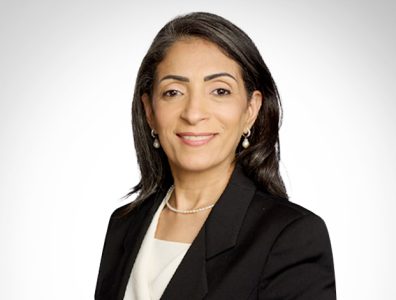
OQAE champions renewable energy and hydrogen in Oman
July 10, 2025 Oman
Oman 


Najla Zuhair Al Jamali, CEO of OQ Alternative Energy (OQAE), talks to The Energy Year about the company’s role in OQ’s and Oman’s decarbonisation and energy transition, the importance of partnerships in its strategy and its primary customers. OQAE is Oman’s national champion for the development of clean-energy projects.
What is the mission behind the creation of OQAE?
While OQ, an integrated energy player, spans the full energy value chain, OQAE focuses specifically on decarbonisation. Our goal is twofold: to ensure the resilience of our existing OQ assets across upstream and downstream sectors and to open new avenues of growth aligned with the energy transition.
We look to deliver that broadly through four key pathways. The first is energy efficiency across all operations. The second is the conversion of conventional energy use to renewable power. The third is the development of low-carbon molecules, such as green hydrogen, which builds on our existing expertise in molecule production. Finally, the fourth is carbon capture and other negative-emission technologies that support our net-zero aspirations.
The first two ensure the resilience of OQ’s current portfolio by reducing operating costs and carbon exposure. Simultaneously, they provide new income streams. The latter two are central to growth, enabling us to expand into future markets.
In practice, this strategy has resulted in achievements such as OQ’s certification under ISO 50001 and a growing clean-energy portfolio exceeding 7 GW to be delivered by 2030. To put that in perspective, Oman’s utilisation nears 8 GW at peak. We plan to nearly double that within a decade: an enormous feat both for OQ and the nation.
In clean energy, our customer base includes PDO, Marsa LNG, Oxy and OQEP. On the green hydrogen front, we are recognised as Oman’s national developer and hold backing rights on all new renewable and hydrogen projects. With three legacy hydrogen projects and backing rights to all others, OQAE is positioned as both national developer and national champion.
How central are partnerships to OQAE’s strategy?
Partnerships are part of OQ’s DNA. While some companies such as Jindal are both partners and customers, others such as PDO and Oxy are customers only. Partnerships are crucial for growth, knowledge transfer and foreign direct investment. They also align with Oman’s Vision 2040.
By co-developing projects with international and regional entities, we not only scale faster but strengthen domestic capabilities. It’s a win-win: the country benefits from innovation and investment, while OQAE expands its scope and impact.
Who are your primary customers, and what solutions are they seeking?
Our potential customers include oil and gas companies such as PDO, BP, Shell and Oxy, as well as industrial players such as Vale, Jindal and Sohar Aluminium. Within OQ Group itself, we look to serve the refinery and plants in Salalah.
We envision that they come to us for decarbonisation solutions. First, we evaluate their energy usage and efficiency. Then we offer a clean-energy substitution, such as switching from conventional to renewable power. While energy efficiency remains underutilised, we see it as a major lever for change. Reducing energy consumption is often the most impactful yet overlooked intervention.
What’s the status of your 7-GW portfolio announced during Oman Sustainability Week?
The portfolio includes a wide range of projects. We’ve already kicked off implementation of some projects in the portfolio such as Riyah 1, Riyah 2 and North Oman Solar, with a combined capacity of about 300 MW and expect the rest of the portfolio to mature over time.
As the national champion, we have rights in Nama Power and Water Procurement (NPWP) tenders. Three have already been floated. Ibri III has been awarded and Jaalan Bani Bu Ali and Dhofar Wind 2 wind farms are progressing. NPWP has also allocated around 1 GW of wind projects to us, with some already identified and others still pending site determination.
Among solar, wind and hydrogen, does OQAE place a greater emphasis on one?
Each serves a different purpose. Sectors that are easy to decarbonise will lean towards electrification using solar and wind. Hard-to-abate sectors, such as aviation and steel, require green molecules, such as hydrogen or ammonia.
Renewables have shorter deployment cycles – 18 months for solar and 24 months for wind – so they are scaling faster. Green hydrogen is still maturing globally. Large-scale projects have yet to materialise. OQAE expects its hydrogen projects to advance beginning around 2030, with some even spilling into the following decade.
Can you update us on the progress of Oman’s 1-million-tonne-per-year green hydrogen production target?
OQAE is a major contributor to this goal. Our Hyport project features a 500-MW electrolyser. Green Energy Oman and Salalah H2 each represent around 2 GW. Collectively, these three legacy projects contribute around 400 kilotonnes per year. We believe that they are more advanced than other projects, having gathered wind data and reached pre-FEED stages.
What role does innovation and technology play in your strategy?
Innovation is essential. With significant hydrogen production anticipated, we are exploring how best to utilise it. This includes developing synthetic fuels (e.g., SAF), e-methanol, methanation (for e-natural gas) and feeding into direct reduction iron processes.
Processing hydrogen into downstream molecules improves offtake certainty and commercial viability. We’re focused on identifying use cases that create stable demand, thereby enabling bankability.
How bankable are hydrogen projects compared to other renewable energies?
Renewables are relatively low risk and easy to finance, especially under long-term PPAs [power purchase agreements]. Financial institutions are eager to invest due to the predictability and green alignment of these projects.
Hydrogen is more complex. It requires full project finance structures and robust offtake agreements to prove bankability. However, as standards and demand stabilise, investment confidence will improve.
What are your immediate priorities for 2025, and what challenges do you see?
In 2025, we aim to begin construction on our renewables’ projects. While no project will go live this year, we expect physical progress, with some becoming operational by 2026.
We are also targeting broader implementation of decarbonisation and energy-efficiency solutions. Many opportunities remain untapped, both within OQ and across Oman. At the same time, we continue progressing our hydrogen projects, focusing on reducing costs and identifying solid offtake partners.
In terms of challenges, for renewables, the grid’s ability to absorb new capacity could be a bottleneck. Transmission infrastructure must be built fast enough to match project delivery.
For green hydrogen, shifting regulations and unclear demand signals from target markets are barriers. This creates uncertainty for developers. Without demand-side clarity, manufacturers and financiers hesitate.
Regarding negative-emission technologies, cost remains the biggest hurdle. While everyone wants to deploy them, affordability and scalability must improve.
Where do you see OQAE by 2035?
By 2035, I envision OQAE exceeding 10 GW in renewable-energy production and becoming a regional leader, possibly expanding beyond Oman. I would like to see our hydrogen projects supplying both domestic and international markets. Ideally, we would minimise export dependencies by fostering local offtake.
Read our latest insights on:
More content from Oman




Latest Reports


The Energy Year Oman 2026
The Energy Year Kuwait 2025
The Energy Year Angola 2025
The Energy Year Nigeria 2025
The Energy Year Saudi Arabia 2025
The Energy Year UAE 2025