
Leadership in low-carbon methanol
September 16, 2025 Trinidad and Tobago


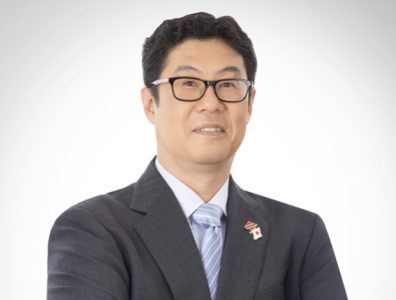
Keio Kato, CEO of Caribbean Gas Chemical Limited (CGCL), talks to The Energy Year about reducing emissions through process upgrades, exploring the potential for green methanol from green hydrogen and/or waste, and maintaining strong ties with the La Brea community. CGCL is a joint-venture methanol and dimethyl ether producer in Trinidad and Tobago. The company’s methanol product is exported globally.
What role can methanol play in the energy transition?
Methanol is versatile. While it’s primarily known as a chemical feedstock and fuel, it can also act as a carrier for hydrogen. Transporting hydrogen in its gaseous form is complex and costly but converting it to methanol makes it far easier to store and ship. Once delivered, hydrogen can be extracted from methanol. This gives methanol a potentially transformative role as a bridge in global hydrogen logistics.
Locally, methanol remains one of Trinidad and Tobago’s cleanest fuels. As global carbon policies intensify, including mechanisms such as carbon taxes in Europe, there is growing interest in low-carbon methanol. Transitioning from fossil-based feedstocks to waste-based or CO2-derived carbon sources could position CGCL as a frontrunner in sustainable methanol production.
What are the advantages of producing methanol in Trinidad and Tobago?
The key advantages are location and stability. Trinidad offers a politically and socially stable environment, which is critical for the long-term viability of operations. Geographically, we are well positioned to serve the US, European and Asian markets.
Local plants have a collaborative dynamic, whereby we support one another in terms of operational best practices, technical expertise and knowledge-sharing. We participate in various industry committees where we exchange experiences, information and assist each other during safety, mechanical and process challenges. This collaborative spirit strengthens the reliability and resilience of the entire sector.
What have been the most important developments at CGCL in the past two years?
One of our major milestones was the achievement of ISO 9001 certification in March 2024 and this year, we completed our first annual audit update, reaffirming the robustness of our systems and processes. Another significant achievement was reaching a cumulative total of 4 million tonnes of methanol produced and shipped in January 2025.
How does your distribution system work, and where does your methanol go?
CGCL does not directly sell its methanol. Our Offtakers – Mitsubishi Gas Chemical Company Inc. (MGC), Mitsubishi Corporation (MC), NGC Petrochemicals Limited and Massy Energy (Trinidad) Ltd – are responsible for global distribution. Customer relationships and logistics are mainly managed by MGC and MC. Once production is complete, the cargoes are taken directly by the Offtakers and shipped to destinations in Asia, Europe and the United States of America.
What gives CGCL a competitive edge in global markets?
Our product quality among methanol producers is largely standardised. What sets CGCL apart is the strength of our Offtakers. MGC and MC have a vast, established global network – MGC, for example, operates in Venezuela, Brunei and Saudi Arabia. This reach allows them to access a wider customer base and secure optimal prices. Their global infrastructure and market intelligence significantly enhance our product’s commercial competitiveness.
Do you have any plans to expand production or build new facilities?
At present, we do not have plans to increase capacity or construct new plants. However, we are exploring a potential partnership with the government to incorporate green hydrogen into our operations and use it to produce green methanol – a cleaner variant that supports the country’s energy transition goals. This initiative aligns with MGC’s “Carbopath” project, which aims to produce methanol from CO2 and/or waste.
What sustainability measures has CGCL implemented?
Improving production efficiency is our key strategy. By optimising our process, we reduce the amount of natural gas needed to produce each tonne of methanol. In 2024, we completed two major projects in partnership with MGC. We placed our Natural Gas Compressor on bypass, which significantly reduced electricity utilisation, then shifted to a single boiler operation, thereby reducing our natural gas consumption for fuel and CO2 emissions. These actions are aligned to support both environmental goals and national gas conservation.
Another noteworthy mention is that since commencing operations in 2020, we have not required a major turnaround. This is uncommon in the industry, where plants typically require shutdowns every two to four years. Our plant has been operating reliably and efficiently for nearly five years, which reflects the strength of its design and the maintenance strategy of our team.
How is the company approaching digitalisation and technology?
We are in the early stages of digital transformation. A recent example is we installed vibration sensors on 50-plus overhead fans, allowing for remote condition monitoring. This enables preventive maintenance which can in turn minimise possible mechanical issues. During the pandemic, we also used remote DCS connectivity to allow MGC engineers to monitor and support commissioning from abroad.
At the moment, we are evaluating the integration of handheld data devices with our CMMS system to expand digital integration. While we are still maturing in this space, the vision is to embrace these technologies to boost operational efficiency and resilience.
What are your top priorities over the next two to three years?
Our first priority is of course safety. In our five years of operation, we have had no major incidents, and this is a track record we wish to maintain. Our second priority is operational stability – methanol production is the backbone of our operations, so ensuring maximum uptime is crucial.
Thirdly, we must continue to build strong ties with the local community in La Brea and ensure that we do our part to support sustainable economic development in the South. We have in the past collaborated with several NGOs, CBOs [community-based organisations], and in particular the La Brea Association for Innovation, along with other local companies to provide employment where feasible as well as other CSR support, via various strategic initiatives, to our host and nearby communities in the areas of Education Transformation, Sports, Community Health and Enterprise Development. We are here for the long haul and believe that our presence must give rise to outcomes that are good for company, good for community and good for country.
Read our latest insights on:
More content from Trinidad and Tobago





Latest Reports


The Energy Year Oman 2026
The Energy Year Kuwait 2025
The Energy Year Angola 2025
The Energy Year Nigeria 2025
The Energy Year Saudi Arabia 2025
The Energy Year UAE 2025