

Innovating in Angola’s bunkering sector
September 30, 2025 Angola


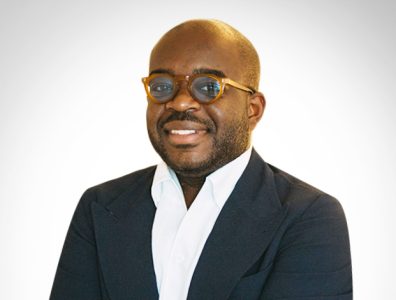
Henrique Mayamona, general manager of SEAGO, talks to The Energy Year about how the company entered the bunkering business, what distinguishes SEAGO from other operators, its vessels and their capabilities, and the challenges in Angola’s bunkering sector. SEAGO is an Angolan bunkering specialist.
Tell us about the origins of SEAGO and how the company entered the bunkering business.
SEAGO began as a company founded by three friends who met each other a long time ago, and by the irony of destiny, all ventured into the fishing industry. As we encountered issues with fuelling our fishing vessels, we realised that there was a massive opportunity in the bunkering business.
For example, we observed that the bunkering process was inconsistent in terms of pricing among the brokering companies, and the brokers also struggled to provide their service on the requested date. We decided to establish a company to fuel our fishing vessels and provide a better experience for our clients.
What distinguishes SEAGO from other operators in the market?
At SEAGO, our clients are responded to and fuelled on time at the best price in the market. We are a company run by young Angolans who rely on strong international partnerships in order to learn from the best. Our team has played a crucial role in our growth. We also believe in gender equality, and we have an equal number of women and men working in the company.
With a strong background in the fishing industry, we understand what it is like to be on the other side of the transaction. Clients are looking not only for quality products but also for a simple way to acquire bunkering products with consistency and service that adds value to their operating process. For instance, we allow our clients to make post-payments. This aligns with our slogan, “SEAGO, your land partner at sea.”
Moreover, we made a significant investment early on. We started out working as brokers for six or seven months, but the broker role became extinct, so we had to adapt quickly. That meant bringing in our vessel, which we now charter.
However, all bunkering companies in Angola have their unique approach to working, and most of them are performing well in the industry. We thank our competitors because we learn a lot from them as well. As many may know, the bunkering industry is a challenging business due to high demand and a scarce product. However, Sonangol is doing a magnificent job of providing a fair amount of product to each company.
How many vessels do you currently operate, and what are their capabilities?
Right now, we have one vessel, the RLO Explorer. It has a capacity of approximately 5,000 tonnes and is a hybrid, allowing it to carry both MGO [marine gas oil] and IFO [intermediate fuel oil]. We are actively exploring the possibility of adding another vessel.
We are also seeing a lot of interest from investors and companies who want to enter joint ventures with us. Many come forward with vessel proposals or investment opportunities. This interest stems from the fact that the SEAGO name is now well-established in the market, and demand is present. Bunkering is booming in Angola, and we anticipate even stronger market growth in 2026.
We have generated approximately USD 9 million in revenue during our first year. With a year-to-date revenue of approximately USD 20 million, we aim to reach USD 35 million by year-end.
What role do partnerships and joint ventures play in your strategy?
When considering partnerships, we examine what each party brings to the table. We already have the clients, the product and a strong relationship with Sonangol, so usually when someone approaches us, it is either to bring a vessel or capital. If they receive capital, we can find a vessel and start operating immediately. That is how we see partnerships at SEAGO: They need to complement what we already have in place.
What are the key challenges you face in the Angolan bunkering sector?
The biggest issue right now is the high demand for MGO, for which quantity is scarce. IFO is less of a challenge because it is produced locally. Although there is a limited quantity of product, we believe that Sonangol is doing a great job by allowing players to have product every month to trade.
Client payment delays can also be an issue. However, we have developed systems to work effectively with banks to manage prepayments and cash flow.
Is regional expansion a part of your future strategy?
Yes, and we have already started conversations with other countries to assess opportunities. We are considering Walvis Bay, which is a competitive port. Expansion is not something we are rushing, but it is certainly on our radar. We are figuring out whether that means taking a vessel to Namibia or forming other types of partnerships. Regardless, regional growth is part of our roadmap.
What are your long-term objectives for SEAGO?
Within 5-10 years, our goal is to become the largest bunkering company, not only in Angola but also in sub-Saharan Africa. That is why we are starting conversations with ports in other countries.
Right now, we operate only in Angola, but we want to have more vessels and stronger partnerships, including with Sonangol to find mutual solutions. We are also aiming to get a spot at the new Barra do Dande Oceanic Terminal to store more product.
As bunkering has its risks, we are also looking to diversify. Bitumen is a business we want to enter this year, along with lubricants and other products. Our vision is to be involved in every major segment of the sector.
When people talk about Angola, we want them to say, “I know SEAGO.” We want to be a national reference, just like Sonangol.
Company website: www.seago.ao
Read our latest insights on:
-

-

Quality acquisitions over acreage
INTERVIEW -

More content from Angola
Latest Reports


The Energy Year Oman 2026
The Energy Year Kuwait 2025
The Energy Year Angola 2025
The Energy Year Nigeria 2025
The Energy Year Saudi Arabia 2025
The Energy Year UAE 2025