

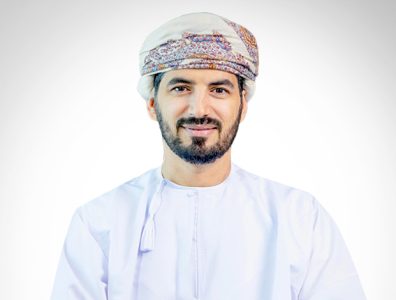
Long-term workforce planning for economic resilience
October 6, 2025 Oman
Oman 


Mohammed Hamood Al Naabi, CEO of Oman Energy Association (OPAL), talks to The Energy Year about the role the association plays in Oman’s energy ecosystem and how it is helping develop Oman’s labour force in line with energy transition and digitalisation trends. OPAL is a business society in Oman focused on the energy and minerals sectors.
What role does OPAL play in Oman’s energy ecosystem?
OPAL serves as the unified voice of the energy industry in Oman. Representing more than 500 member companies, including both international and domestic operators and service providers, OPAL spans the entire energy value chain and its associated industries. Unlike many neighbouring countries, where a single national operator dominates, Oman’s landscape comprises more than 10 active operators. This diversity necessitates a harmonised and standardised approach, which OPAL is uniquely positioned to ensure.
OPAL is widely recognised as a central platform that fosters communication, collaboration, dialogue, synergies and alignment across the sector. To date, we have developed and issued more than 12 unified HSE standards, with our two most recent covering worker welfare and emergency response, further reinforcing our commitment to consistency and excellence.
We maintain a close working relationship with the Ministry of Energy and Minerals. Both the minister and the undersecretary chair steering committees in which OPAL plays a pivotal role, such as the HSE Senior Leader Safety Forum and the ICV [In-Country Value] Steering Committee. Beyond aligning policies, we support our members with operational challenges, whether in labour clearances or workforce development, helping ensure the sector operates efficiently and sustainably.
Every stakeholder has different priorities. Operators aim to manage costs, improve efficiency and maximise business outcomes. The government, in addition to supporting these priorities, also drives strategies to increase Omani employment, advance local content and build local capabilities for long-term sustainability. Service companies concentrate on enhancing productivity and business continuity. OPAL serves as both mediator and advocate among these interests, regularly bringing CEOs together to identify and address key challenges.
For example, while some see Omanisation as a short-term cost, we work to reframe it as a long-term investment in business continuity, local integration and operational resilience.
OPAL’s unique position enables us to consolidate industry concerns and present them directly to the Ministry of Energy and Minerals and the Ministry of Labour. This collaborative approach ensures that solutions are systemic rather than fragmented and accelerates decision-making on issues of national importance.
How does OPAL collaborate with the government and industry on skills development?
A core mandate for OPAL is to develop and train Omani talent to meet the evolving needs of the energy sector. To this end, we play a leading role in qualifying training centres, accrediting trainers and curricula, and ensuring that graduates are equipped with the competencies required across various segments of the industry. Our flagship initiative is the Energy and Minerals Sector Skills Unit (EMSSU), which is fully managed by OPAL.
Licenced by the Ministry of Labour, EMSSU operates independently under a dedicated board comprising representatives from government, academia and industry. It is entirely employer-led, which ensures that its priorities are directly aligned with real workforce needs.
We work closely with industry to identify current and emerging skill gaps and then co-ordinate with government bodies and academic institutions to design and implement targeted training programmes that address them. This includes mapping occupational roles in oil and gas as well as emerging sectors such as renewables and hydrogen.
By doing so, we enable the upskilling and reskilling of existing workers, reducing reliance on new hires and fostering cross-functional capabilities within Oman’s workforce. This approach not only supports long-term workforce sustainability but also aligns with Oman Vision 2040, which emphasises economic diversification, human capital development and the establishment of Oman as a resilient and competitive energy hub.
What is OPAL’s role in benchmarking and establishing industry standards in Oman?
Enhancing industry efficiency and operational excellence is one of our core missions. Our approach goes beyond unifying local practices; we actively benchmark against international standards and integrate global best practices into Oman’s energy ecosystem. To ensure our standards remain current and competitive, OPAL regularly engages in international knowledge exchange. We send our team abroad, for example, to the USA, the UK, Japan and soon Germany, to explore and adopt best practices.
In addition, OPAL hosts international delegations to foster bilateral learning and collaboration. We recently welcomed a Russian delegation to Muscat that included representatives from both the government and the private sector. These international exchanges facilitate the transfer of knowledge, promote innovation and strengthen Oman’s position as a forward-looking energy hub.
Through these global partnerships and continuous benchmarking efforts, OPAL ensures that the standards we develop not only reflect the needs of the domestic industry but also align with international excellence.
How is OPAL preparing Oman’s workforce for the energy transition and digital shift?
We are in the midst of an energy transformation, moving from fossil fuels to renewables. In parallel, the sector is experiencing a digital evolution, with technologies such as AI, big data and advanced digital solutions reshaping how business is conducted. OPAL is proactively addressing both dimensions of this transformation through strategic workforce development initiatives.
To adapt to this shift, we are mapping cross-functional talent and expertise across the industry and identifying how capabilities can be leveraged in emerging sectors such as renewables and green hydrogen.
On the digital front, OPAL has begun embedding digital literacy and emerging technology into the curricula of accredited training centres. While this is an evolving process, the introduction of AI awareness and foundational digital skills into educational content represents a critical first step.
What strategies does OPAL use to boost Omanisation in the energy sector?
Together with operators and service companies, we analyse workforce compositions to identify roles still held by expats. We then co-design training programmes to prepare Omanis to fill these specific roles. In some organisations, Omanisation has reached 70%.
Our approach is collaborative from the start. Before any initiative begins, we consult all stakeholders, ensuring buy-in from ministries, operators such as PDO and Occidental, and training institutes.
EMSSU plays a key role in this alignment, and we co-ordinate efforts via a steering committee that includes CEOs and senior government officials. With this structure, Omanisation is not just a policy goal but a structured, industry-supported pathway.
What message would you share with international investors unfamiliar with Oman?
Oman is a welcoming country and a strategically positioned nation distinguished by its youthful, educated population. In fact, we even see Omani professionals increasingly taking on leading roles in many organisations domestically and abroad, reflecting the strength and potential of the national talent pool.
Under the visionary leadership of His Majesty Sultan Haitham bin Tarik, Oman is enhancing its investment climate by streamlining business regulations and reducing barriers to entry, making Oman more attractive to foreign investors. OPAL is proud to contribute to these national efforts, particularly in shaping the future of the energy industry, including the growing focus on renewable energy.
As part of our commitment to long-term workforce planning, OPAL led a comprehensive labour market intelligence analysis to assess whether Oman will have the skilled workforce required to support emerging sectors such as green hydrogen over the next 15 years. This analysis extended beyond technical roles to include logistics, operations and support functions, ensuring a holistic view of future talent needs.
This initiative was conducted in close collaboration with government entities and industry stakeholders, and the findings have already been shared with the relevant authorities. It reflects Oman’s serious and proactive approach to energy industry development and workforce readiness, and its broader ambition to attract sustainable foreign investment.
Read our latest insights on:
More content from Oman






Latest Reports


The Energy Year Oman 2026
The Energy Year Kuwait 2025
The Energy Year Angola 2025
The Energy Year Nigeria 2025
The Energy Year Saudi Arabia 2025
The Energy Year UAE 2025