
Private investment drives power distribution in Nigeria
March 25, 2026 Nigeria


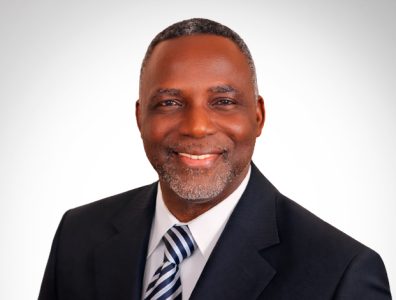
Bart Nnaji, chairman and CEO of Geometric Power, talks to The Energy Year about restoring Nigeria’s first integrated power project post-commissioning and expanding reliable electricity access through infrastructure investments.
Geometric Power is an integrated utility managing generation and distribution across Aba and Abia State in Nigeria.
- Distribution companies in Nigeria often face challenges in collecting payment from end users, causing recurring interruptions to revenue flows along the value chain.
- The core challenge in expanding electrification across Nigeria is not insufficient generation capacity but the lack of distribution infrastructure. The sector struggles with misaligned incentives, which lead distribution companies to shift the burden of capital investment on local governments.
- In renewables, projects often face delays due to regulatory uncertainties, lack of financial guarantees and unclear tariff structures, which are exacerbated by the elevated cost of energy storage.
Geometric Power has developed the 141-MW Aba IPP, Nigeria’s first fully integrated private generation and distribution power project. What is its current status?
Following the February 2024 commissioning, we’ve entered a recovery period necessitated by years of project delays. We’re now working to restore the infrastructure and assets to their originally intended state.
The core idea behind Nigeria’s privatisation of the power sector, particularly distribution, was that new owners would invest to strengthen the infrastructure and introduce more effective commercial arrangements. Geometric Power has made significant investments in distribution infrastructure, which are now beginning to yield results. We’re seeing a marked improvement in efficiency.
On the generation side, there have been persistent challenges with gas supply, although this is now improving. The broader issue in the industry remains the ability to collect payment down the value chain. Ideally, if a distribution company collects adequately, it can pay for transmission and power generation, and the power producer can then pay for gas. While this chain is often broken across the sector, it’s functioning at Geometric Power thanks to our integration and coupling of the critical value chain elements: gas supply, generation and distribution. Credibility and circular payment flow are critical.
How do you view your company’s role in improving electricity access in rural and remote areas of Nigeria?
We don’t see the power supply as the problem for rural areas – it’s the lack of distribution infrastructure to deliver it. The responsibility to build and extend this infrastructure lies squarely with the distribution companies. However, some companies pass this duty on to state governments, expecting them to finance the infrastructure and then hand it over.
But even if a state government builds a network, the distribution company still needs to take it over and operate it. The state must then step aside to allow electricity to flow properly. My firm belief is that distribution companies should be the ones building and maintaining electricity infrastructure.
Has there been an improvement in stakeholder understanding of the power sector, particularly with the Electricity Act 2023 decentralising certain regulatory powers to states?
Some understanding is beginning to take root, but there are still misconceptions. The Electricity Act 2023 made people think states could fully take over power provision. But the reality is more complex.
Power development is very capital-intensive. For example, a 1-MW gas-fired power plant in Nigeria costs at least USD 1.5 million to build. If a state government wants to build for its entire region, it must also balance this against its responsibilities in healthcare, education, roads and more. It quickly becomes overwhelming.
In Abia State, we’ve created a working model by collaborating closely with the governor. Geometric handles most of the power investment – generation to distribution – while the state supports us through permitting and security. It’s a public-private synergy that works. However, when states try to do it all, they often hit roadblocks. Even in tariff regulation, we’ve seen state governments slash rates without planning for subsidies, creating major financial gaps in the system.
You’ve mentioned before that solar power was a strategic interest. How are your solar plans progressing?
Solar power is still very much part of our long-term strategy – it’s the only viable renewable in our operating environment. However, for it to play a meaningful role, two things need to improve: energy storage and solar panel development.
There’s a lot of discussion about storage now, which is essential because solar power isn’t generated at night. You can store solar energy for later use, but the question is how much and at what cost?
We’re open to solar and continue to explore it. But even today, you’ll rarely find a 50-MW solar plant in Nigeria. People are trying to build them, but the challenge is, once you build, can you sell the power? Without a reliable commercial model, most developers don’t move forward.
Given these evolving dynamics in Nigeria’s energy sector, where do you see Geometric Power heading in the coming years?
We’re focused on expanding because we’ve proven our model works. Aba is the first industrial city in Nigeria to enjoy reliable electricity. The only disruptions we face are due to gas supply issues – otherwise, we provide continuous power. That’s what reliability is about.
Currently, we serve nine out of the 17 local governments in Abia State. The government is working on acquiring the remaining eight, and once that’s done, we will supply bulk power to the state distributor in those local governments.
We’ve also developed, in partnership with GE, a major project: the Oma Power Plant. This facility has a total capacity of 1,080 MW, to be built in two phases. Phase one is 560 MW, and we have secured nearly all the financing. Investors were ready – GE invested millions in development – but we hit a stumbling block with the federal government, specifically the Ministry of Finance, which failed to provide the required put–call option agreement. This wasn’t just our issue; Mobil and others faced the same problem after developing their power plants.
What people don’t always understand is that in power development, it can take two to three years of documentation and preparation – and millions of dollars – before even breaking ground. That’s the nature of the industry. But despite the obstacles, we remain committed to delivering scalable, bankable power solutions in Nigeria.
Read our latest insights on:
-

-

A new opening for African gas
INTERVIEW -

More content from Nigeria


Latest Reports


The Energy Year Oman 2026
The Energy Year Kuwait 2025
The Energy Year Angola 2025
The Energy Year Nigeria 2025
The Energy Year Saudi Arabia 2025
The Energy Year UAE 2025