
From gas to EVs: a diversified energy transition strategy
May 12, 2026 Nigeria


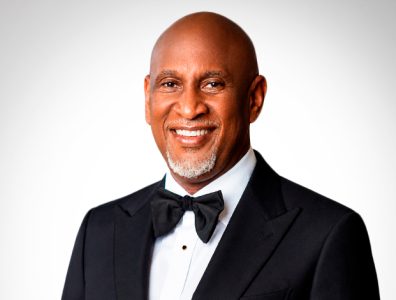
Akintoye Akindele, chairman and CEO of Platform Capital, talks to The Energy Year about the company’s integrated energy park in Nigeria and leveraging renewables and carbon services to support the energy transition.
Platform Capital is an investor in technology, energy and infrastructure for sustainable development in Africa.
- Hybrid energy models are becoming essential for Africa’s transition, with gas and renewables assets being increasingly developed in parallel, not in competition, to balance energy security and affordability with decarbonisation goals.
- Solar-as-a-service and microgrid solutions are gaining traction as cost-effective alternatives to diesel, while also unlocking access to carbon credits and improving energy reliability, indicating that distributed clean energy has the potential to outcompete traditional generation.
- Carbon markets and services are emerging as a new value layer in Nigeria. Carbon audits, verification and trading frameworks are positioning emissions management as a business function that can create new revenue streams alongside traditional energy operations.
What can you tell us about Platform Capital’s recent activities in energy infrastructure and clean energy?
As a group, Platform Capital is focused on building sustainable, integrated energy solutions that balance people, profit and the planet. We are not a single-asset company. We are an ecosystem of investments and partnerships across the energy value chain, from midstream infrastructure to renewables, electric mobility, and carbon services.
Our clean energy portfolio spans multiple technologies. We are deploying solar-as-a-service models across Nigeria, replacing diesel and gas plants with solar alternatives. We are also investing in electric vehicle (EV) ecosystems, including EV charging infrastructure and fleet electrification. Through our partnership with the Munja Group, we are supporting solar-powered microgrids that serve as community hubs, delivering not just electricity but also clean water, education spaces and cold storage. We are exploring wind and battery storage solutions where they make economic and environmental sense.
We also provide carbon audits, valuation, verification and certification services to help companies transition to net-zero emissions. We have published reports on carbon economics, including Understanding Carbon and Why It Matters and The Economics of Clean Power in Africa, which lay out practical frameworks for how Nigeria and Africa can participate in global carbon markets while driving local development. On the policy front, we have worked with Nigeria’s House of Representatives to sponsor a decarbonisation bill.
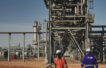
We successfully built the first fully integrated energy park in Nigeria, which includes CNG processing, a modular refinery and other midstream assets, storage tanks and Tier 4 data centres. We have obtained free zone status for this project, allowing us to partner globally on a US dollar basis.
What are the key technical specifications of your modular refining and gas facilities?
Our modular refining capacity is set at 2,500 bpd, with plans to scale to 10,000 bpd. The gas processing facility has a capacity of 1.13 mcm (40 mcf) and converts feed gas to CNG, which is then supplied to the grid. We plan to scale that to 2.27–2.83 mcm (80–100 mcf). At Platform Capital, we have the goal of becoming a net-zero company, and we are monitoring our carbon footprint, investing in gas processing, and deploying clean technologies and renewable energy solutions such as solar and EV infrastructure.
How has Platform Capital been involved in renewable energy and electric mobility beyond the energy park?
We have a subsidiary company that operates power plants. They have partnered with a major energy operator and are building solar plants for companies across Nigeria, offering solar as a service. Solar is cheaper than diesel and makes companies eligible for carbon credits.
We are also deeply invested in the EV ecosystem. Through our portfolio and partnerships, we are supporting the deployment of EV charging hubs, electric taxi programmes and fleet conversion initiatives. We believe electric mobility is a critical piece of Africa’s energy transition, reducing both emissions and dependence on imported fuels.
We are helping businesses go green across solar adoption, EV uptake, carbon credit generation and energy efficiency. We provide carbon audits, valuation, verification and certifications to support them through that process.
Our business model is built on being at the centre of people, profit and planet. Africa needs to grow and reach carbon neutrality simultaneously, and it can do so through a mix of gas, renewables and electric mobility.
What investments are you making in technology and innovation, and what is your vision for the next few years?
Platform Capital is one of the leading investors in technology across Africa. We invest in health tech, mobility tech, data tech and fintech. Every sector that needs transformation and disruption receives our attention.
Our vision is to build sustainable enterprises that drive social impact while changing the African narrative. We have a commitment not only to Nigeria but to the continent as a whole. This is also a personal mission, which is why I teach emerging market entrepreneurship at EM Normandie Business School in France. I want the world to better understand how emerging markets in Africa, Latin America and Southeast Asia differ from Europe and America, as well as how they operate and the unique challenges they face.
Having invested in and helped build over 100 companies, and as a professor of finance who has advised thousands of businesses globally, I believe I have the knowledge and experience to do exactly that.
Read our latest insights on:
-

-

A new opening for African gas
INTERVIEW -

More content from Nigeria

Latest Reports


The Energy Year Oman 2026
The Energy Year Kuwait 2025
The Energy Year Angola 2025
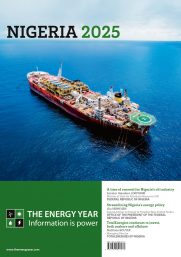
The Energy Year Nigeria 2025
The Energy Year Saudi Arabia 2025
The Energy Year UAE 2025