

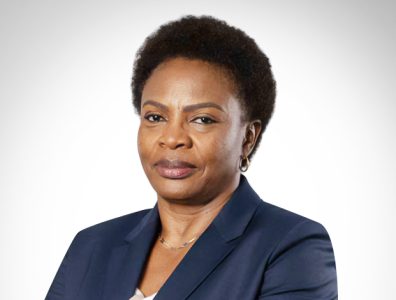
25 years of energy-sector experience
July 2, 2024 Angola


Fátima Freitas, founder and managing partner of Fátima Freitas & Associados, talks to The Energy Year about the company’s involvement in energy sector projects over the past year and the evolution of Angola’s legislative and regulatory frameworks for the energy sector. Fátima Freitas & Associados is an Angolan law firm.
How did your involvement in energy sector projects evolve in the past 12 months?
2023 was, like other years, a year of significant oil and gas and wider energy sector projects for our firm and for the Miranda Alliance in Angola.
I would like to highlight the hiring of our firm by major international oil companies and other major sector investors for the structuring of close to 50 renewable energy projects (including major solar power plants), the renegotiation of some of Angola’s most important historical oil and gas concessions, the negotiation of various new petroleum contracts and the structuring and/or financing of three refinery projects.
We also had the privilege of having some of our lawyers participate in high-profile secondments to important clients, thus contributing to the implementation of their projects in the country while also allowing them to gain closer knowledge of how clients work internally through embedding them in the respective teams.
In the mining sector, we have been actively involved in projects involving some of the largest mining companies in the world, not only in traditional areas of the Angolan mining sector (such as diamonds) but also in critical minerals exploration and extraction, which is a subsector that the government has invested heavily in.
Overall, our firm continues to grow in all of the sectors and subsectors that will shape the future of the Angolan economy and foreign investment, and we have been able to count on the experience and support of our Miranda Alliance partners. They have added their international expertise in emerging sectors to our solid Angolan know-how, thus allowing us to better serve the needs of our clients.
What are your perspectives on the evolution of Angola’s legislative and regulatory frameworks in the energy sector?
On the oil and gas front, there are rumours that some aspects pertaining to the regulatory framework governing petroleum operations might be streamlined in the future. Moreover, every once in a while there are rumours of a possible revamping of the upstream tax regime and of targeted amendments to the industry-specific foreign exchange framework in force.
Regarding the latter case, we understand that the government is increasingly aware of the difficulties experienced by resident service providers – which are paid in local currency by the operators and subsequently face great challenges in paying their foreign suppliers and creditors in foreign currency – and that measures to address this issue are being contemplated.
Moreover, an ANPG-sponsored legal and regulatory framework on biofuels is expected soon.
Although, for the time being, there are no concrete indications on if, when or how these aspects will be addressed by the government, these are definitely areas to which we will continue to pay close attention, not only because of the possible (positive) impacts on our clients’ presence and operations in Angola but also because of the new opportunities they may bring about for existing and prospective Miranda Alliance clients.
What is the way forward for Angola in strengthening the impact of its local content regulations?
Angola has had decades of experience with local content, with the first robust set of regulations being implemented in 2003. Two decades on from this milestone, the executive set about modernising the framework to try to bring added value to Angola and widen the scope of goods and services that can be provided locally.
As with local content everywhere around the globe, a fine balance needs to be struck between incentivising the local procurement of goods and services and ensuring that the goods and services effectively exist or can be made available on the local market and that locally procured goods meet the required oil industry standards and are not excessively onerous.
If they do not meet these criteria, this will contribute to higher operational costs (with reduced petroleum profits for the state) and decrease Angola’s competitiveness compared to other regional and international oil provinces.
What are the main opportunities and challenges for project financing in Angola’s energy sector?
The government remains committed to implementing reforms to stimulate the economy and promote greater efficiency in public administration (e.g., with the approval of the Project for the Simplification of Public Administration Procedures, amendments to the Angolan General Labor Law and new rules on litigation procedures).
It also seeks to create conditions for greater participation by the private sector (e.g., with the ongoing privatisation programme and the reissuance of sovereign guarantees), in line with the National Development Plan.
In addition to the oil and gas sector, there is significant untapped potential for hydropower, solar and wind energy generation, offering opportunities for financing renewable energy projects and the much-needed development of transmission infrastructure.
In the mining sector, there is interest in developing the exploration of “strategic” minerals (critical raw materials). Recent geological surveys demonstrate that Angola has 36 of the 51 minerals currently considered the most critical in the world, which will fuel an expected investment in the mining sector (excluding diamonds) of up to USD 2 billion by 2027 and USD 24.7 billion by 2050, according to the executive roadmap for the sector.
There are, of course, challenges and hurdles related to regulatory frameworks, infrastructure deficits, market volatility and environmental and social considerations which make it difficult to access external financing. Nevertheless, a positive note is that there is openness and flexibility from the authorities to accommodate different investment initiatives.
As an example, the MCA solar mini-grids project, which was initially envisaged as an IPP project, subsequently adopted an EPC structure. This has not affected the ability of the project to be financed with external sources, which showcases the government’s focus on creating a conducive environment for investment.
Read our latest insights on:
-

-

Quality acquisitions over acreage
INTERVIEW -

More content from Angola



Latest Reports


The Energy Year Oman 2026
The Energy Year Kuwait 2025
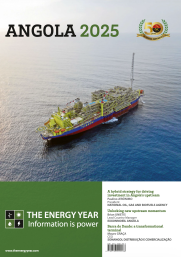
The Energy Year Angola 2025
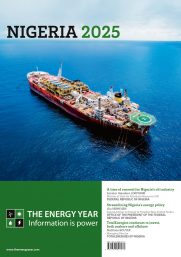
The Energy Year Nigeria 2025
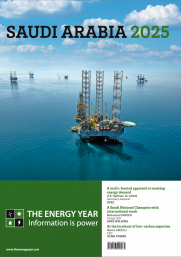
The Energy Year Saudi Arabia 2025
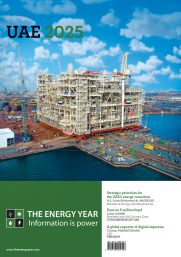
The Energy Year UAE 2025