

A leader in Angola’s elevator market
August 28, 2024 Angola


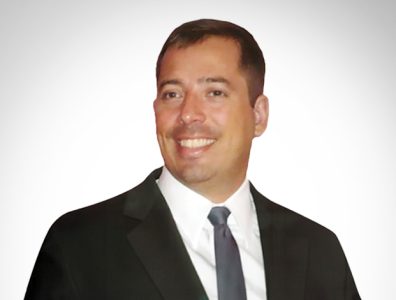
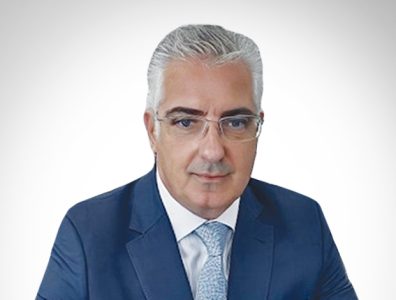
Rui Silva and Rui Salvador, co-founders of Grupo GERA, talk to The Energy Year about how the group has been developing its presence in Angola, its pillars to success and how it can expand its presence in the oil and gas sector. Grupo GERA supplies, assembles, services and repairs lifting equipment.
How has Grupo GERA been developing its presence in the country?
Rui SILVA: Rui and I have both been in the elevator business since 1999. We joined the ThyssenKrupp company in Portugal at about the same time, and each of us worked in different areas. In 2006, ThyssenKrupp Portugal took its first steps into Angola. The growth figures at that time were fantastic and aligned with the potential of the economy. We became the leaders in the elevator market.
From Cabinda to Cunene, from 2010 to 2014, we sold and installed 1,000 elevators in Angola. Our expectation was that the market would continue to grow and stabilise, but unfortunately after the 2014 oil crash, the opposite happened. When ThyssenKrupp decided to exit Angola at the end of 2019, we took over the business here by March of 2020.
We are here today guaranteeing sustainable growth despite all the challenges this market has. The country has many challenges, but we are convinced that we will continue to operate for many, many years to come.
What are Grupo GERA’s key pillars of success?
Rui SALVADOR: One pillar is our wide scope of services. Although we represent TK Elevator [TKE] and assemble TKE equipment, in terms of after-sales, we also provide technical service for other brands. We have the capacity to service any lifting equipment: that of Otis, Schindler, Kone, Mitsubishi and others.
A significant part of our operations is training. There is no training for elevator technicians here in Angola, as this is a very specific market. Therefore, we train technicians in-house.
One of our pillars is therefore the training of workers, both technically and in terms of safety. Over these past 13 years, we have never had a serious accident in the company.
Our other pillar is logistics, as nothing is manufactured in Angola. In order to not have our customers waiting for months because of a lack of parts, we invest heavily in the supply of parts and equipment, and we have a very large warehouse. We know that we are the most expensive company on the market, but we are confident that we provide the best service.
And we have this confirmation from our customers. At the time of the transition from ThyssenKrupp to Grupo GERA, customers could have chosen another option, but they decided to stay with us.
We currently have 75 employees and approximately 950 pieces of equipment. Our employees and customers feel safe within the company. Furthermore, we demonstrated this confidence when we didn’t let them down at a time when the company was going through its most challenging moments.
How can Grupo GERA expand its presence in the Angolan oil and gas sector?
Rui SALVADOR: We want to work together on maintenance with our oil company partners, both onshore and offshore. We can do this with Sonangol, TotalEnergies and Azule Energy. These types of oil operations need structures which are extremely specific to their operations. We were able to identify the total added value of having a specialist company maintaining elevators on platforms.
The main issue for oil companies is the age of the platforms. We have platforms that are 40-50 years old; they’re very old. And although there is a lot of investment in maintenance, everything has a life cycle, whereafter there is no possibility of guaranteeing an extension, and in the case of elevators, there is such a limit.
Eventually one must replace some of the units on these platforms, which won’t be easy. It’s already a difficult job to do in an inhabited building, for example, but doing it 200 km away in the middle of the ocean is much more complicated. Our aim for 2024 is to convince TotalEnergies that it’s necessary to intervene in a more structural, far-reaching way.
Read our latest insights on:
-

-

Quality acquisitions over acreage
INTERVIEW -

More content from Angola

Latest Reports


The Energy Year Oman 2026
The Energy Year Kuwait 2025
The Energy Year Angola 2025
The Energy Year Nigeria 2025
The Energy Year Saudi Arabia 2025
The Energy Year UAE 2025