

Ambitious plans for Nigeria’s LNG pioneer
April 16, 2025 Nigeria


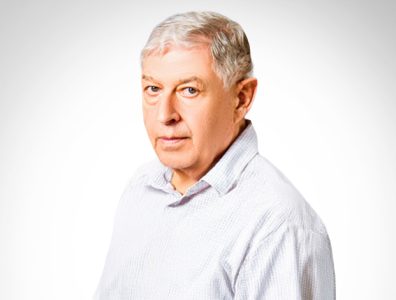
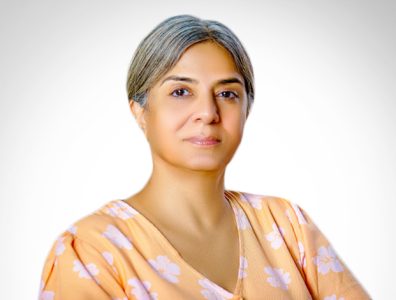
Eddy van den Broeke, chairman of Greenville LNG, and Ritu Sahajwalla, the company’s managing director, talk to The Energy Year about Nigeria’s LNG sector, how the company has developed the market and the challenges and progress it experienced during its journey. Greenville LNG is Nigeria’s first producer and distributor of LNG for in-country use.
Can you walk us through how Greenville LNG started its journey and how it has pioneered the domestic LNG landscape?
Eddy VAN DEN BROEKE: In 2015, we decided to move from bitumen into the LNG business, selling the Asca Group’s assets both in Nigeria and West Africa, to focus on supplying LNG to the Nigerian market. We realised that, even though LNG has been around for over 30 years and Nigeria produces about 22 tonnes per year, not a single drop was made available for internal consumption.
Moreover, we noticed that diesel and PMS were too expensive. We knew that LNG and CNG could mitigate costs for vehicle users (especially daily commuters and the Keke-NAPEP community) and that they are cleaner solutions for industry and heavy vehicle operators, with the potential to exponentially enhance operational efficiency.
We began by connecting to the gas plant installation and started to save USD 18,000-40,000 per day just by switching our fuel source for our vehicles. This was eye-opening.
We realised 10 years ago how many benefits gas could provide in a gas-rich market such as Nigeria, where it is so cheap, so we started wondering: “Why don’t we find a way to distribute that gas?” When we started our project, we were supposed to be up and running after 12 months. However, like the Dangote Refinery, our investment took time and did not succeed automatically. It took us six years to become operational.
It was not easy to enter the market especially due to a lack of knowledge, technology and suppliers, but that is something common to all those who try to do something new and pioneer a field. Finally, in 2015, we kicked off following an investment of USD 500 million, and then we needed a further USD 200 million in investment to keep it running.
What was the state of the gas market in Nigeria when you began, what are the biggest challenges you have faced, and how did the company manage to eventually thrive?
Ritu SAHAJWALLA: When we started, gas was a new frontier in Nigeria. There was little infrastructure, with only some pipelines in the south of the country and not much else besides that. We are not oil and gas specialists. Our main strengths lie in logistics. We have our own fleet, storage we built in-house and technologies we developed, all of which we have from working in bitumen distribution.
For example, when we had to transport bitumen imported from all over the world across Nigeria, it arrived hot at the port terminal. Then we had to move it to the north, and it would become cold.
We developed a technology to insulate our tanks to keep the product at its optimal temperature throughout transportation. The cost of the investment was high, but we recovered it quickly because the customer did not have to reheat, and we could offload it the same day, whereas before we used to lose up to three days.
That is how we began building up our logistics capabilities. We were forced to always find innovative ideas to survive and thrive since, at the end of the day, we are a family company. We are small compared to international groups, but these companies are not really interested in logistics, as they focus on bigger and more lucrative segments, such as the upstream and downstream, so this left us with room to capitalise on our logistics expertise and fill in another market gap.
However, we really had to educate the people regarding the benefits of gas. Our plant took some time before coming online, and we literally had to go to our customers’ doors because nobody, particularly in the centre and the north of the country, really knew what gas was or how to handle it. We had to go the extra mile, providing them with storage facilities, regasification units, generators and funding as well.
In fact, we created our own market; before it was simply non-existent. It was truly challenging at the beginning, and even if our products were cheaper than oil products, it took time before we really became competitive. Then awareness started to increase. Everyone saw that our products were 40-50% cheaper than oil products. The economies in the north, such as in Kano, grew exponentially, and our clients began demanding more supplies.
How do you assess the policies put in place by the current administration to boost gas penetration in the domestic market, and what impact do you think gas’s proliferation will have on pump prices?
EVDB: The FG [federal government] understands the importance of gas for the country’s economic development. The Pi-CNG [Presidential CNG Initiative] is a testament to Nigeria’s efforts to achieve a greener and more sustainable future, and the tax relief package promoted through Executive Order 40 includes tax exemptions for, among others, CNG and cooking gas. This represents a bold step forward towards greater gas utilisation and will play a crucial role in transportation.
We recognise the support of the FG, thanks to which we built up our capabilities and managed to remain steady in the market. However, gas-based industrialisation is still lagging behind, and the industrial development of the business is still minimal and mostly located in the south, while the rest of the country is either wholly undeveloped or significantly underdeveloped.
When President Tinubu came into office, he stopped the subsidies too fast in my opinion. He should have done it in steps. The idea is revolutionary for a country such as Nigeria, and it was welcomed, but the execution was too rapid, and they put prices that were too low for the sale of CNG, thinking that selling it at NGN 200-230 per cubic metre [USD 0.22-0.26] in the south would keep everybody happy.
They should have started around double that price, at NGN 400-420 [USD 0.45-0.47], and included the costs associated with the conversion kits in that price because you can transport the gas to the north, but it is pointless if you cannot convert it and have it ready-to-go.
Additionally, when you set such a low price, you completely spoil the demand, generating expectations to keep that price when it is simply unaffordable since the margins are too low and businesses such as ours cannot even recover their investment and distribution costs.
Today, everybody expects very cheap gas, but the actual situation varies. There are discrepancies in delivering to the south and to the north that impact the final price, which results in a product sold at NGN 230 [USD 0.22] per cubic metre in the south and NGN 800 [USD 0.89] per cubic metre in the north.
Can you give us an overview of your assets, your modus operandi and the role Greenville LNG plays in the market?
RS: We are the pioneers and the only player in the market with the right infrastructure to produce LCNG in Nigeria for automobile, power and industrial use. We are aiming to develop hubs for CNG distribution, which will supply fuel stations across the whole country. These hubs are key for facilitating the spread of LCNG given the lack of pipeline infrastructure in the areas where there are gas shortages, such as in northern and central Nigeria.
Through our virtual pipeline system, LNG can be transported to these strategically located hubs, and these will function as microeconomic centres for their respective regions. Each will supply 30 daughter CNG stations, which will be located no further than 200 kilometres away from their respective hub, with each station retailing between 5 and 20 tonnes of CNG per day.
They will supply LNG to SMEs and larger industries in the area with our trucks. This will drive industrialisation and development in these remote areas.
Each hub will have a buffer stock of about six to eight days, which will allow our customers to sleep well at night since they’ll know we have their back covered during supply disruptions. Furthermore, we will extend our distributor network to include those who today are selling PMS. This will be a real boost for local economies, and particularly for SMEs, which are facing cashflow issues and are struggling due to the high and volatile costs of PMS.
Finally, Greenville LNG operates strategically positioned refuelling stations for LNG-fuelled vehicles, which serve trucks, tankers and buses across the country. Our current locations include Korton Karfe in Kogi State, Sagamu in Ogun State, Benin in Edo State, Kakau in Kaduna State and Rumuji in Rivers State, Lafia in Nasarawa State and Amukwu in Enugu State. In the latter state, we have three liquefaction trains that produce 2,250 tonnes of LNG per day. This LNG is sufficient for complete LNG-based power and heating solutions for industrial use, power plants and transportation.
The feedstock is coming fully from TotalEnergies, but we are going to diversify our gas sources, as we are now building new trains with a capacity of about 3,000 tonnes per day. These trains will supply the domestic market and also be used to export to West Africa. At the moment we have around 700 trucks running on LNG, coupled with 50 planned hubs, and we are looking to expand our entire network even further.
What is your plan for expanding your business operations?
RS: We have an ambitious expansion plan. By the end of 2025, we will have invested over USD 1 billion since we started the business. This shows how committed we are to supporting the local economy. We are looking to deliver LNG to every corner of Nigeria, targeting the north in particular, from Sokoto, to Kano, to Maiduguri, to Yola. We are now building new hubs.
As mentioned, we made a large upfront investment for our plant, which was required because of the high costs of liquefaction for a mid-size LNG facility. We started slowly, and we will probably recover that invested capital in 15 years, but we are here for the long-term, and what we are doing is revolutionising the whole market.
We have introduced LCNG at our Rumuji, Kaduna, Lafia and Enugu retail stations, which is fully operational, and while before our aim was to supply CNG to fuel small vehicles (such as cars, taxis and buses), now cheaper CNG is changing the haulage landscape, bringing many new opportunities.
We are aiming to have 50 gas hubs spread across the country within the next two years, and this is a conservative estimate because we are receiving a lot of interest from different governors, so that number will most likely be higher.
These hubs will be complemented by an extensive network of distribution centres around them. By the end of Q2 2025, there will be CNG available all over the country, and Greenville will be the champion of this effort.
What opportunities and challenges do you see ahead in Greenville’s next phase of development?
EVDB: The AKK [Ajaokuta–Kaduna–Kano] natural gas pipeline should be completed soon, and at least on paper, this might create friction with our system of virtual pipelines, making them less relevant. Nonetheless, we look at its finalisation more as an opportunity than a challenge because all our stations can be linked to the pipeline, something the government has already agreed to.
Moreover, a country, its businesses and industry cannot rely exclusively on CNG, which currently is not even profitable, and improvements to the domestic infrastructure are always welcome.
Speaking of infrastructure, the state of the country’s roads is the real challenge. There is no maintenance, and certain routes are simply not accessible, hindering our trucks’ itineraries. This led us to a situation where our costs have more than doubled, and we have recurrent breakdowns despite using brand-new equipment. Our maintenance costs have more than tripled, which has led us to build new repair shops to deal with the issue.
Furthermore, most of the heavy trucks are converting to CNG, as CNG is becoming increasingly convenient. Dangote Group’s logistics business unit, for example, has 9,000-10,000 trucks, and the Group already committed to converting 3,000 to CNG, and in the next 15 months I foresee more than 10,000 trucks running on CNG. These converted trucks, which are all tri-axle vehicles, will weigh 70-72 tonnes on the ground, while the permissible maximum weight on ground is only about 56 tonnes per axle.
It goes without saying that roads will not be able to bear that weight for long. Contract dynamics also play a role in the deterioration of our roads. We have good road contractors in Nigeria, but often they have to wait ages before getting paid, and this delays roadwork. The Kano-Maiduguri road took 15 years to complete. Proper infrastructure development is a real problem that needs to be solved because it is really holding back business that could push further economic growth.
Can you outline the main pillars of Greenville LNG’s strategy for keeping its prominent role in the domestic gas market going forwards?
RS: We have been running our business in the country for almost 30 years. Our first pillar of business is to help Nigeria develop, and I think we have succeeded in that, despite challenges. Our goal is to supply gas across the whole country, from the north to the south, particularly in those dangerous and remote areas such as Maiduguri, where we are supplying LNG to the NNPC power plant every day.
Our second pillar is to have better control of our gas supplies so that we can have gas available for everyone. Last but not least, we will keep investing in gas undertakings in Nigeria. We had the foresight to be a first mover, and we need to be increasingly competitive because gas is on the rise, and in Greenville LNG, we have all the right capabilities to dominate this market for many years to come.
Read our latest insights on:
-

-

A new opening for African gas
INTERVIEW -

More content from Nigeria


Latest Reports


The Energy Year Oman 2026
The Energy Year Kuwait 2025
The Energy Year Angola 2025
The Energy Year Nigeria 2025
The Energy Year Saudi Arabia 2025
The Energy Year UAE 2025