
Digital control systems to prevent costly leaks
January 21, 2025 Saudi Arabia


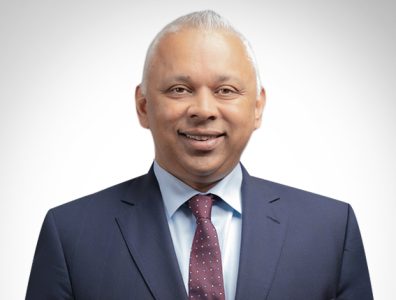
Jay Patel, Managing Director of Evostel, talks to The Energy Year about the company’s success with leak-detection systems and exciting prospects for business in the AI and digital solutions space. Evostel is a technology company that provides equipment and services to the oil and gas, petrochemicals, water, heavy industry and transportation sectors.
How has Evostel’s footprint evolved since its rebranding in 2023?
Since our rebranding in 2023, we’ve expanded our automation capabilities to offer digital solutions across various industries covering manufacturing plants and several types of facilities in the oil and gas industry.
We continue to deliver traditional automation for the water sector, where we’ve had tremendous successes in new infrastructure projects, such as those in The Red Sea. We have a mega-project there for automation, reduction of water losses and non-revenue water (NRW) solutions for distribution networks.
The Red Sea project has been going on for about a year and a half and integrates leak detection with SCADA systems and control system automation for potable water, irrigation water, treated water and sewage, which is a proposition that is unique to us in the market. This project has a potential extension in the future.
We have successfully implemented solutions for four major customers – Alfanar, Camel Step, Qassim Cement and SAAK International – under the Digital Factory programme of the Ministry of Communications and Information Technology. We are also qualified under the Future Factories initiative of the Ministry of Industry and Mineral Resources as the first company in Saudi Arabia that can deliver manufacturing execution systems.
In our electrical business, we are bidding to provide electrical products and lighting solutions for construction projects, while our aviation business specialises in delivering solutions for civil airports, military bases, helipads and heliports, and buildings and towers. We take pride in having completed a range of projects tailored to meet the specific needs of our diverse customers, which include Jizan Regional Airport, Amaala International Airport, Neom Bay Airport, Price Sultan Air Base, King Khalid Air Base and the Ministry of Defense.
What role is the company playing in the Master Gas System (MGS) project, and how has your previous work positioned you to continue supporting Aramco’s infrastructure projects?
We have already delivered leak detection solutions (LDS) in the first two phases of the MGS project. We will now participate in the upcoming phases. As the project expands, we are positioned well to maintain our role in supporting Aramco’s infrastructure with advanced LDS.
How has the integration of PipeTech into GNS enhanced your operations and what benefits does it bring to clients such as Aramco?
The PipeTech business has now been merged with GNS. With the integration and the establishment of a closed-loop leak detection facility, companies such as Aramco and its subcontractors no longer need to spend resources on conducting factory acceptance tests with companies outside Saudi Arabia. These tests can now be performed at our facility.
What factors have helped you grow in the leak detection market and establish yourself as a provider in Saudi Arabia?
In oil and gas, our involvement with PipeTech spans over a decade, with more than 20 leak-detection projects completed. We have captured a substantial share of the market – approximately 70% – and we are the only Saudi company capable of providing a complete LDS locally. We have developed proprietary software and created an in-house team that handles configuration and deployment, and we have achieved significant success with Aramco. On that front, I would say we are number one.
How will the expansion of the Factory Acceptance Test (FAT) facility enhance your service offerings?
We operate a facility that is approved by Aramco for FATs and control panel assembly. However, it has limited space, so we are expanding it so we can cater to Aramco and non-oil and gas customers as well. We plan to expand our testing facility in 2025 to accommodate a wide range of solutions in addition to LDS, including industrial automation, smart city applications, digitalisation and electrical services.
This expansion aligns with Vision 2030’s focus on localisation. Evsotel is committed to delivering end-to-end solutions that leverage its expertise, ensuring high-quality, cost-effective solutions that provide exceptional value to customers.
What specific solutions have you implemented in the Green Riyadh project and how do they contribute to broader water conservation efforts?
We have worked on three phases of the Green Riyadh project, delivering solutions for irrigation management, sewage treatment and NRW. Our technology helps prevent, detect and repair leaks, ensuring efficient and sustainable water management.
We are participating in several water projects in Saudi Arabia and have successfully secured an NRW mega-project, which is currently under execution. There are multiple tenders at the moment, and we are qualified with the National Water Company to bid for projects up to Level 2.
What potential market opportunities do you see for your electric vehicle (EV) chargers in Saudi Arabia?
We anticipate that by mid-2025, our facility will be capable of building our own EV chargers. There are plenty of opportunities across Saudi Arabia to install charging stations in public spaces such as malls, car parks and hotels – this is the market we aim to target. We have a vehicle distribution company within our group, which will be key for showcasing our business.
What strategies do you have in place to assess the market potential for uninterruptible power supply (UPS) storage in Saudi Arabia, and how do your localisation plans fit into these efforts?
We see significant potential in the UPS storage segment, particularly within renewable energy and power generation. Currently, we are seeking a partner to bring these capabilities to Saudi Arabia. This is one of the key streams we are examining as part of our three-year strategy.
Does Evostel have any initiatives under way in the digital solutions and AI space?
We are working on an AI and digital solutions proof of concept (POC) project with a customer for one of their heavy industry manufacturing facilities, and we are implementing an AI platform from Rockwell Automation called DataMosaix, which uses AI to optimise plant operations. The project is still in its early stages, as we only secured it in August 2024.
If the POC proves successful, it will pave the way for broader implementation and open doors for further opportunities in this sector. This is a key initiative for us as we continue to expand our presence in the AI and digital solutions space.
What are Evostel’s strategic goals for 2025 and beyond?
Looking ahead, we plan to double our business over the next five years. We are forecasting double-digit year-on-year revenue growth. We are also scaling up our workforce. After increasing our team by 55 people in 2024, we expect a similar expansion in 2025.
Read our latest insights on:
More content from Saudi Arabia





Latest Reports



The Energy Year Oman 2026
The Energy Year Kuwait 2025

The Energy Year Angola 2025

The Energy Year Nigeria 2025

The Energy Year Saudi Arabia 2025

The Energy Year UAE 2025