

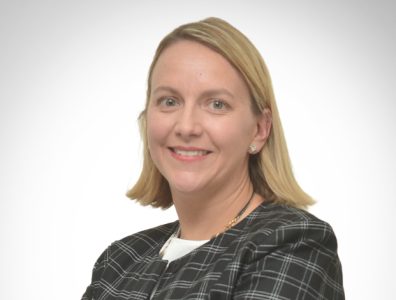
ExxonMobil’s objectives in Angola
August 7, 2024 Angola


Katrina Fisher, lead country manager of ExxonMobil Angola, talks to The Energy Year about the main development and production objectives for the company in 2024 and the importance of exploration in its mid- to long-term strategy. ExxonMobil Angola has producing interests in Angola’s deepwater blocks 15, 17 and 32 and exploration in blocks 30, 44 and 45.
What are the main development and production objectives for ExxonMobil Angola in 2024?
In 2024, we are focused on delivering on our production commitments with a combination of strong reliability, production optimisation, well interventions and new wells, while maintaining and improving our safety performance by striving to eliminate high-consequence, life-altering events.
On Block 15, we are currently executing an 18-well redevelopment programme. The two-rig drilling programme began in 2022 and should be completed this year. This has resulted in our production increasing by 30% from 2022 to present.
For ExxonMobil Angola, generating additional opportunities to sustain and increase production in Angola is a high priority, and we intend to contribute by cultivating and maintaining meaningful external relations with key stakeholders, such as MIREMPET, the concessionaire ANPG and others.
ExxonMobil’s footprint in Angola also includes an 18% participating interest in Angola’s Block 17 through our affiliated company Esso Exploration Angola (Block 17) Limited and a 15% participating interest in Block 32 through Esso Exploration and Production Angola (Overseas) Limited.
Our non-operated businesses in Block 17 and Block 32 have attracted considerable investment from ExxonMobil over the years. We continue to support the operator and discuss and share what we learn across blocks in order to improve overall efficiency and effectiveness across all of our operations.
In addition, in 2020 we secured exploration acreage in Angola’s southern Namibe Basin in blocks 30, 44 and 45. We expect exploration activities to start in Q3 2024.
How important is exploration for ExxonMobil Angola’s mid- to long-term strategy?
Continuing to explore for opportunities that can easily be tied into existing Block 15 infrastructure is central to the Block 15 strategy.
In late 2022, as part of the current redevelopment programme, we drilled the Bavuca South exploration well; that well led to a follow-up development of three wells which were brought online at the end of 2023 and early 2024.
We also just recently drilled the Likembe exploration well, which has the potential for additional follow-up development and will inform decisions on extending facility life.
In 2024, we will drill the first exploration well in the Namibe basin. We are proud to partner with Sonangol E&P to explore this frontier basin.
What are the key updates and prospects regarding ExxonMobil Angola’s Namibe basin exploration campaign?
The Arcturus-01 well, in Block 30, will be the first well drilled in the Namibe basin. The opportunity has high technical risk – it’s uncertain if the basin is generating hydrocarbons – but, if successful, it will create opportunities, value and growth for Angola, as well as ExxonMobil and our partner.
We are preparing to spud the well in Q3 2024, with the goal of capturing key information for evaluating the overall prospectivity of the basin. The results will be paramount for informing the path forward.
What have been the ANPG’s key successes in stimulating new developments in Angola’s upstream industry?
Angola has been very proactive in encouraging oil and gas investment in recent years.
The national concessionaire, the ANPG, has been very open to discussions on what is necessary to make Angola’s opportunities competitive in global markets.
We have a very positive and collaborative relationship with the ANPG, which has resulted in enabling many opportunities, including the previously mentioned Block 15 redevelopment programme and the Namibe Basin Risk Contracts.
From an exploration perspective, the bid rounds, permanent offers and the improvement of fiscal terms have attracted investment that otherwise wouldn’t have come. The changes Angola has made have increased its competitiveness with respect to attracting exploration investment dollars, and we are seeing that effect. Hopefully the discoveries will follow!
How important will Angola continue to be in ExxonMobil’s global portfolio?
Angola is currently an important part of ExxonMobil’s deepwater and overall global portfolio.
Not only is it providing direct value to the company’s shareholders, but it is also a key area to develop deepwater operating expertise that can be leveraged by other ExxonMobil business units. In fact, Guyana is currently employing many of the lessons from the early days of Angola Block 15, and we currently have Angolan expats in Guyana sharing their deepwater expertise.
As a mature affiliate, Block 15 is also a role model within ExxonMobil when it comes to production optimisation. It is being used to define and establish practices and processes, integrating information, technology and people, to improve standards for production optimisation for the entire ExxonMobil upstream.
With continued exploration and redevelopment success, Angola’s importance will only continue to increase.
What is ExxonMobil Angola’s approach to local content and capacity-building?
ExxonMobil Angola has a proactive and collaborative approach to local content and capacity-building. We monitor industry trends and evolving needs to comply with legal requirements and our business priorities while continuously advocating for a sustainable framework for the local oil and gas industry.
Our strategy includes the promotion of competitive local suppliers by creating business opportunities and fostering the development of future and ongoing projects. Approximately 90% of ExxonMobil Angola’s existing contracts are with local suppliers (including Angolan incorporated companies).
We believe that local content adds positive results to the business and values, not only for the internal workforce but also for suppliers and contractors, promoting economic growth and improving the quality of life of Angolans.
In addition, given our long-term career orientation, ExxonMobil has a robust personnel development programme that features essential training and skills development elements, which effectively addresses questions about local content and capacity-building.
This programme consists of identifying the right training at the right time in the right way at the right place for the right people. It also enables opportunities for assignments abroad for Angolans or mentorship by other ExxonMobil employees who are assigned temporarily in Angola to occupy critical positions, helping in the continued professional development of our national workforce.
As a result of these efforts, ExxonMobil is proud to have reached a level of nationalisation of over 90%, with around 70% of the leadership being Angolan.
How important are decarbonisation efforts for the company? What are its key initiatives in this area?
ExxonMobil develops and deploys solutions to meet society’s energy needs. Today that means taking a leading role in providing the products that enable modern life, reducing greenhouse gas emissions and developing and deploying the technologies needed to advance a lower-carbon-emissions future.
As governments around the world implement policies to meet their respective emissions-reduction goals, demand for more carbon-intensive energy products will be reduced. However, a growing and increasingly prosperous global population (particularly in Africa and Asia) will need more energy and products that support modern life, which will still require significant investment in new supplies of oil and natural gas.
Reaching net-zero emissions will take more than one solution. ExxonMobil is using its experience and technical ability to advance climate solutions while meeting the evolving needs of a growing population. We’re committed to providing these critical products, working towards the goals of the Paris Agreement and creating value for all stakeholders.
As part of that effort, we’re lowering our own emissions. With the support of clear and consistent government policies, ExxonMobil aims to achieve net-zero Scope 1 and 2 greenhouse gas emissions from our operated assets by 2050. To get there, we’re developing detailed emission-reduction roadmaps for major operated assets. Here in Angola, we’ve reduced flaring by 92% and all greenhouse gas emissions by 74% since 2016.
Read our latest insights on:
-

-

Quality acquisitions over acreage
INTERVIEW -

More content from Angola


Latest Reports


The Energy Year Oman 2026
The Energy Year Kuwait 2025
The Energy Year Angola 2025
The Energy Year Nigeria 2025
The Energy Year Saudi Arabia 2025
The Energy Year UAE 2025