
IMF: building macro resilience in Angola
December 16, 2025 Angola


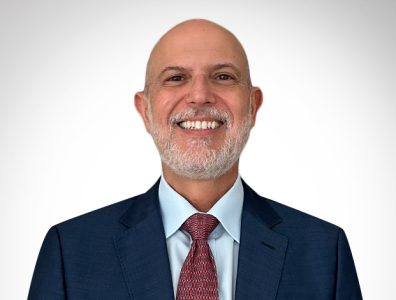
Victor Lledo, resident representative for the International Monetary Fund (IMF) in Angola, talks to The Energy Year about the organisation’s engagement with Angola and how it ensures its policy advice translates into results. The IMF works to achieve economic stability and sustainable growth for all of its 191 member countries.
How has the IMF recently engaged with Angola?
The IMF has long maintained a strong partnership with Angola, primarily through three channels: policy advice, financial assistance and capacity development. Our policy advice is delivered annually via Article IV consultations, which are typically held towards the end of the year.
The 2024 consultation, published in March, was the most recent. In between these annual reviews, we also engage in targeted discussions at the authorities’ request. These provide tailored support on macroeconomic and structural policies.
The most prominent financial engagement was through the Extended Fund Facility (EFF), which ran from 2018 to December 2021. It supported Angola’s macroeconomic stabilisation and was particularly important during the Covid-19 pandemic, when we provided an augmentation of resources.
The programme helped Angola correct fiscal and external imbalances and launch key reforms such as a flexible exchange rate regime, a fiscal responsibility law with a debt anchor, improvements in tax administration and financial sector enhancements.
Finally, Angola is a major recipient of IMF capacity development, delivered by our experts based in Washington and at our Mauritius-based AFRITAC South centre. This includes technical assistance and training across fiscal, monetary and statistical domains, targeting institutions such as the Ministry of Finance, the National Bank of Angola and the National Institute of Statistics. These three areas – advice, financing and capacity building – are deeply interlinked in supporting Angola’s economic objectives.
How does the IMF ensure its policy advice is translated into results?
We place a significant emphasis not only on policy design but also on implementation. It’s not enough to propose reforms; authorities must be supported in executing them. That’s why our advice is hands-on and complemented by technical assistance and training. For instance, if the IMF suggests a tax-policy reform, our capacity-development work ensures the Angolan Tax Authority has the tools, knowledge and systems to apply that reform effectively.
Implementation challenges are common across developing economies. In Angola’s case, the complexity of macroeconomic reforms, especially after years of structural imbalances, means our support must be sustained, strategic and locally adapted. We believe that sustained engagement, aligned with national priorities, enhances the government’s capacity to manage shocks and deliver inclusive growth.
Can you walk us through the objectives and findings of the recent Post-Financing Assessment (PFA)?
The Post-Financing Assessment is a tool used by the IMF to monitor countries that have concluded an IMF-supported programme but still carry high debt levels to the fund. Angola’s outstanding debt to the IMF currently stands at around 2.8 billion Special Drawing Rights, which is approximately USD 3.9 billion. That exceeds 200% of its IMF quota, the threshold for regular PFA reviews.
These reviews are annual and assess Angola’s capacity to repay the IMF. We run stress scenarios and analyse indicators such as reserves and revenue. This also doubles as an update on macroeconomic policy, offering advice for fiscal and monetary stability.
The latest mission, concluded in May 2025, occurred against the backdrop of global tariff tensions, which have indirectly impacted Angola. While US-Angola trade and aid links are limited, higher oil prices and tighter external financing have introduced new risks.
Compounding this is Angola’s large external debt service payments this year, which notably includes a significant Eurobond redemption due by year-end. Our mission discussions focused on balancing external obligations with safeguarding fiscal space for social spending and sustaining economic growth, which had picked up strongly in 2024 after a dip in 2023. Authorities are working on policy adjustments and seeking new financing sources. The PFA report will be reviewed by our executive board in August or September.
With oil prices dropping below budget expectations, how does the IMF see Angola’s near-term outlook?
It’s a challenging situation. Angola based its 2025 budget on oil prices around USD 70 per barrel. Current prices hover around USD 60-65, with recent dips even lower. Given Angola’s oil dependence, this creates immediate fiscal pressure.
Our advice focuses on managing this shock through careful budget recalibration while protecting growth and social spending. A key area is fuel subsidy reform. These subsidies are regressive and expensive. Last year, they cost around 2.7% of GDP, close to or even exceeding the combined education and health budget. The government has taken gradual steps, such as increasing diesel prices, which is the right approach to mitigate social impact.
Another pillar is domestic revenue mobilisation. A bill currently in parliament proposes a unified corporate income tax to simplify payments and encourage SME formalisation. This reform aims to broaden the tax base without increasing the burden on smaller firms.
It’s complemented by administrative reforms at the AGT [General Tax Administration] to enhance compliance. Angola is also actively pursuing low-cost external financing from institutions such as the World Bank and the AfDB.
As for the IMF, we offer financing options such as the Standby Arrangement (which is for one to two years) or the EFF (which is for two to four years). Both have annual interest rates around 3.6%, which is significantly below market rates for instruments such as Eurobonds.
Is Angola considering returning to an IMF lending programme?
There has been no formal request from the Angolan authorities, nor have we initiated any negotiations. That said, Angola remains a member of the IMF, and our doors are always open. Whether or not financial assistance is requested, we continue to support Angola through our policy and capacity-development work.
We’re committed to helping Angola meet its macroeconomic goals and navigate financial constraints. Should the authorities decide to request a programme, we are prepared to engage promptly and constructively.
What are your recommendations regarding Angola’s efforts to diversify its economy?
Economic diversification is essential for Angola. The country still relies on oil for over 60% of fiscal revenue and more than 90% of exports. Diversification is not just a development goal. It’s existential.
From our perspective, the first step is to anchor sound macroeconomic frameworks. The shift towards inflation targeting and a floating exchange rate is critical in stabilising inflation and reducing import-driven price volatility. This fosters a stable investment climate, which is crucial for private-sector-led diversification.
The financial sector must also play its part. A healthy banking system that can channel credit to the private sector, including to SMEs, is vital. The central bank is making progress in regulation and supervision, but this needs to continue, especially in a volatile external environment.
Fiscal stability is the third leg of the framework. Ensuring public debt is sustainable avoids crowding out private credit and supports confidence. Angola’s fiscal responsibility law is a good step in this direction, but it needs to be properly monitored and enforced.
Structural reforms are equally important. These include lowering the cost of doing business, simplifying licensing and investing in education, especially for girls, who are disproportionately affected by gaps in access and attainment. Gender parity in education is not just social justice; it is economic common sense.
Finally, Angola should prioritise horizontal reforms that benefit all sectors before launching targeted, vertical initiatives. When vertical incentives are considered, they must be temporary, transparent and export-oriented to avoid distortions.
Angola’s relatively small domestic market, about 40 million people, makes a regional export focus particularly compelling. With large markets such as the DRC and South Africa nearby, an outward-looking approach could be the key to unlocking sustained growth.
Read our latest insights on:
-

-

Quality acquisitions over acreage
INTERVIEW -

More content from Angola

Latest Reports


The Energy Year Oman 2026
The Energy Year Kuwait 2025
The Energy Year Angola 2025
The Energy Year Nigeria 2025
The Energy Year Saudi Arabia 2025
The Energy Year UAE 2025