
in figures
Kuwait's 2040 domestic refining target:1.6 million bpd
Share of very low sulphur fuel oil in Kuwait's oil exports:60%
Kuwait’s downstream revolution and petrochemicals ambitions
September 17, 2024 Kuwait


As global value chains shift to meet the growing demand for refined oil products, Kuwait is stepping up its game to not only significantly increase production at its domestic and international downstream refineries but also expand its output to meet new requirements for environmentally conscious downstream exports.
Kuwait is carrying out broad reforms to diversify its economy under the government’s Kuwait Vision 2035 development plan, including a thorough review of the country’s refining and petrochemical capabilities to boost production for international markets and support domestic industry. The country’s downstream sector currently processes 1.42 million bpd of refined products from its three domestic refineries and is placing a growing emphasis on diversifying outputs to include optimised amounts of various fertilisers, aromatics and olefins, and refined petroleum and coke.
In March 2024, KPC approved a plan to dissolve the Kuwait Integrated Petroleum Industries Company (KIPIC) and bring its operations under the umbrella of its downstream arm, KNPC. The move is part of the government’s plan to reduce operational costs, upgrade the performance of the Al Zour refinery and increase integration with domestic and international stakeholders.
Under KPC’s current strategy, domestic refining capacity is set to increase to 1.6 million bpd by 2040. KPC subsidiaries also hold ownership stakes in international refining assets in Oman, Vietnam and Italy, which together process an additional 415,000 bpd. “KPC is committed to further expanding our petrochemical reach both within and outside Kuwait through strategic investments and partnerships,” KPC CEO Sheikh Nawaf Al Sabah told The Energy Year. “Our expansion plans in the petrochemical segment reflect our ambition to achieve a leading position internationally by 2040.”
DOMESTIC CLOUT: In May 2024, Kuwait officially inaugurated the long-delayed Al Zour Refinery, located on the country’s southeastern coast. The asset hit its peak production capacity of 615,000 bpd for the first time in February 2024 after coming on line in late 2022.
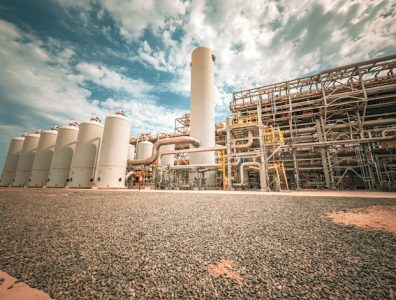
One of the largest refineries in the Middle East and the world, the Al Zour complex contains three crude distillation units that now account for 43.5% of Kuwait’s refining capacity. They can produce various products such as jet fuel, diesel, chemical naphtha and very low sulphur fuel oil (VLSFO) from a range of Kuwaiti crudes including Kuwait Heavy Crude and contains the world’s largest array of units to remove waste sulphur from petroleum feedstocks.
The refinery also contains a dedicated sea island and pier through which products can be exported to power plants in the region and markets around the globe. The Al Zour project is operated by Kuwait Integrated Petroleum Industries Company (KIPIC), a subsidiary of KPC created in 2016 specifically to oversee this strategic venture for the country.
“Following the commissioning of the Al Zour refinery, KPC’s focus is on optimising the operational efficiency and reliability of our downstream assets,” Al Sabah said. “This includes streamlining processes, enhancing maintenance practices and investing in technology upgrades to maximise throughput and product quality.”
Kuwait’s two other downstream assets, the Mina Al Ahmadi and Mina Abdullah refineries, located on the Gulf coast south of Kuwait City, have also undergone major works starting in 2022 to increase throughput. Their processing capacities stand at 346,000 bpd and 454,000 bpd, respectively, and additional work is being done on the two plants to reach a minimum output of 45 million tonnes of petrochemicals in 2025.
A crucial step in this revamp will be the replacement of nine electrical stations at the Mina Al Ahmadi refinery with high-efficiency units, which are expected to be operational by year-end 2024.
GLOBAL REACH: Kuwait’s international downstream arm, KPI, also known as Q8, reached a significant milestone in February 2024 with the official inauguration of the OQ8 (Duqm) refinery in Oman. The USD 9-billion project is a joint venture between Q8 and Oman’s largest integrated energy player OQ Group, and a key step in Kuwait’s goal to refine 425,000 bpd of its oil internationally by 2025.
The giant complex is the largest joint investment between Kuwait and Oman and the largest joint petrochemical project in the GCC to date. It sits in Oman’s Special Economic Zone in Duqm on the eastern coast of the country and has the capacity to process 230,000 bpd. The project began in 2018, and by February 2024 the facility was processing 230,000 bpd with plans to enlarge its output by up to 10% by the end of the year and enhance its naphtha output.
This investment complements Q8’s existing capacity in the USD 9-billion Nghi Son Refinery and Petrochemicals Complex in Vietnam. Located on the country’s eastern coast 260 kilometres from Hanoi, it is a joint project with PetroVietnam and Japanese energy giants Idemitsu Kosan and Mitsui Chemicals. The complex was inaugurated in December 2018 and has the capacity to process 200,000 bpd of Kuwaiti oil.
In a move to diversify its output range, Q8 bought a 50% stake in Italian biofuels manufacturer Eco Fox in March 2024. The deal will give the Kuwaiti giant better access to blends and will help it increase the supply of alternative fuels through its European retail distribution network. Eco Fox has a biofuels facility in Vasto, on Italy’s Adriatic coast, with a production capacity of 200,000 tonnes per year (tpy), a warehouse with 30,000 square metres of storage and logistics infrastructure that supports shipping by sea and land.
Q8 is also in the process of introducing biofuels production capacities at its refinery in Milazzo, Sicily, a 50-50 joint venture with Eni capable of producing 10 million tpy, to support its network of around 2,700 branded petrol stations in the country and its aviation business, which supplies conventional fuel and sustainable aviation fuel at 70 airports in Europe.
KUWAIT’S GREEN REVOLUTION: Kuwait’s downstream sector has been adopting increasingly stringent environmental standards and deploying green technologies at its facilities to steer the country’s output towards cleaner products that meet Euro 4 and Euro 5 requirements.
One of the main goals of the country’s Clean Fuel Project was to shift production to products with higher market potential in the global trend towards energy transition, including very low sulphur fuel oil and chemicals used in solar panels, batteries and thermal insulation for homes.
In February 2024, Kuwait’s oil exports hit a high of 158,000 bpd, with VLSFO accounting for 60% of its output. As Nadia Alhajji, CEO of Petrochemical Industries Company, told The Energy Year, “There are deep misconceptions about petrochemicals. Without them, we wouldn’t have many products that are crucial for the shift to renewables.”
The nation’s refineries have also adopted innovations to lower environmental impact and further Kuwait’s goal to become net zero by 2060. For example, the Al Zour Refinery recycles and reuses wastewater and manages its carbon footprint with state-of-the-art furnaces and low-emissions boilers which are coupled to dedicated stations that monitor air quality. In Oman, OQ8 has deployed solar modules over 47,000 square metres around the complex that produce 8 gWh per year of electricity and significantly decrease the facility’s carbon emissions.
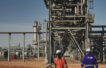
Photo courtesy of KIPIC
Read our latest insights on:
More content from Kuwait




Latest Reports


The Energy Year Oman 2026
The Energy Year Kuwait 2025
The Energy Year Angola 2025
The Energy Year Nigeria 2025
The Energy Year Saudi Arabia 2025
The Energy Year UAE 2025