

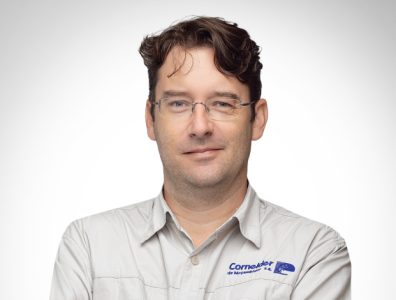
Modernisation for growth at the Port of Beira
August 22, 2024 Mozambique


Jan De Vries, CEO of Cornelder de Moçambique (CdM), talks to The Energy Year about strategic investments being carried out at the Port of Beira and the role of transport and logistics as drivers of Mozambique’s economic growth. CdM is the terminal operator of the Port of Beira in Mozambique.
How important is the Port of Beira for the region and Mozambique, given the country’s aim to position itself as a regional logistic hub?
The Port of Beira is a critical maritime facility for the region and plays a significant role in the country’s aim to become a regional logistics hub. Its importance is evident in several key areas. Strategically positioned on the Indian Ocean, the Port of Beira provides a crucial access point for landlocked countries in Southern Africa, including Zimbabwe, Zambia, Malawi and the Democratic Republic of the Congo, making it a pivotal gateway for regional trade.
The Beira Corridor, which includes road and rail links connecting the port to the hinterland, facilitates the efficient movement of goods to and from these landlocked countries, significantly reducing transportation costs and time compared to alternative routes. The port fosters regional economic integration by enabling smoother and more cost-effective trade flows between Southern African countries, essential for regional economic development and co-operation.
For Mozambique, the Port of Beira is a major asset for economic growth, driving the logistics and transport sector, creating jobs and generating revenue. It enhances the country’s trade balance by boosting exports and facilitating imports. Investments in port infrastructure, such as maintaining the access channel and upgrading facilities, improve its capacity and efficiency, benefiting Mozambique and attracting more regional and international trade.
Developing Beira as a regional logistics hub aligns with Mozambique’s national strategy to become a significant player in the regional and global supply chain, positioning the country as a critical node in international trade routes.
What are the advantages that Beira’s port and corridor can offer to the import and export markets?
The Beira Corridor provides a shorter and more direct route for goods moving to and from landlocked countries compared to other regional ports, translating to lower transportation costs and reduced transit times, making it an attractive option for traders. Continuous improvements in port infrastructure, such as warehousing facilities and modern handling equipment, enhance the port’s capacity and operational efficiency, supporting larger volumes of cargo and more efficient handling.
The port offers comprehensive services, streamlining the import and export process. By serving as a key transit point, Beira promotes regional trade facilitation, supporting regional economic integration efforts by providing reliable and efficient access to international markets.
The competitive pricing of services at the Port of Beira, combined with its strategic location and efficient operations, gives it an edge over other regional ports, attracting more shipping lines and trade volumes.
Can you outline the infrastructure and improvement projects you have in the pipeline to improve the port’s efficiency and capacity?
The planned infrastructure and improvement projects at the Port of Beira aim to significantly enhance its efficiency, capacity and operational capabilities, positioning the port as a competitive regional logistics hub. We are expanding our fleet to improve our capacity for handling maritime traffic and reducing ship turnaround times.
We are doubling the container terminal capacity to handle up to 700,000 teu, adding 100,000 square metres of paved area to the yard for increased storage space and implementing rubber-tyred gantry (RTG) cranes to double our stacking capacity.
Specifically for reefer containers, works are underway to double our plug points for import cargo and a new export reefer yard is being finished to ensure that we can receive more import and export volume. We have implemented a reefer monitoring system providing reliable and transparent information that will allow shipping lines and clients to monitor reefer temperature online.
Additionally, we are expanding the gate with five additional lanes to double gates and introducing in 2024 a new gate operating system called C-Gate 2.0 that was developed in-house and uses artificial intelligence to vastly increase gate processing speeds and avoid congestion.
Our quay capacity is being enhanced to accommodate 19 row-wide ship-to-shore (STS) cranes, allowing operations on vessels up to 10,000 teu. We are increasing the capacity of the general cargo terminal, developing a bulk fertiliser terminal with 70,000 tonnes of storage capacity and a discharge speed of 10,000 tonnes per day, and creating a 40,000-square-metre bulk minerals terminal with a 150,000-tonne storage capacity and bulk container system.
Future expansion plans include accessing the implementation of an additional quay, adding 600 metres of additional piers and 300,000 square metres of terminal area designed by Royal HaskoningDHV, and constructing a multi-purpose quay capable of accommodating STS gantry cranes.
What benefits will the new cranes bring to operations?
These infrastructure and improvement projects offer several advantages to the import and export markets. Expanding terminal and yard capacities will allow us to handle a higher volume of cargo, meeting the growing demands of regional and international trade.
Upgrading to RTG cranes and expanding gate lanes will streamline operations, reducing congestion and improving the overall efficiency of cargo handling and processing. Enhancements in quay capacity and the addition of advanced STS cranes will enable us to accommodate larger vessels and expedite loading and unloading processes, reducing turnaround times for ships.
The development of specialised bulk fertiliser and minerals terminals will cater to specific cargo types, providing tailored handling and storage solutions and enhancing our ability to manage diverse cargo efficiently.
The comprehensive expansion plans, including the construction of additional quays, will future-proof the port by providing the infrastructure needed to handle anticipated increases in trade volumes and larger vessels. Improved port infrastructure and efficiency will attract more trade, boosting economic growth in Mozambique and the region. Our enhanced capabilities will support industries, create jobs, and generate revenue.
What are the main products being handled at the port and the latest capacity figures?
The port has been steadily increasing volumes over the past 25 years with record volumes being recorded in 2023. The container terminal saw a 27% increase from the previous year handling a total of 327,000 teu and 3,500,000 tonnes of cargo, representing a 6% increase in volumes.
The main commodities being imported through the Port of Beira are manufactured goods, equipment, trucks and project cargo, in addition to fertiliser, rice, maize, wheat, sulphur and clinker. Exports are mainly agricultural and mineral products such as tobacco, chrome, granite, lithium, copper and cobalt.
How important is the government’s USD 290-million investment for the port and what main improvements will be made?
CdM has a continuous growth plan, and investments will be gradually implemented over the next 15 years. They will focus on developing systems to monitor and control operations as well as the flow of traffic within the port facilities, in addition to the continuous upgrading of equipment and infrastructures.
What eco-friendly initiatives is CdM implementing to reduce the Port of Beira’s environmental footprint?
The recent introduction of electric forklifts highlights our commitment to environmental responsibility at CdM. In addition to this initiative, we are implementing several other eco-friendly measures to reduce the port’s environmental footprint and replacing traditional lighting with energy-efficient LED lights throughout the terminal and yard areas to lower energy consumption and maintenance costs.
We have implemented comprehensive recycling programs for paper, plastics and other materials, and established protocols for proper handling and disposal of hazardous materials to prevent environmental contamination. For water conservation and pollution control, we are installing water recycling systems to treat and reuse water used in port operations, reducing our freshwater consumption and minimising wastewater discharge.
The electric forklifts serve as a pilot project for a broader electrification drive. In 2025, the first terminal tractors and larger forklifts will go electric, and we are upgrading the electric infrastructure in the port so that the upcoming RTGs can be electric models that will have a drastically lower carbon footprint than the current reach stackers.
What are some of CdM’s social responsibility initiatives and their impact on the Beira community?
We collaborate extensively with local governments and other stakeholders on various social responsibility initiatives that significantly benefit the Beira community. In education, we renovate and build schools, providing learning materials and supporting vocational training programs, all aimed at increasing access to quality education and improving youth employability.
CdM collaborates with various universities and institutes and receives on average 100 interns per year in various departments within the company. The students are given an opportunity to implement theories on a practical level. Internships last from three months to one year. In addition to preparing students for work, internships help us create a database to fill potential vacancies within the company.
Our internship programs, in partnership with universities, are designed to democratise access to technological and professional knowledge. We equip individuals for the job market and foster the creation of innovative solutions by offering practical education and training.
We empower participants with digital and professional skills, help reduce social and economic inequalities and promote engagement and collaboration among students, universities, and companies. This internship program also allows us to continue our drive to incorporate technology developed in-house into the operations.
Can you provide some examples of past events that CdM has spearheaded?
Last year we held the Cornelder CodeLabs program where 60 young programmers competed in groups in a challenge based on logistics business cases. From these participants, the 10 best were selected and tasked as interns with designing and developing a participant management application for the 6th edition of the Beira City Run.
The City Run has just been held and it was a great success. Using the application, 3,750 participants were registered efficiently and the distribution of running kits, lunches and water was managed via QR codes controlled by the application.
The event brings together the city and the port community and promotes health through the incorporated fair, where all participants and spectators can get free medical tests and health advice. In addition, there are a few events that are developed specifically for the youth, namely basketball tournaments for local and primary students, and writing and arts competitions for children, that are essential for building a more just and inclusive society.
Overall, these activities not only promote wellbeing and inclusion but also prepare individuals to face future challenges with essential skills. We reinforce our commitment to the community and improve our relationships with various stakeholders. By promoting and participating in these initiatives, we invest in the future, creating a more equitable, healthy and prosperous environment.
In healthcare, CdM donates medical supplies and equipment to local facilities and sponsors health campaigns on critical issues like HIV and AIDS. In times of crisis, CdM is ready to help where it can. During Covid-19, it transformed an abandoned building into one of Beira’s main treatment centres, equipped with oxygen installations and ventilators.
When Cyclone Idai hit Beira, CdM brought its port generators to the water utility company to provide power for clean water when all lines were cut and a cholera outbreak due to lack of clean water was imminent. CdM is committed not only to keeping its bond with the surrounding community but also to making it stronger every year.
Read our latest insights on:
-
Project highlight: Mozambique LNG
PROJECT HIGHLIGHT -
-
Project highlight: Mozambique’s Central Térmica de Temane
PROJECT HIGHLIGHT
More content from Mozambique

Latest Reports


The Energy Year Oman 2026
The Energy Year Kuwait 2025
The Energy Year Angola 2025
The Energy Year Nigeria 2025
The Energy Year Saudi Arabia 2025
The Energy Year UAE 2025