
Mozambique at the heart of international energy demand
August 20, 2024 Mozambique


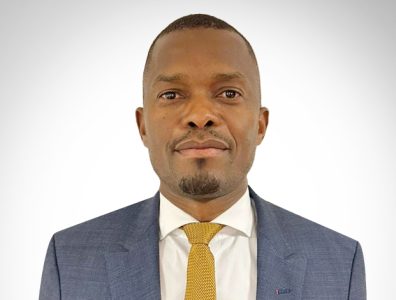
Nazário Joel Bangalane, chairman of the National Petroleum Institute (INP), talks to The Energy Year about launching new bidding rounds for exploration projects in Mozambique and promoting carbon capture technologies in the oil and gas sector. INP is the regulatory authority responsible for the management of Mozambique's petroleum resources and the administration of petroleum operations in the country.
How would you describe INP’s role in the development of Mozambique’s petroleum resources?
INP, whilst promoting responsible petroleum exploration and production activities, enforces a combined set of conventions and legislative and administrative measures to be observed by industry operators. It is highly committed to remain a driving force behind the enactment of legislation and regulation that is favourable for investment in exploration.
This is particularly true in these particular times, characterised by trending issues that the world is currently debating, such as energy transition. Our objective is to set up a conducive environment for the sustainable development of petroleum operations to the benefit of the Mozambican people, companies, the region and the world.
I would say that our role is quite challenging in the sense that we are aware of the legitimate expectations of Mozambicans who would like to see this industry’s contribution to the economic development of the country. They are right, as the potential for the transformation of other industries through this particular one is enormous, especially the agricultural sector.
Why is Mozambique attractive to oil and gas investors, and what opportunities does the country present to them?
The determination and willingness of the Mozambican government to establish Mozambique as a regional energy hub due to its abundant resources and substantial gas discoveries make the country very attractive for investment. All the measures that were subsequently taken took that into consideration. Importantly, transparent and predictable petroleum legislation and regulations were enacted together with the adoption of international petroleum industry best practices.
Undisputedly, this is complimented by the country’s strategic geographic location which facilitates the distribution and supply of natural gas in the form of LNG, CNG or via pipeline to various markets, including neighbouring nations.
We have examples to share that confirm that Mozambique is an attractive investment destination. In May 2024 alone, five exploration and production concession contracts were signed, and we anticipate more for the remainder of the year. Sasol’s investment in production since 2004 and current exports of natural gas to South Africa cannot go unnoticed.
Recent progress also includes the commencement of production from the Coral Sul FLNG vessel in Area 4 in late 2022. Apart from that, three major gas production projects in the Rovuma Basin are expected to yield approximately 30 million tpy of LNG. These projects will serve as a crucial gas supply anchor for the domestic and international markets.
Are there any other sectors you would highlight for potential investment?
There are many options for investors to establish, for example, GTL projects that would reduce Mozambique’s dependence on imported petroleum products and at the same time create export opportunities.
In the base chemical sector, we can talk of ammonia and urea, which are paramount to the government’s efforts and strategy for the development of agriculture and agribusiness. Greater production would result in the reduction of fertiliser imports, while at the same time contributing to satisfying our neighbours’ fertiliser needs. There are also opportunities in power generation to improve industrialisation and rural electrification.
Have your studies found potential for additional discoveries in the country?
Our geology suggests significant undiscovered reserves, and we will continue launching bidding rounds to ensure that companies keep coming to Mozambique to invest in exploration.
Can you comment on the capabilities and track record of the companies that were awarded licences in the latest round?
We seek the most qualified partners for our natural gas projects and have a successful track record working with major companies such as Eni, ExxonMobil and TotalEnergies. The most recent arrival is CNOOC, a Chinese company that was awarded a licence in Area 4.
Our rigorous selection process evaluates experience, technical expertise, financial strength and commitment to environmental responsibility. The criteria are based on the applicable laws and regulations. From the evidence provided, CNOOC possesses the capabilities to ensure the successful development of the activities they have committed to and are also obliged to undertake.
What do you expect from future concession rounds?
Following the six areas awarded in the most recent bidding rounds, 10 promising blocks remain unclaimed and INP is open to proposals. In exceptional cases, the legislation allows for direct or simultaneous negotiation, a flexibility that helps us attract investment under the best conditions for the long-term development of our natural gas reserves. We are currently in discussions with several interested companies and expect to award additional exploration licences shortly.
How is the situation in Cabo Delgado affecting the oil and gas sector?
We always feel honoured whenever there is an opportunity to express our gratitude to the defence and security forces for their total and unconditional dedication to the pursuit of their noble mission of defending our sovereignty. Our gratitude is also extended to the nations that joined the efforts of our defence and security forces.
We are confident that Cabo Delgado will continue to be an attractive investment destination. It is the government’s top priority to create an environment that is attractive and also capable of retaining investments. In this regard, we can assure that it is safe to direct investments to Cabo Delgado.
What is the level of engagement of domestic companies in exploration and production activities and how do you expect local capabilities to evolve?
Our own national oil company, ENH, is present in every block and all phases of petroleum operations as the state’s sole representative. Their progress shows that in the coming years, we will be proud to witness it become an operator. They are working on their capacities and the government is giving them all the support they require.
As far as local participation in the oil and gas sector, INP is actively promoting local content. The new guidelines recently approved by the government are of great help in directing the sector’s efforts. One of the principal challenges is to prepare domestic companies to carry out the full range of activities that the market requires.
We are taking steps to make sure that they get certification through dedicated programmes, while IOCs and other international companies in the sector are contributing by providing training to their employees. It is an ongoing process and we see a lot of progress being made.
What role can natural gas play in the domestic and global energy transition?
Mozambique has reiterated its commitment and full engagement in the global agenda to mitigate global warming, not only by adhering to international mechanisms but above all by adopting concrete and immediate measures.
It was pursuant to this that the government chose natural gas for the energy transition, given that it is a clean and environmentally friendly energy source. Even though we are facing this shift, we are confident that the world will still need natural gas as the contribution of renewables will not be enough to satisfy overall demand.
When considering the award of concessions, we seek to incorporate technologies that minimise emissions and help to produce natural gas without impacting the environment. We have CCUS projects under discussion and other means of cleaner production. We are also looking into the production of hydrogen through natural gas, and all is being done responsibly to avoid compromising the country’s socio-economic development.
Read our latest insights on:
-

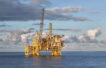
Project highlight: Mozambique LNG
PROJECT HIGHLIGHT -
-

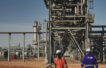
Project highlight: Mozambique’s Central Térmica de Temane
PROJECT HIGHLIGHT
More content from Mozambique

Latest Reports


The Energy Year Oman 2026
The Energy Year Kuwait 2025
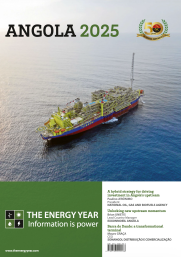
The Energy Year Angola 2025
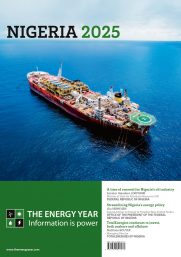
The Energy Year Nigeria 2025
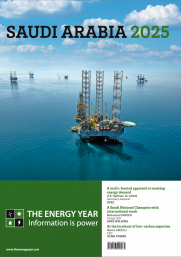
The Energy Year Saudi Arabia 2025
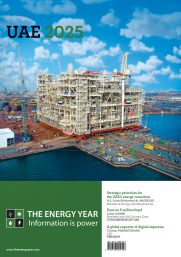
The Energy Year UAE 2025