
Namibia: Africa’s latest upstream frontier
May 12, 2025 Namibia


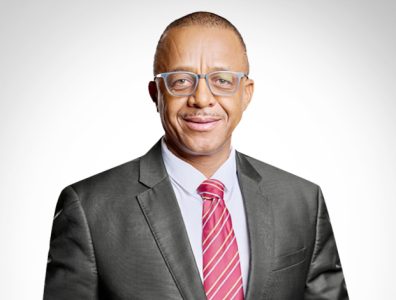
Ebson Uanguta, interim managing director of Namcor, talks to The Energy Year about the company’s current upstream developments, its collaboration with Sonangol and Petrobras, how it is leveraging deepwater technologies and how small companies are contributing to Namibia’s upstream. Namcor is the national oil company of Namibia.
What are Namcor’s most active upstream developments today?
Over the past 18 months, our focus has been primarily on the upstream, even as we also reformed parts of the downstream sector. Namcor holds working interests in several blocks with major IOCs, such as Shell, TotalEnergies, Chevron, Galp, Azule Energy and Rhino Resources. These partnerships are pivotal, as Namibia remains in an exploratory phase but with increasingly promising signs.
We currently have three major discoveries in play. The first is in PEL39 with Shell and QatarEnergy. This is still being assessed as we determine the most viable development approach. While it presents challenges, it has not been written off.
PEL56, operated by TotalEnergies, is another exciting prospect. All technical indicators suggest a positive outcome, and we anticipate the FID by Q4 2025 or Q1 2026. Then there is PEL83 with Galp, where both oil and gas discoveries are under appraisal. Discussions are ongoing about a possible early production facility, which could enable first production within three years.
Namcor plays an active role in all of these ventures, not as a passive participant but as a knowledge partner. Our geoscientists are deeply engaged in assessments and drill planning. This local geological expertise, combined with international collaboration, has significantly contributed to the string of recent successful wells.
Do you collaborate with other NOCs?
Yes, we do. We’re currently in discussions with Sonangol and exploring joint transactions. While we don’t have a direct partnership with Petrobras, we’ve worked with them indirectly through operators. We’re eager for Petrobras to enter the Namibian market due to their extensive deepwater expertise.
Namibia is now an emerging frontier, and we encourage participation from other NOCs. Their presence would boost knowledge exchange and bring critical technology to bear on our development efforts.
No player succeeds in this sector in isolation. Collaboration forms the backbone of oil and gas development, especially for emerging producers such as Namibia. As a latecomer, we have the rare opportunity to learn from others’ successes and to avoid their mistakes. With more than a century of global experience to draw on, and active engagement with both IOCs and NOCs, we can build a robust sector with fewer missteps.
Is Namibia able to leverage modern deepwater technologies?
Technological evolution now allows exploration at depths beyond 3,000 metres, something previously unthinkable. This is exactly the kind of frontier where Namibia operates.
Thanks to advances in seismic imaging, drilling technologies and production solutions, we can now explore and eventually produce from these challenging environments, and we’re seeing that, with nearly every second or third well drilled, significant hydrocarbons are being discovered.
Are smaller upstream players such as Rhino Resources contributing meaningfully to the sector?
Definitely. The oil and gas sector needs a range of operator types. While IOCs bring resources and scale, smaller players such as Rhino and Azule Energy often bring speed and agility. They make faster decisions, respond quickly to operational needs and execute projects efficiently.
We’ve seen that efficiency translates into tangible progress on key projects. Success here isn’t just about size; it’s about having the right expertise, technology and understanding of Namibian geology. There’s plenty of room in this market for operators of all sizes.
Is Namibia open to new upstream entrants?
Very much so. While discoveries in the Orange Basin have drawn the most attention, we also see great potential in the Walvis, Lüderitz and Namibe basins. The Orange Basin’s geology extends into these lesser-explored areas, offering substantial upside.
Namcor invites companies – large, medium and small – to explore with us. We are a willing partner, ready to collaborate and support new entrants as they contribute to expanding Namibia’s oil and gas frontier.
How is Namcor linking its upstream discoveries to downstream development?
Our downstream strategy is increasingly tied to our upstream activities. Many of Namibia’s discoveries involve light crude with high gas-to-oil ratios. That presents a perfect opportunity to pursue gas monetisation strategies.
We’re currently developing a gas monetisation plan aimed at converting upstream gas into power. This could significantly reduce Southern Africa’s power deficit, particularly in South Africa. We envision a vertically integrated strategy that transforms upstream resources into regional energy security.
Our gas monetisation approach includes both gas-to-power and LNG opportunities. With rising LNG demand globally, Namibia is well positioned to become a key supplier. These are critical components of our energy transition and regional economic contribution.
What is your message to service providers in the region?
We are already working with top-tier service providers such as SLB and Halliburton in the areas of software, data analysis and 3D seismic assessment. Our message to others, particularly those in Angola and across Africa, is simple: Now is the time to enter the Namibian market.
Hydrocarbons are being discovered in almost every second or third well. We are just scratching the surface. This is the ground floor of Namibia’s energy future. The earlier you enter, the more you benefit commercially and the more you are able to shape the sector’s evolution.
Where do you want Namcor to be in 10-15 years?
I envision Namcor becoming a major integrated energy company, not just in oil and gas but across the full energy spectrum, including green energy.
We want to be recognised beyond Namibia’s borders and build internal competencies for operatorship. That means learning from all partners, large and small, and gradually assuming greater operational responsibility.
Our aim is to develop the capability to lead or co-lead offshore operations while maintaining collaborative partnerships. Namcor’s future lies in becoming a regional energy leader rooted in global expertise.
Read our latest insights on:
More content from Namibia




Latest Reports


The Energy Year Oman 2026
The Energy Year Kuwait 2025
The Energy Year Angola 2025
The Energy Year Nigeria 2025
The Energy Year Saudi Arabia 2025
The Energy Year UAE 2025