
New developments in Mozambican renewables laws
September 2, 2024 Mozambique


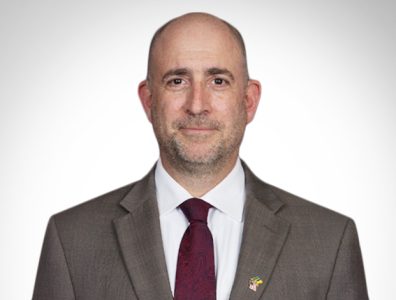
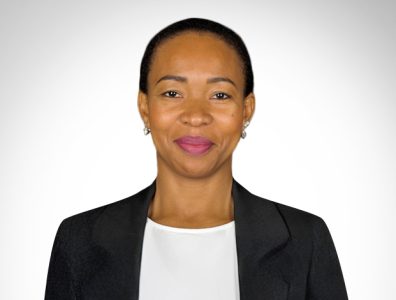
Samuel Levy, founding and senior partner of SAL & Caldeira Advogados, and Kaina Mussagy Arentsen, senior manager, talk to The Energy Year about the evolution of local content laws in Mozambique and how renewables projects are benefitting from a streamlined concession regime. SAL & Caldeira Advogados is a full-service Mozambican law firm specialising in natural resources.
What is your assessment of Mozambique’s local content laws?
Samuel LEVY: At SAL & Caldeira Advogados, we’re closely following the development of local content laws and, while nothing material has been passed, we have seen drafts and participated in discussions with the government and stakeholders.
The oil and gas sector does have specific rules and there are local content provisions under the specific legal framework for the Rovuma Basin. The challenge is consolidating what already exists with the general framework that might be approved.
Kaina MUSSAGY ARENTSEN: As far as the Rovuma Basin is concerned, the local content questions are settled and laws that come subsequently that contradict the Rovuma Basin rules will not be enforceable in the Rovuma Basin.
We look at local content from the point of view of a firm that is based in Mozambique, dealing with Mozambique’s reality, but defending the interests of our foreign investment clients. They generally like to preserve as much flexibility as possible. Accordingly, we encourage them to demonstrate how they are adding value and, over the years, many have made very substantial efforts to ensure there are opportunities for local entrepreneurs and training for local professionals.
Do you find that the laws accommodate the sector’s needs?
SL: Currently, the legal framework has the main aspects necessary to move projects forward. In the context of Mega-Projects Law, also called the PPP Law, politics can play a disproportionately large role. Other than that, with assistance, investors can navigate smoothly through the projects.
Regarding concessions and licensing in the oil and gas sector, there have been bidding rounds where the government’s progress has been relatively quick, and others where the bids have languished. It depends on the particular round and what the government is trying to achieve. The focus is still very much on Rovuma Basin and its development. It’s so big that it almost overshadows other exploration plays.
KMA: The model here, at least in the oil and gas space, is what you would expect to see in countries that follow the principles of the Association of International Petroleum Negotiators. The government is sophisticated and knows its role, and it is comfortable working in English and Portuguese.
How do you frame your collaboration with the government when working on legal reform?
KMA: In an example from the oil and gas sector, we helped found an organisation called AMOPI, which is the Mozambican Association of International Petroleum Operators. It’s for operators, not stakeholders per se. We organised them many years ago and we serve as the secretariat. The government likes this because it gives a single, organised voice to the oil and gas sector in matters of legal reform. When they have questions, we canvass our members and represent their voices. When we work with the government, it’s from the consolidated perspective of the private sector.
SL: Our goal is the development and smooth progress of projects, the same as investors and the government, though of course there are different perspectives on how to achieve those goals. So far, the government has been supportive towards energy projects. They want to make sure that the country benefits directly, especially the local communities around the site where those projects take place.
What improvements have arisen from the government’s USD 80 billion energy transition plan?
KMA: New regulations for mini-grids have been approved that come with specific rules for renewable projects, which are more flexible than those that were provided under the Electricity Law. They improve the process from a cost and timing perspective.
Concession requests, say from a mining operation that requires additional power, can now be submitted directly to the government and the negotiation process is more streamlined. In addition, there’s more room to negotiate the prices at which electricity is sold to our utility company, which is a boon to renewables projects.
How does the firm undertake any pro bono work and what are some recent examples?
SL: Our pro bono engagements have grown significantly in recent years, with most of our work recently having been on gender equality. Especially outside of Mozambique’s main cities, women are often treated unfairly in the workplace and other contexts. We have conducted forensic investigations into the mistreatment of women employees and women beneficiaries of NGO programmes, and we have been involved in educating and building awareness around the legal standards in Mozambique regarding the treatment of people of different genders.
Read our latest insights on:
-

Project highlight: Mozambique LNG
PROJECT HIGHLIGHT -

-

Project highlight: Mozambique’s Central Térmica de Temane
PROJECT HIGHLIGHT
More content from Mozambique



Latest Reports


The Energy Year Oman 2026
The Energy Year Kuwait 2025
The Energy Year Angola 2025
The Energy Year Nigeria 2025
The Energy Year Saudi Arabia 2025
The Energy Year UAE 2025