
New green energy for the Angolan market
August 14, 2024 Angola


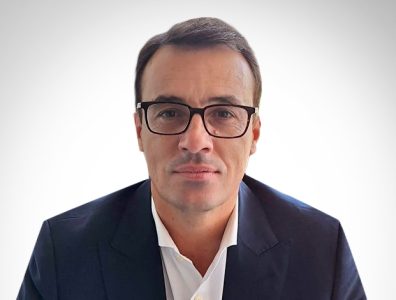
Jorge Salvador Nunes, executive director and co-founder of Greentech, talks to The Energy Year about the evolution of the company’s business model, the segments it is targeting and its involvement with the Quilemba project. Greentech is an Angolan company developing projects in energy and in environmental technologies.
Can you walk us through Greentech’s evolution of its business model and the key market segments it is targeting at the moment?
Greentech started as a strategic advisory firm. Then we decided to participate in equity on the projects. Thus, we revised our business model, adopting one which could combine both approaches: being directly involved in the projects while also having strategic partners we could work with to develop them. Now, one of our objectives is to identify more projects where we can have our equity ownership stake.
Currently Quilemba Solar and a mining project are our top priorities where we are concentrating all our effort and focus. We also started looking into a green hydrogen/e-methanol initiative, but this will take more time. Green hydrogen projects require a significant amount of energy and many megawatts from renewables, and we are dealing with some industrial players on that front to provide the needed capacity.
All our efforts reflect and are oriented towards what, in my opinion, should be the strategy for the country: increase the country’s electrification rate and work to enable high electricity consumption among large industrial players.
Could you provide us with some updates regarding your Quilemba project and how important this undertaking is for Greentech?
The Quilemba project, for which we have a 19% minority share, is divided into two phases: phase I features a 35-MW capacity, and phase II will feature an additional 45 MW. We are about to kick off construction in phase I, and our aim is to start deploying energy in 2025, whereafter we will proceed with phase II development..
We had challenges in the development phase of the project. From a regulatory point of view, for instance, tariffs are not easy to manage, and the one we are deploying is very competitive. A key point is to find the right equilibrium to make the project as predictable as possible so that it is ready to face and absorb any tariff fluctuations in the market, which takes time.
Then, considering that our project is very close to Lubango, another setback which delayed the development process was the environmental assessment, which defined what steps needed to be taken to resettle the people that were living on the site.
Nonetheless, Quilemba is a very important project for us because we have developed it from the very beginning, and it represents a launching pad for future projects, as it has helped us grow and learn more about efficiently managing the development process, both in terms of quality and cost. We want to take advantage of the experience and know-how we gained and replicate what we are doing in Quilemba for our future undertakings.
What do you think are the fundamental conditions needed to make Angola’s electricity framework more competitive?
In Angola there is spare capacity since there is more energy than we need, which means we need to build transmission lines to channel that power and cover the whole territory. To have a competitive electricity system, it is important to have the highest possible electrification access rates, and the government is working on that.
It is also paramount to attract large industrial customers to Angola because that is the best way to drive economic development and to have a framework where everybody wins. If we cannot have these players on board, we will rely only on domestic consumption, and that is not what we should aim for.
What are the main challenges slowing down the development of renewables initiatives?
In Angola we are still at the initial phase of developing solar PV projects under private models, and it is reasonable that the first ones will take more time than those that follow. If the country manages to have large customers coming here, these projects will be more bankable, considering that financing them is still one of the key challenges in the country.
Since the last time we talked, the situation has not changed much, and we keep demanding better conditions for accessing financing. At Quilemba, for example, we are partnering with two big companies, TotalEnergies and Sonangol, which give value and credibility to the project. However, since we want to be involved in more projects, it is essential to have the right financing solutions for local Angolan companies such as Greentech.
To improve investing schemes in private-based models, first there is the need for people to understand what a private project really is because sometimes there is confusion over what is public investment and what is private investment. Second, the private sector needs to realise what it is not doing right instead of blaming the public sector for not providing optimal conditions. In my view, both sectors have to cooperate and manage the associated risks to successfully deliver high impact projects.
How do you see the relationship between oil and gas businesses and renewables companies such as Greentech?
In my opinion, it is a perfect match because oil and gas companies today are becoming multi-energy companies. Oil and gas is the most competitive sector in the country and the one that generates the highest revenues. Angola needs to find out how to align this knowledge, expertise and capital in hydrocarbons with the global energy transition and push domestic players to undergo more green projects in an increasingly competitive global renewables market.
For a successful transition, the synergy between renewables and oil and gas is crucial. Greentech is here to facilitate this process, working side by side with players such as TotalEnergies and Sonangol, which have great relevance in the oil and gas sector and which want to deploy an increasing number of megawatts in the country. Our objective is to be agile and selective in identifying the projects that can help the country move forward along the transition path.
What are the key goals you have set for 2024, and where do you see Greentech in five years?
First, we want to complete the Quilemba project under a competitive financing model. Second, we seek to remain very committed to the mining project that we are supporting, and this is right now a top priority for us alongside the Quilemba project. Third, we aim to launch a green hydrogene-methanol initiative that for now I can’t give more details on. Finally, we want to consolidate our business model as equity participants while maintaining our strategic advisory services for specific areas and partners.
In the future, I want to see Greentech bringing projects to the table which are not yet on the market. We want to position ourselves as leaders of this approach. Our goal is to be involved in the initial stage of larger projects that will position Angola in the global energy transition. In five years, I see us as one of the key players dealing with these projects in Angola.
Read our latest insights on:
-

-

Quality acquisitions over acreage
INTERVIEW -

More content from Angola


Latest Reports


The Energy Year Oman 2026
The Energy Year Kuwait 2025
The Energy Year Angola 2025
The Energy Year Nigeria 2025
The Energy Year Saudi Arabia 2025
The Energy Year UAE 2025