
Oman’s champion of energy infrastructure
January 5, 2026 Oman
Oman 


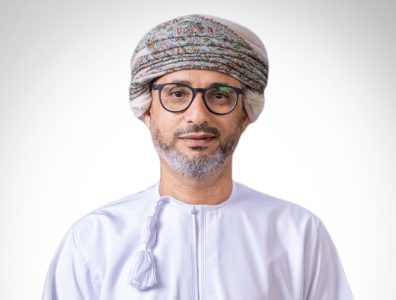
Mansoor Ali Al Abdali, CEO of OQ Gas Networks (OQGN), talks to The Energy Year about the role the company plays in Oman’s energy ecosystem, its plans to increase its transmission capacity and how the industrial zones influence its network development. OQGN is the owner and operator of Oman’s gas transmission network.
What role does OQ Gas Networks play in Oman’s energy ecosystem?
OQGN is the backbone of Oman’s energy system. We connect upstream oil and gas producers to downstream consumers such as power plants, petrochemical complexes, desalination facilities and other industries. That gives us a vital role in enabling and supporting Oman’s economy. Without OQGN’s network, even oil and gas production would be affected.
We own and operate more than 4,200 kilometres of high-pressure gas pipelines and manage gas distribution in key industrial sites, such as those operated by Madayn. We also support OPAZ [Public Authority for Special Economic Zones and Free Zones] in the development of strategic zones such as Duqm, which is becoming a major industrial hub.
Oman has long served as a stable and neutral trade partner in the region, and our infrastructure enables that legacy to continue. In 2024, we transported 43 bcm (1.52 tcf) of gas at a reliability rate of more than 99.99%.
What are your plans to increase capacity and volumes?
We’re currently operating at a system capacity of 70.5 bcm (2.5 tcf) and are planning to expand that to 79.7 bcm [2.82] by 2027. Growth is driven mainly by rising domestic demand and co-ordinated through IGC Oman, the national gas shipper.
To support rising demand in Sohar, including for TotalEnergies’ LNG bunkering project under Marsa LNG, we’ve started constructing a 193-kilometre, 42-inch pipeline. Duqm is also seeing continued growth, which we are integrating into our long-term planning.
How do these industrial zones influence your network development?
We provide a common-use infrastructure, which we operate on a seven-year planning horizon to anticipate demand from Oman’s industrial strategy. We work with the gas shippers in planning for network growth.
For example, we recently commissioned a 32-inch pipeline to Salalah, and more than 60% of its capacity is already booked. We can do this due to our planning, stakeholder engagement and involvement with policy makers. We are creating a multi-shipping environment where any industrial customer or shipper can connect directly to our network, avoiding unnecessary steps and enhancing efficiency.
How is OQGN contributing to developing Oman’s hydrogen infrastructure?
At OQGN, we aim to replicate our natural-gas common-use network model for hydrogen infrastructure. We were the first to sign an MoU with Hydrom, giving developers the option to use our hydrogen pipeline rather than build their own, enhancing the market competitiveness of Oman’s hydrogen.
For these efforts, we’ve been recognised by the MEM [Ministry of Energy and Minerals] as the national hydrogen champion and are now a part of a government steering committee leading the studies, design and commercial modelling for the hydrogen common-use infrastructure for Duqm and Salalah.
Since Oman’s gas demand is still growing, we’re planning to build a dedicated hydrogen network instead of repurposing existing gas infrastructure as was done in Europe. Repurposing might happen later, but not during this initial buildout.
We’re currently forecasting around 200 kilometres of pipeline in Duqm and a likely longer extension in Salalah. We’re also currently building the Fahud to Sohar loop line, which will be around 193 kilometres long. The total investment of these expansions could be close to USD 1 billion, although we haven’t made an FID yet.
What determines when you’ll take an FID on the hydrogen network?
Our FID depends on the hydrogen developers reaching their own FIDs. The government has awarded five concessions in Duqm, but we need clarity on which will proceed. To prepare, we’ve partnered with both financial and technical entities. During our IPO in 2023, we brought in investors, such as PIF [the Public Investment Fund] and QIA [Qatar Investment Authority], and selected Fluxys as our technical partner and anchor investor.
In May 2025, we signed a strategic collaboration agreement with Fluxys on hydrogen network development to leverage their know-how in potentially securing a route to the European market for Oman’s hydrogen. We’ve also signed an MoU with Gasunie to continue exploring the development of this European-Omani hydrogen link.
How did your IPO impact OQGN’s appeal among investors?
The IPO significantly raised our visibility and attractiveness in the eyes of both international and local investors. In fact, our share price has remained above the OMR 140 [USD 362.90] offer level and recently reached OMR 160 [USD 414.75]. We’re compliant with Rule 144A of the US Securities Act, so North American investors can participate.
The MSX [Muscat Securities Market] views OQGN as pivotal to its transition towards becoming an emerging market hub. We now have more than 70,000 shareholders, and international demand remains high.
What’s OQGN’s approach to localisation and in-country value (ICV)?
ICV is embedded in our DNA. We’ve achieved 95% Omanisation, and in 2024, we committed around OMR 25 million [USD 64.8 million] to ICV initiatives. Every contract we issue includes ICV targets. Many of our EPC contractors are local. While line pipes are imported, we ensure logistics and services involve local SMEs. These policies support Oman Vision 2040 and contribute to Oman’s broader economic diversification goals.
What is your long-term strategy for growth and regional expansion?
We revised our strategy earlier this year to take advantage of the government’s decarbonisation and net-zero ambitions, structuring it around three pillars: the commodities we transport, our national footprint and the specialised services we offer.
Regarding the first pillar, we are looking for joint ventures for carbon transportation with upstream and power-generation companies. For instance, we are talking to Sohar Industrial City to build a 200-kilometre carbon dioxide pipeline for CCUS, aiding their decarbonisation objectives.
Secondly, we’re studying regional expansion across the GCC and markets where our model could be replicated.
Finally, we also aim to develop new service offerings, such as storage services to secure the gas supply or even gas distribution in cities.
While staying true to our low-risk profile, we see OQGN evolving into the national champion of energy infrastructure – both in Oman and beyond.
Read our latest insights on:
More content from Oman



Latest Reports


The Energy Year Oman 2026
The Energy Year Kuwait 2025
The Energy Year Angola 2025
The Energy Year Nigeria 2025
The Energy Year Saudi Arabia 2025
The Energy Year UAE 2025