
Oman’s green hydrogen developments accelerate
July 14, 2025 Oman
Oman 


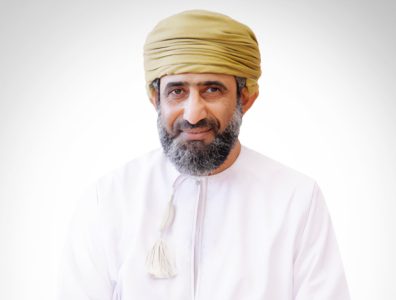
Abdulaziz Al Shidhani, managing director of Hydrom, talks to The Energy Year about how the company is supporting Oman’s green hydrogen ecosystem with its third bid round. Energy Development Oman-owned Hydrom was launched in 2022 to orchestrate, structure and accelerate the development of the green hydrogen sector in Oman.
What are Hydrom’s current priorities, and how has its role evolved since the early green-hydrogen auction rounds?
After closing Round One and Round Two of the green-hydrogen block bid rounds, we stepped back to reassess Hydrom’s broader purpose of orchestrating the development of the nascent green hydrogen sector, guided by His Majesty’s royal directives.
We defined the hydrogen ecosystem around six pillars: policies, regulations, supply chain, demand, infrastructure and capacity building. With these in mind, we mapped active players and refined Hydrom’s role into four core areas: advising, leading, coordinating and incubating.
We advise the government on policies and regulations to support a robust and investment friendly framework. We lead auction processes and manage contracts. In parallel, we also serve as custodians of the Green Hydrogen Strategy, overseeing land master planning and the sector’s long-term vision. Once projects are awarded, developers take the lead on execution while we ensure coordination, especially for shared infrastructure.
To do that, we work closely with “National Champions,” key public and private entities entrusted with specific responsibilities across the hydrogen value chain.
OQ Alternative Energy leads investment. Nama Water Services oversees water and power. OQ Gas Network is responsible for gas transport. Oman Electricity Transmission Company manages power transmission. Most recently, Oman Tank Terminal Company was named national champion for central green ammonia storage.
Our mandate is not to operate across the entire value chain but to empower and coordinate. Where clear ownership was initially lacking – as we saw in infrastructure or domestic hydrogen use – we incubated those efforts, shaped the concepts and transitioned them to the most suitable players. That same strategy now drives our phased approach to project development.
How is Round Three different from the first two, and what are its strategic goals?
After Round Two, we paused for 12 months before launching Round Three, using that time for market research and a strategic recalibration. The global context had shifted, with political transitions and delayed national policy updates in major markets such as Germany and Japan. Consequently, we designed Round Three with more flexibility and responsiveness to market needs.
We offered a 300-square-kilometre block where bidders can propose developing a third, two-thirds or the entire area, depending on their capabilities. We can award the land to one, two or three developers.
Strategically, the message is that Oman is committed yet agile. We’re introducing new mechanisms, including a double-sided auction with a contract-for-difference model and a downstream auction aimed at domestic industry.
These initiatives encourage local hydrogen use by bridging the price gap between suppliers and buyers. We’re also allowing phased project development. Instead of delivering the full 50,000 tonnes per year within seven years, developers can begin smaller and scale up.
Additional incentives, yet to be announced, will reward developers that achieve specific milestones. Importantly, only 4% of Oman’s 50,000-square-kilometre potential has been allocated so far. We’re serious about scaling but balanced about risk.
How does Oman stand out compared to other hydrogen leaders in the region?
We focus on clarity, speed and simplicity. From submission to award, our auction process takes just three to four months, including negotiations. That pace keeps investor interest high. Oman also offers some of the world’s best renewable resources – year-round sun, 24-hour wind, low population density and proximity to ports. Add 50 years of political stability and consistent policy, and you have a solid investment climate.
We’ve also built experience. Through rounds One to Three, we’ve established a transparent framework. Oman has collaborated with major oil and gas players for over four decades. We’re familiar with tough negotiations, contract boundaries and long-term partnerships. This maturity builds trust – a hidden asset many overlook.
What are the main hurdles for hydrogen-project bankability today?
The biggest challenge is linking supply and demand in the offtake market. We’re addressing this through government-to-government agreements with Japan, South Korea, Germany, the Netherlands, Belgium and Singapore. These are not just MoUs. We conduct workshops, run joint studies and have launched the world’s first liquid-hydrogen corridor with partners from Germany and the Netherlands.
Domestically, we’re exploring downstream use and building support tools such as the double-sided auction model. These aim to make green hydrogen viable for local industries without compromising competitiveness. We’re not waiting for perfect conditions. Instead, we’re pushing forwards with real engagements and infrastructure planning.
What role does technology localisation play in Hydrom’s strategy?
Technology localisation is fundamental to our strategy. We’ve signed MoUs with electrolyser manufacturers, including Siemens Energy and ThyssenKrupp Nucera. These partnerships support industrial ambitions, including polysilicon production, solar-panel and wind-turbine manufacturing. Sohar is set to host solar-panel production; Duqm will see wind-turbine assembly.
To reach our 2030 targets, Oman requires approximately 40 million solar panels and up to 3,000 wind turbines, nearly triples our existing grid capacity. We’re proactively enabling this expansion by laying the necessary groundwork now. With project contracts signed for up to 47 years, the momentum is clear, and investors are taking note.
How can free zones support the hydrogen sector’s growth?
We strategically allocate free-zone land primarily for downstream activities rather than renewable energy generation, maximising economic value. While Hyport and ACME were early exceptions, future electricity generation will occur outside these zones, but downstream hydrogen conversion and value-added industry will remain within.
We work closely with free-zone authorities to align policy and infrastructure. For example, Vulcan Green Steel and others are planning green steel projects. These are backed by hydrogen supply chains from outside the free zones.
To prepare, we ran the Green Hydrogen Ecosystem Readiness Lab last September, bringing together 58 government entities. We identified 26 strategic initiatives grouped into five core areas: logistics and infrastructure readiness, regulatory streamlining, technology localisation, workforce capacity building and domestic market development.
These initiatives are actively tracked and managed via our green hydrogen acceleration dashboard, gH2ad, ensuring transparency, promoting accountability and keeping all stakeholders aligned towards common goals.
How has Hydrom upgraded its infrastructure and permitting processes to support the sector?
We had a major breakthrough with the single automatic permit system. Previously, developers needed approvals from 36 entities. We have simplified this to just nine and newly launched the Oman platform. Once a project is approved, developers immediately receive access to all requirements, with full land access granted the following day. This automated approach has drastically reduced administrative bottlenecks.
Moreover, we conducted a logistics study that confirmed Duqm Port can effectively handle turbine transport. We also tested it with Dhofar’s wind farm, where it took just two months to mobilise turbines after two years of permitting.
We assigned Asyad Group to lead logistics, with three key initiatives: a readiness assessment, a control-tower approach to manage scheduling from port to site and coordination with ongoing oil and gas activities. We’re piloting our plan with the recently signed 100-MW PDO Riyah-1 and Riyah-2 wind farm projects at Duqm to learn and adapt as needed.
How does Hydrom envision its long-term future and that of the hydrogen economy in Oman?
We see green hydrogen as a catalyst for economic diversification and transition beyond oil dependency. Our updated mission is to maximise the sector’s value for Oman, not just in exports but in domestic transformation.
Hydrom remains the coordinator, but success depends on ecosystem partners delivering on their responsibilities. We expect our first hydrogen plant to be operational between 2029 and 2031.
Read our latest insights on:
More content from Oman





Latest Reports


The Energy Year Oman 2026
The Energy Year Kuwait 2025
The Energy Year Angola 2025
The Energy Year Nigeria 2025
The Energy Year Saudi Arabia 2025
The Energy Year UAE 2025