
PDO moves forward in the right direction, for the right reasons
February 19, 2026 Oman
Oman 


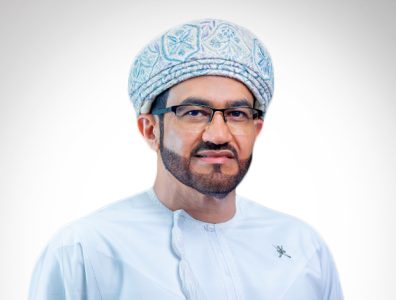
Aflah Al Hadhrami, managing director of Petroleum Development Oman (PDO), talks to The Energy Year about the company’s vital and growing role within Oman’s economy and the first positive results of its transformational restructuring process.
This interview is featured in The Energy Year Oman 2025
PDO is the leading oil and gas E&P company in Oman.
What distinguishes PDO within Oman and internationally?
PDO is a unique organisation, both within Oman and beyond. Established in 1937, the company carries more than 85 years of history and responsibility. From the beginning, PDO was built on strong international partnerships, with Shell being a prominent example. Oman is known for honouring its commitments, and PDO reflects that culture. Institutions do not endure for decades without sound governance, capable leadership and a clear sense of purpose.
PDO has always understood that success cannot be achieved in isolation. We must integrate global expertise, and the company’s leadership includes talent from different nationalities and backgrounds. Technology is not developed locally; it is sourced globally, adapted and applied responsibly.
While developing Omani capability remains a core responsibility, PDO must operate to international standards, and training and development are approached with this mindset. PDO invests significantly in youth development and capability building, and works with leading global universities and executive institutions.
This is more than a business mandate; it is a national responsibility. The economy continues to rely heavily on hydrocarbons, and this reality places an added obligation on the company. PDO is the largest contributor to Oman’s GDP. We are a cornerstone of the national economy, and that requires resilience, discipline and consistency.
What was the rationale behind PDO’s recent transformation?
After more than 55 years of operations, we took a hard, honest look at ourselves. We found bureaucracy, duplication and ways of working that no longer serve today’s reality.
Expectations have changed, especially among younger generations. We employ around 9,300 people directly, about 60,000 contractors and close to 100,000 indirectly across the value chain. That scale alone demands a different way of thinking.
Transformation was not optional. I was very clear about one thing: We would not outsource it to consultants. I have seen too many organisations become dependent on them. They leave behind nice slides, but take no ownership. This transformation had to come from inside. Our people had to write it, own it and live it. If it succeeds, the credit goes to the team. If it fails, the responsibility is mine.
From Musandam to Salalah, we listened to engineers, operators and support staff. The message was consistent: Change is overdue. That is how our Journey of Transformation was born and built around four pillars: production growth, cost competitiveness, governance and ethics, and HSE.
How did you secure internal buy-in and commitment?
We went bottom-up, not top-down, involving people across assets, functions and management levels. To set the tone, we took our top 40 leaders to Jebel Akhdar with the Center for Creative Leadership. We did not focus on theory, but on why transformations succeed or fail in practice. Transformation is painful. Like training for a marathon, enthusiasm fades, resistance kicks in, and only real commitment gets you through.
We spent nine months preparing before launch, and when we finally went live, everything was internally designed – even the branding. The slogan, For Oman, and the logo were created by a young female engineer and selected through a company-wide vote. That mattered because when people see themselves in the transformation, they defend it.
What differentiates PDO’s transformation from those of other corporations?
First, we have significantly reduced reliance on traditional steering committees to minimise internal politics and bureaucracy. Instead, we gave project leaders real authority – financial and managerial. Each one operates like a mini managing director. That requires trust, but it also requires strong controls.
Second, we invested in psychology, not just process. Transformations fail when they stay at the management level. We focused on emotional connection – making this a movement, not an initiative.
Third, we track everything in real time. I personally spend around 50% of my time on this. My two executive leaders, who manage almost 95% of the organisation between them, spend even more.
In my office, I have a live dashboard displaying KPIs in real time: production, deferments, HSE, everything. It is like an MRI of the company. And I report transparently to shareholders and the government every quarter, both good news and bad. Trust is built that way.
What are the ultimate objectives of the transformation?
Our tangible goals are higher production, lower costs, stronger governance and a safer organisation. None of that is achievable without people, and that is why leadership development is central to our effort.
We launched the Ruwad Sadara programme with London Business School – fully customised for PDO. We selected 53 top talents through a rigorous, independent process, and they are undergoing leadership training, mentorship and shadowing. Besides technical capability, they are also being observed for behaviour, mindset and values. When I leave, PDO’s leadership must be younger, more diverse and globally credible.
What milestones have marked your first year as managing director?
I committed to not taking personal leave until I had achieved three milestones: resolving a long-standing employee matter that was critical to restoring trust and stability across the organisation, initiating the transformation journey and fully understanding PDO’s internal dynamics. Once those were accomplished, I allowed myself my first break.
The first year and a half was an intense period, marked by sustained, demanding days. But I was never alone. I had a committed team from day one, willing to sacrifice alongside me. Significant changes have already taken place within the management structure. This is only the beginning, but the direction is clear. PDO is moving forward in the right direction, for the right reasons.
Read our latest insights on:
More content from Oman






Latest Reports


The Energy Year Oman 2026
The Energy Year Kuwait 2025
The Energy Year Angola 2025
The Energy Year Nigeria 2025
The Energy Year Saudi Arabia 2025
The Energy Year UAE 2025