


Pioneers in fuel and logistics
May 3, 2023 Saudi Arabia


Mike Douglas, CEO of SKA International Group, talks to The Energy Year about the company’s pioneering provision of fuel and logistics services in high-risk areas, its work in Iraq’s growing terminal and export infrastructure, and the importance of the UAE as a hub for its operations. Dubai-based SKA International provides logistics solutions, primarily for fuel supply.
What steps has SKA International taken to grow its presence in Iraq while contributing to the country’s terminal infrastructure?
SKA International evolved out of opportunities in Iraq, where we first managed to secure a contract to help rehabilitate the five main airports in the country in 2003. We were also involved in the repair of the jet fuel pipeline that linked the Daura Refinery to the Baghdad airport.
Following that, we developed key aviation fuel infrastructure to produce JP 8, which was the primary jet fuel for the coalition forces in Iraq, and we became the main supplier to the US Defense Logistics Agency. Further, we developed transportation fleets and operated cargo aircraft and helicopters, with involvement in a multitude of such projects.
However, from 2010 onwards things changed. We started to focus on commercial activities, and we decided to invest in infrastructure. We invested in the Khor Al Zubair port in southern Iraq, where we constructed the first privately owned fuel storage terminal, with a capacity of 20,000 cubic metres of multi-product fuels. We then established a JV with BP to build a second phase, which is an extension of the terminal. In 2017, we signed another JV with the Ministry of Oil and its subsidiary Oil Pipeline Company to rehabilitate the three main jetties in the port of Khor Al Zubair.
Iraq had a severe lack of infrastructure for importing refined products. These products were transported up the river to the port of Khor Al Zubair. Yet MR-size vessels of 45,000 DWT could only move half loads of 17,000-18,000 tonnes due to the low draught. Riverbeds were packed with vessels, which made the operations slow and dangerous. We decided to invest in the dredging of this area, taking the jetties from a 6.5-metre draught to a 12-metre one. We also refurbished them and installed new connecting pipelines to the major line coming from Basra Refinery. We changed the dynamics of fuel importation in that region and now you can see LR1- and LR2-size vessels in these jetties.
Tell us about the current storage capacity of your terminal in Iraq and how you have adapted it to export activities.
Today, we have a storage capacity of 50,000 cubic metres of multi-product fuels and a pumping speed of over 1,000 cubic metres an hour for export and import. This means we can load and offload a ship very efficiently. Moreover, in the terminal, we have an international laboratory operated by Intertek. Inspections are done on all the products exported and imported. The labs are fully equipped in accordance with both national and international standards. We are constantly looking to improve and enhance our operations. For instance, we recently implemented major technical changes. The terminal was designed as an import terminal, so we’ve invested in different pumping systems and floating roof tanks and now we have the capacity to export. We are currently focused on exporting naphtha, but we could export other products.
The ability to efficiently handle refined products – gasoline, gas oil, and kerosene – is critical because these products are a pillar of Iraq’s economy. That’s why during the pandemic we never stopped our operations, as they are critical to the well-being of the Iraqi economy. All in all, we are a pivotal player in the Iraqi oil and gas sector, and the country is fundamental to our existence as well.
How important is the UAE as SKA International’s logistics hub?
The headquarters of our operations worldwide are based in the UAE. Additionally, most of our logistics supply is sourced from the UAE, which has become the hub from which we ship and move all our support equipment to our different locations. We have fully integrated logistics services which combine our warehousing, trucking, Customs clearance and specialised transport capabilities. We are a reliable logistics provider for NGOs, governmental institutions such as the US Department of Defense and private businesses.
The logistics sector has undergone serious challenges in the past year. The pandemic and the war in Ukraine led to a severe supply chain crisis. Container shipping and logistics saw huge cost increases and the rapid uptick in fuel prices caused prices to shoot up across the value chain. Likewise, the shortages in supply created other problems and changed economic dynamics – now, for instance, we see a strong push for localisation schemes like “Make it in the Emirates.” Due to our flexibility, we have managed to adapt despite the challenges and to find and develop opportunities where others only see problems. As our slogan says, we are used to “doing difficult jobs in difficult places,” which means our operations are intrinsically linked to challenging scenarios.
Tell us about your longstanding presence in Somalia.
Our niche is to operate in frontier countries where others may not be able to operate – either post-conflict areas or remote locations. It is there where we find opportunities. That is our competitive edge and what differentiates us from the rest.
We have been operating in Somalia for 13 years, with a well-established footprint in both the logistics and fuel sectors, where we support an array of UN projects. We have a fleet of 150 trucks for different logistics operations across Somalia. Additionally, we recently signed a JV with Somali Fuels Company, Mogadishu’s main fuel storage provider. We have always been involved in the business of aviation fuelling, but this partnership opens bigger doors for us. We are now investing in equipment and training but we are very interested in growing our fuel supply chain. We are looking to invest in pipelines and seeking the best way to get involved in these projects.
How keen is SKA International on penetrating the frontier market in Uganda?
We don’t limit ourselves to the Horn of Africa. We are currently looking at other sub-Saharan markets, such as Kenya and especially Uganda. Uganda has a very new yet prospective energy market, so we would be looking for different technical partners to participate in the array of upcoming greenfield projects. We regard the country as a great opportunity. We see potential in the development of oilfields and adjacent infrastructure, such as pipelines and refineries, and in the downstream and storage sector. Despite Uganda’s energy sector still being in its infancy, we are determined to be at the forefront of this frontier market.
What competitive edges does the company have and how is it tapping into renewables projects?
Our main edge is the fact that we have experience operating where others cannot. We have a very high risk appetite. Compliance is also a crucial area to consider, and we make sure we meet top standards. We learned how to work in the most difficult places, having the flexibility to adapt to the given environment and to get things done, all while being compliant. Among the many things that we gained from being in a JV with BP are our high levels of compliance, health and safety.
We work in Baidoa, in the South West state of Somalia, which is probably one of the most challenging places on Earth given the conflicts in the area and insurgency attacks. We have to airlift the majority of the material that we move as most of the area is controlled by Al-Shabaab. Despite this, we have had a base there for the last five years and we’ve even broken ground on a 50-MW solar plant that will produce power for the local community. As a subcontractor, we are involved in all of the project’s logistics and construction. We see our participation in this venture as a great opportunity to get ourselves more involved in the renewables space. We expect to be part of other similar projects of this nature moving forward.
Read our latest insights on:
More content from Saudi Arabia





Latest Reports


The Energy Year Oman 2026
The Energy Year Kuwait 2025
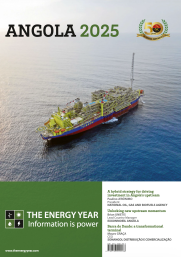
The Energy Year Angola 2025
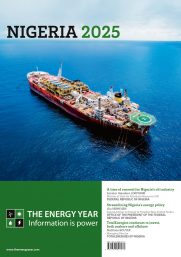
The Energy Year Nigeria 2025
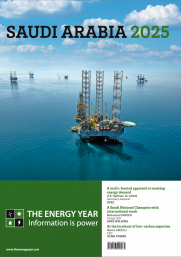
The Energy Year Saudi Arabia 2025
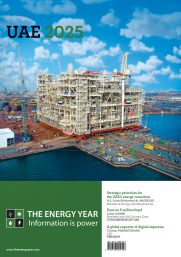
The Energy Year UAE 2025