

Policies and investment for a multi-modal Mozambique
August 29, 2024 Mozambique


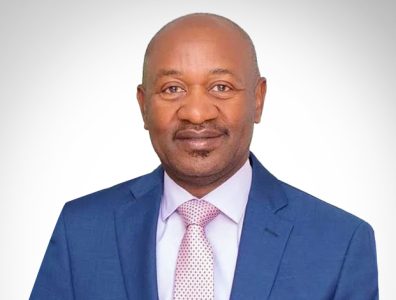
Mozambican Minister of Transport and Communications Mateus Magala talks to The Energy Year about infrastructure priorities, the steps the government is taking to improve cargo-handling capacity and access to information and communication technologies, and the role of PPPs in the transport and communications sectors. The Ministry of Transport and Communications is the governmental body that directs and implements policies for multi-modal transport, communications and meteorological infrastructure.
This interview is featured in The Energy Year Mozambique 2024
Can you explain the ministry’s current priorities for infrastructure development, focusing particularly on balancing investments in road, rail and port networks?
Mozambique is experiencing growth in various economic activities that demand increasingly efficient logistics services. At the regional level, our strategic location makes the country a fundamental logistics node for trade in the SADC [Southern African Development Community]. In this context, we are developing transport and logistics infrastructures, with emphasis on railway lines, roads, ports and airports, to respond to the demands of the national economy and the region.
In the northern corridor, last year we completed the rehabilitation, modernisation and expansion of the Port of Nacala, in an investment of around USD 300 million. The Port of Nacala is connected to a 912-kilometre railway infrastructure that connects with the Malawian and Zambian railway systems.
In central Mozambique, we have the Port of Beira, which is geographically closer to Zimbabwe, Malawi, Zambia and the south of the Democratic Republic of the Congo. The Port of Beira has a rail connection with Zimbabwe through the Machipanda line, where we invested around USD 200 million towards reconstruction and requalification, going from a previous annual capacity of around 500,000 tonnes to 3 million tonnes, with the potential to increase capacity further, depending on demand.
In the south, we have the Port of Maputo, on which we have just signed the contract for the extension of the concession that will allow investments of about USD 2 billion, with a return to the economy in the order of USD 8 billion. This investment will reposition the Port of Maputo on the regional and global map. The Port of Maputo has a sizable rail network connecting it to South Africa, Zimbabwe and Eswatini.
What are the steps the government is taking to improve cargo-handling capacity and efficiency?
In addition to the expansion and modernisation of transport infrastructures, we are working on the allocation of locomotives and wagons to allow a better response in cargo transport, and we are streamlining procedures at our borders to improve flow in our corridors. In this context, we have already signed agreements with South Africa and Eswatini, based on which we are operating trains without borders to the Port of Maputo, and contacts are under way to expand this to the Beira and Nacala corridors.
Also towards simplifying procedures, we are developing a one-stop border crossing at Ressano Garcia, which connects Mozambique and South Africa. We have also initiated contacts with the government of Zimbabwe for the development of a one-stop border in Machipanda, another border that needs urgent intervention. We have funding from the World Bank to build three single border posts with Malawi, one with Zambia and one with South Africa.
How is the government planning to increase the volume of goods handled by rail in the country?
We are implementing a project to double the capacity of the railway that connects the Port of Maputo to South Africa to meet the demand that is currently pressuring road traffic on the track that goes to the port. The first phase of the duplication of the Ressano Garcia line has already been completed, with an investment of around USD 80 million. The Port of Maputo handled about 31 million tonnes last year, and about 60% of this cargo was transported by road.
How is the ministry bridging the digital divide and ensuring equitable access to information and communication technologies throughout Mozambique?
Digitalisation is an irreversible process. Information and communication technologies are important tools and facilitators of the process of sustainable and inclusive socio-economic development of our country. It was with this assumption that the Ministry of Transport and Communications defined connectivity as one of its four strategic priorities.
Our intervention has been in the coordination of efforts to continue the expansion of the network and the quality of telecommunications services to respond to growing demand. We are also digitising production processes and services provided by the public administration while improving the promotion of cybersecurity to provide an environment of trust and security for users of telecommunications services.
Our country, like other African nations, faces challenges associated with the availability and quality of telecommunications services. The Mozambican telecommunications market has about 16 million subscribers, equivalent to a penetration rate of about 50%. The Mozambican population that owns a mobile phone is estimated at around 49%. These figures reveal the path we still have to travel to ensure access to telecommunications services for all Mozambicans.
To reverse this reality, we have created the Universal Access Service Fund, a mechanism to finance access to telecommunications services with contributions from operators managed by the Communications Regulatory Authority to fund various initiatives for free access to telecommunications services. With the support of the World Bank, we are implementing the Digital Acceleration Project, valued at USD 150 million, through which we hope to lay the necessary foundations for the digitalisation of the country.
What role do PPPs play in the ministry’s plans to expand and modernise Mozambique’s transport and communications sector?
The government promotes investment through PPPs, as an alternative to state investments in the execution of large works and projects, especially in the areas of infrastructure, transport and communications, energy and industry, among other dynamic branches of our economy.
PPPs are mechanisms for attracting the investments necessary for the viability of various structuring initiatives of our economy, while the state continues to play a strategic role in boosting the country’s economic development. Mozambique has been making significant progress in the process of contracting, implementing and monitoring PPP projects in the transport and communications sectors.
We can highlight the port concessions as successful examples that have allowed the rehabilitation, expansion and modernisation of the country’s main ports. In communications, two of the three mobile phone operators in the country are privately owned.
Our vision for the sector is to continue promoting PPPs as a mechanism for raising the necessary resources for the viability of strategic projects without burdening the state. Nonetheless, in the contracting of PPPs, the challenge of ensuring more benefits for the communities where large projects are implemented persists.
Can you comment on the status of the collaboration with the Ministry of Mineral Resources and Energy and your perspective on the role of natural gas in achieving a more sustainable and efficient transport system in Mozambique?
Mozambique is aligned with the global movement on energy transition within the framework of climate resilience and the reduction of polluting gas emissions. To improve and mobilise the different sectors, the government approved and presented its Energy Transition Strategy 2023-2030 at COP28.
In the energy transition, Mozambique stands out through its potential as a source of clean energy that can play a key role in the decarbonisation of the SADC economy. We have dams that produce and export energy to the region and large gas reserves, among other resources.
In the mobility component, our vision is to privilege the use of mass transport as a way to improve accessibility and optimise our infrastructures, while creating the necessary foundations for the decarbonisation of transport within the framework of the Energy Transition Strategy.
In addition to the one-stop border project, can you share some ideas in the pipeline at the Ministry of Transport and Communications for future projects or key initiatives in the transport and communications sector?
To accelerate growth, we have defined five strategic priorities, namely mobility, road safety, accessibility, connectivity and reforms. The specific actions and projects are in the annual plans of our implementation strategy.
The sector offers enormous investment opportunities in several strategic projects, such as the construction, expansion and modernisation of transport infrastructures, the financing of mobility improvement projects and mass transport, the expansion of the telecommunications networks, particularly in rural areas, and projects to promote road safety, among other initiatives.
As a government, we are determined to create the necessary environment for the framing of all investment initiatives, taking this opportunity to invite all potential investors to present their initiatives to our various agencies for the promotion and attraction of investments in the country.
Read our latest insights on:
-

Project highlight: Mozambique LNG
PROJECT HIGHLIGHT -
-

Project highlight: Mozambique’s Central Térmica de Temane
PROJECT HIGHLIGHT
More content from Mozambique



Latest Reports


The Energy Year Oman 2026
The Energy Year Kuwait 2025
The Energy Year Angola 2025
The Energy Year Nigeria 2025
The Energy Year Saudi Arabia 2025
The Energy Year UAE 2025