
in figures
Estimated amount of soil treated each year via mechanical means: 728,000 tonnes
Estimated water recycling rate achieved: 70%
Project highlight: Kuwait’s NKETR and SKETR remediation projects
September 15, 2024 Kuwait


The Kuwait Environmental Remediation Program (KERP) manages the clean-up and aftercare of the oil spills and environmental damage caused when Iraqi troops ignited more than 700 oil wells in their retreat from Kuwait in the final stages of the 1990-1991 Gulf War. Within this effort, the NKETR and SKETR soil remediation projects are a USD 400-million push to restore the Greater Burgan, Raudhatain and Sabriya oilfields.
In the final stages of the 1990-1991 Gulf War, Iraqi troops ignited more than 700 oil wells in their retreat from Kuwait, creating the largest man-made oil spill in history and causing severe environmental damage.
In response, the United Nations established the Kuwait Environmental Remediation Program (KERP) to manage the clean-up and aftercare of the massive oil spill and environmental catastrophe. KERP’s target area covers approximately 114 square kilometres and contains about 26 million cubic metres of oil-contaminated soil.
SCOPE: The NKETR project tackles oil contamination in the soils of the Raudhatain and Sabriya oilfields, close to Kuwait’s northern border with Iraq, while SKETR focuses on the Greater Burgan oilfield in southeastern Kuwait.
The contaminated features are being treated with different methods based on location, configuration and total petroleum hydrocarbon (TPH) content, which has required developing site-specific processes and building dedicated facilities. An overarching goal is to prioritise bioremediation and beneficial reuse as far as possible to reduce the need to divert material to landfills.
PROCESS: Less-contaminated soils with TPH content under 5% are being treated with biological methods, while soils with TPH upwards of 5% are subjected to mechanical washing.
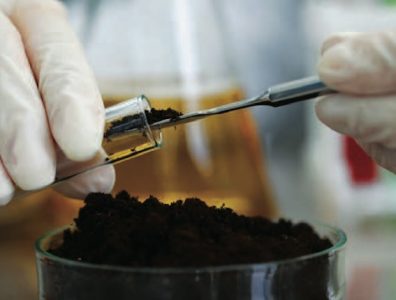
Bioremediation consists of adding bacterial strains that attack and break down the hydrocarbons in the soil. To counter Kuwait’s extreme climactic conditions, special compounds are added to facilitate the bacteria’s work along with organic substances that bind water.
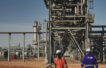
Soil destined for mechanical processing is crushed and fed into purpose-built machines that yield washed construction sand and aggregates that are suitable for reuse. The units supplied by CDE are treating an estimated 728,000 tonnes of contaminated soil each year, at a rate of up to 140 tonnes of soil per hour.
WATER: Mindful of water scarcity conditions in Kuwait, the project utilises industrial water which is reused or recycled whenever possible. The water recycling rate that is being achieved in the project is estimated at 70%.
KEY PLAYERS: KOC is one of the stakeholders that is planning and executing remediation and restoration projects under KERP. The company has signed remediation contracts worth USD 1.7 billion, and numerous clean-up projects have already been completed.
The NKETR and SKETR contracts were awarded to Lamor, a Finnish company specialising in remediation and restoration, in consortium with Kuwaiti EPC contractor Khalid Ali Al-Kharafi & Bros. Northern Irelands’ CDE Group has supplied the wash plants that are being utilised to treat contaminated soil.
INVESTMENT: The NKETR and SKETR projects were awarded for amounts of USD 194 million and USD 197 million, respectively. The sand washers alone were sourced from CDE at a cost of USD 15 million each.
Read our latest insights on:
More content from Kuwait




Latest Reports


The Energy Year Oman 2026
The Energy Year Kuwait 2025
The Energy Year Angola 2025
The Energy Year Nigeria 2025
The Energy Year Saudi Arabia 2025
The Energy Year UAE 2025