
in figures
Angolan mining production growth forecasted in 20243%
Number of the 51 critical minerals and rare earths present in Angola36
Angola’s 2022 share of global diamond production8%
Revamping Angola’s mining industry
August 6, 2024 Angola


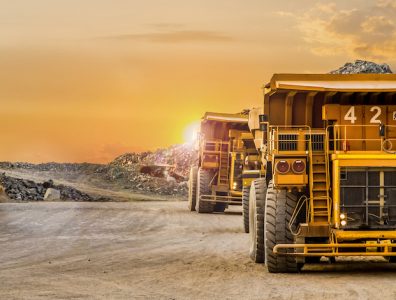
With oil production largely stagnating over recent years, Angola is now looking for ways to grow and diversify its economy through new means. One of these pathways is the mining industry. Although mining has long been a relevant sector in Angola, it has remained underemphasised and lacking investment. Now, the country has restructured the mining industry with new regulations, which has led to a number of new investments.
The government of Angola has identified mineral development as a paramount driver for the country’s diversification strategy, economic growth and in-country value creation. It believes the opportunities offered by the sector will help position Luanda as a first-class mineral supplier by the end of the decade.
As highlighted by Minister of Mineral Resources, Oil and Gas Diamantino Azevedo, Angola is rich in minerals, with 36 of the 51 recognised critical minerals and rare earths. These include cobalt, copper, graphite, iron ore, lithium, manganese, neodymium and praseodymium, which are crucial for the energy transition and experiencing sharp increases in demand.
Nevertheless, Angola cannot fully exploit these minerals due to a lack of investment. The country is therefore seeking increased capital and international participation to boost exploration and discovery initiatives.
THE REGULATORY FRAMEWORK: The mining sector in Angola has been undergoing a significant restructuring in the last few years. These changes intend to bring transparency and ensure greater competitiveness, thus encouraging the growth of private investments in the sector.
In 2020 the government set up a new national mining concessionaire entity, the Angolan National Agency of Mineral Resources (ANRM). The agency largely replaces national diamond company ENDIAMA’s role in concessions, with the aim of consolidating its position as a mining company and expanding its operations into other minerals.
Another major step was made in 2022 when Angola became the 28th African country to join the Extractive Industries Transparency Initiative. This underlines the country’s commitment to ensuring that information regarding its extractive sector is publicly available, particularly information concerning the management of state-owned companies.
The efforts of the Lourenço administration to increase competitiveness and transparency in the domestic mining sector have been received positively by major international stakeholders operating in diamonds and other mineral trading activities. These players are well aware of the potential Angola can have within the global mining supply chain.
As a sign of renewed interest in Angola’s mines, diamond giant De Beers signed two mineral investment contracts with the government in 2022 to establish two JVs with ENDIAMA. These agreements came after De Beers had ceased operating in Angola for 10 years. The JVs will provide the South African company with the rights to explore and extract resources from the licensed areas in the northeast of the country via a 35-year concession.
To further promote good governance and an improved business climate in the country’s mining sector, MIREMPET launched the 2023-2027 Sectoral Development Plan in April 2023. The plan aims to integrate strategies, objectives and programmes for strategic sectors.
In particular, the Development and Modernisation Programme for Geological-Mining Activities looks to increase the geological knowledge about the country, support producers in the production of precious stones and ferrous metals, extend the downstream value chain and diamond-cutting capacity by building new factories, and ensure the exploitation of non-metallic minerals such as phosphates and dolomitic limestone for soil correction and thus improved food security.
CURRENT ASSETS AND FORECASTS: Globally, the African continent holds around 30% of mineral reserves, 15% of oil, 40% of gold, 90% of chromium and platinum, 46% of manganese and the largest reserves of diamonds.
Although most of its hinterland has not been fully explored, recent discoveries of diamond reserves in Angola have made the country the only one in the world where production has increased. This increase is in particular due to the Luele and Catoca mines, which are paving the way to make Angola the world’s second-largest producer of rough diamonds by 2030. Overall, Angolan mining production is forecasted to grow by 3% in 2024.
As of 2022, Angola was the sixth-largest diamond producer in the world, with a production of 8.76 million carats (8% of global production). The country experienced an increase in exports of 4% compared to 2021 and generated an income of USD 1.95 billion, an increase of 1.38% compared to 2021.
With respect to future performance, minerals production is expected to increase significantly by 2027. From a base year of 2021, diamond production is expected to double to 17.5 million carats; gold from 1.37 million fine ounces to 13.2 million fine ounces; and manganese from 47,000 tonnes to 85,000 tonnes. Finally, by 2027 the country expects to produce 252,000 tonnes of phosphates and 212,600 tonnes of dolomitic limestone yearly.
APPLICATIONS: Various minerals are currently in high demand for high-tech applications. Some of these applications may complement Angola’s hydrocarbons sector. For example, besides diamonds’ value as gemstones, they are key components in industrial cutting tools and drilling operations in the oil industry (e.g., they are embedded into the drill bit).
A number of minerals and rare earth elements are used across high-tech and industrial sectors. Copper is a vital mineral widely used for its conductive characteristics. Platinum is extensively deployed in circuit boards and fibre-optic cables. Iron is indispensable for the construction industry and thus infrastructure developments. Then, gold represents an internationally recognised value reserve, as well as being industrially used for electrical connectors.
Rare earths and critical minerals are also at the heart of so-called “green” technologies: elements like neodymium and praseodymium are needed for wind turbines, while lithium and cobalt are needed for manufacturing permanent magnets installed in electric cars.
Applications of rare earths and critical minerals are now countless and include industrial and sanitary tools, household devices, automation and robotics, and military uses. Their demand is expected to grow by 400-600% over the next few decades, with lithium and graphite demand increasing by as much as 4,000% due to their use in EV batteries.
KEY PROJECTS: The development of the mineral processing industry is unsurprisingly one of Angola’s main economic goals. To that end, the country launched the Saurimo Development Hub in 2021. The hub is a USD 77-million project that integrates all diamond industry players – both public and private – unites the country’s entire value chain and aims to reduce illegal mining and enhance the local diamond production capacity.
By 2027, 19 cutting factories will be constructed at the Saurimo Development Hub. They will be overseen by state-owned company SODIAM, which will be in charge of controlling and supervising the purchase, sale and import/export of diamonds in Angola.
Another ongoing project is Pensana’s Longonjo rare earth mining project. The project will lead to the first large neodymium and praseodymium rare earth mine in Africa and have an expected production of 56,000 tonnes per year.
Then there is the Namibe Lithium Project, where Australia’s Tyranna Resources is working to support Angola to develop the country’s first lithium project. The company has commenced operations and has an offtake agreement worth USD 20.3 million with Sinomine Resources Group.
The Buco Zau gold project in the Cabinda province is planned to feed the gold refinery set to be built in the country. The Kassala-Kitungo iron project, located in North Kwanza, is yet another project. Here, the Angolan government plans to assess the mining potential of the area and commence mining operations there within the next three years.
Finally, the Lobito Corridor is designed to be a crucial trade route for critical minerals, allowing for their transport from Angolan, Zambian and DRC inland mines to the port of Lobito, cutting transport times by up to 75% and thereby increasing the opportunities these mines represent for the three countries.
Read our latest insights on:
-

-

Quality acquisitions over acreage
INTERVIEW -

More content from Angola

Latest Reports


The Energy Year Oman 2026
The Energy Year Kuwait 2025
The Energy Year Angola 2025
The Energy Year Nigeria 2025
The Energy Year Saudi Arabia 2025
The Energy Year UAE 2025