

Elham MAHFOUZ
CEO
COMMERCIAL BANK OF KUWAIT (AL TIJARI)
Robust enterprise banking in Kuwait
May 28, 2024 Kuwait


Elham Mahfouz, CEO of the Commercial Bank of Kuwait (Al-Tijari), talks to The Energy Year about the financial sector’s participation in Kuwait’s development goals and the bank’s involvement in oil and gas and other industries. The Commercial Bank of Kuwait is a retail and corporate bank that operates in Kuwait and internationally.
What impact have oil prices had on the domestic economy and the banking sector as a whole?
As per a recently published report, global economic growth, estimated at 3.2% in 2023, is projected to continue at the same pace in 2024 and 2025. The forecast for 2024 is revised up by 0.1 percentage points from the January 2024 World Economic Outlook. Thus, oil demand is expected to rise, driving up both Kuwait’s oil sector and the country’s GDP.
Economic growth in Kuwait is expected to recover to 2.8% in 2024, supported by expansionary fiscal policies, higher oil production and increased output from the Al Zour Refinery. Oil output is expected to grow by 3.6% as OPEC+ announces extensions by mid-2024 of additional voluntary cuts, which currently stand at 135,000 bopd for Kuwait, with global oil prices remaining robust.
Strong oil prices help the government to meet basic domestic requirements, such as paying salaries in the public sector, but they also help expand the projects that Kuwait has in the pipeline. They provide support to contractors and sub-contractors who need to import materials, and they back up the economy with more spending.
High oil prices generate a virtuous domino effect that leads towards a more robust economy, which in turn means more projects and more demand for banks to finance them.
How do local banks help strengthen the Kuwaiti oil and gas sector?
The petroleum sector is complex and composed of many interrelated segments, including production, transportation, refining and marketing, which are key drivers of the economy.
Kuwait intends to become a global centre for the petrochemicals industry and develop an energy hub, including the mixing of resources from other countries by 2030. The country has announced projects for USD 410 billion to implement initiatives such as reaching an oil production capacity of 3.65 million bopd by 2035, completing the Al Zour Refinery and investing in capital projects for energy transformation.
There is a good synergy among domestic banks. We work together for the improvement of the hydrocarbons sector. Whenever oil and gas companies approach banks for a deal, we are all ready to participate because it is how we can contribute to reinforcing the economy.
Since oil accounts for the majority of Kuwait’s GDP, it is our responsibility as a Kuwaiti bank to support oil-related projects. For example, CBK originally participated with USD 150 million in the financing of the USD 8.2-billion Q8 (Duqm) refinery in Oman. When we were approached in 2018, we made our evaluation and saw that the infrastructure would help Kuwait expand its footprint outside national borders and that the investment was reasonable for us and had acceptable risk and return.
We are also involved in Q8’s USD 9.2-billion Nghi Son Refinery and Petrochemical Venture in Vietnam, where we contributed along with two other Kuwaiti banks with USD 32.1 million. Despite several setbacks which caused delays, it is strategically a good project for Kuwait. The refinery serves the Far East, and it is outside of OPEC+ quotas, so output can be stepped up.
What are your thoughts on the country’s diversification efforts and the role the banking sector is playing in supporting them?
Kuwait has been following an oil-based development model for decades. The Kuwaiti economy is highly oil-dependent, with around 95% of exports and approximately 90% of government revenue generated from oil.
The Kuwait Vision 2035 development plan sets ambitious goals for ensuring sustainable development and diversification. It includes infrastructure mega-projects, such as the development of the Kuwait City airport, power plants and water desalination facilities, the Northern Gulf Gateway, the Kuwait National Railway and related projects.
Kuwait has a stable and well-balanced banking system of conventional and Islamic banks. The banking sector is resistant to severe shocks, strengthening financial and foreign balances and increasing the overall financial surplus. It contributes to the diversification of the economy and the growth of the non-oil sector
Diversification plans impact banks because there are limits to what a bank can lend to a specific company and its related companies. We cannot go beyond 15% of our equity. However, projects that are considered strategic for national economic growth, such as infrastructure and oil-related projects, are excluded from these limits. They help GDP growth, and banks that wish to participate are given approval to do so by the central bank.
Can you give us an overview of the bank’s main portfolio segments and their latest performance?
We are a domestic bank with international business, and the biggest share of our portfolio is corporate lending, with construction representing a large segment. Then there are trading activities; many companies in Kuwait are active importers, and we extend them letters of credit to help them get the commodities they need.
The service sector, including education, is becoming one of the bank’s key pillars, and the retail business has historically been very important. And oil and gas, of course, is a strategic component.
In terms of our performance, we reported a net profit of KWD 111.2 million [USD 361.4 million] in 2023, 51% more than the previous year. Through proactive management, we have improved our net interest margin and strengthened our balance sheet. We continue to pace our strategic investments to ensure that the bank is well positioned for future challenges and opportunities.
Al-Tijari has robust financial ratios that comfortably exceed the Central Bank of Kuwait’s statutory requirements. Our capital adequacy ratio is 18.1%, our liquidity coverage ratio is 198.2%, our net stable funding ratio is 113.4% and our leverage ratio stands at 11.8%.
What are some of Al-Tijari’s green energy projects and ESG initiatives in Kuwait and elsewhere?
ESG considerations are important to us, they play a central role in our strategy. In 2022 the central bank issued guidelines concerning sustainable finance and directives to increase awareness of ESG practices. One of our initiatives is Al-Tijari ECHO, which highlights the importance of the United Nations Sustainable Development Goals and provides a platform to educate and orient individuals towards sustainable practices.
In our portfolio, we have green bonds issued by the Korea Development Bank to finance new and existing renewable energy and clean transportation initiatives, as well as green bonds offered by many banks in the UAE. These allocations have supported solar and offshore wind projects, as well as the production of rechargeable batteries for electric vehicles.
We have also invested in the State Bank of India’s USD 650-million Climate Bond issuance, which is listed in Singapore and is being used to finance 49 solar and 32 wind energy projects across India with a cumulative installed capacity of 2,600 MW. Our ESG bond portfolio has reached over USD 132 million and we look forward to increasing this.
How does the bank combine its expansion plans with digitalisation?
In line with our vision to deliver an excellent digital customer experience and innovative products and services to retail and corporate customers, the bank continued to focus on launching new solutions and product offerings.
We endeavour to provide a state-of-the-art banking experience to our customers by setting up best-in-class mobile apps and digital self-service machines. We are leveraging advanced analytics to personalise customer interactions and automate dynamic segmentation in real time, and we simplify processes with technology-driven solutions that serve clients with digital experiences.
At the moment, we have 42 branches and we are planning to open more shortly. They will be digitalised branches, equipped with the latest technology, which means that our customers will be able to carry out all the operations they need on their own.
To help us improve our services and ensure account security for our clients, we also have a solid relationship with Zain, which has provided us with software that screens communications to prevent online fraud.
Read our latest insights on:
More content from Kuwait




Latest Reports


The Energy Year Oman 2026
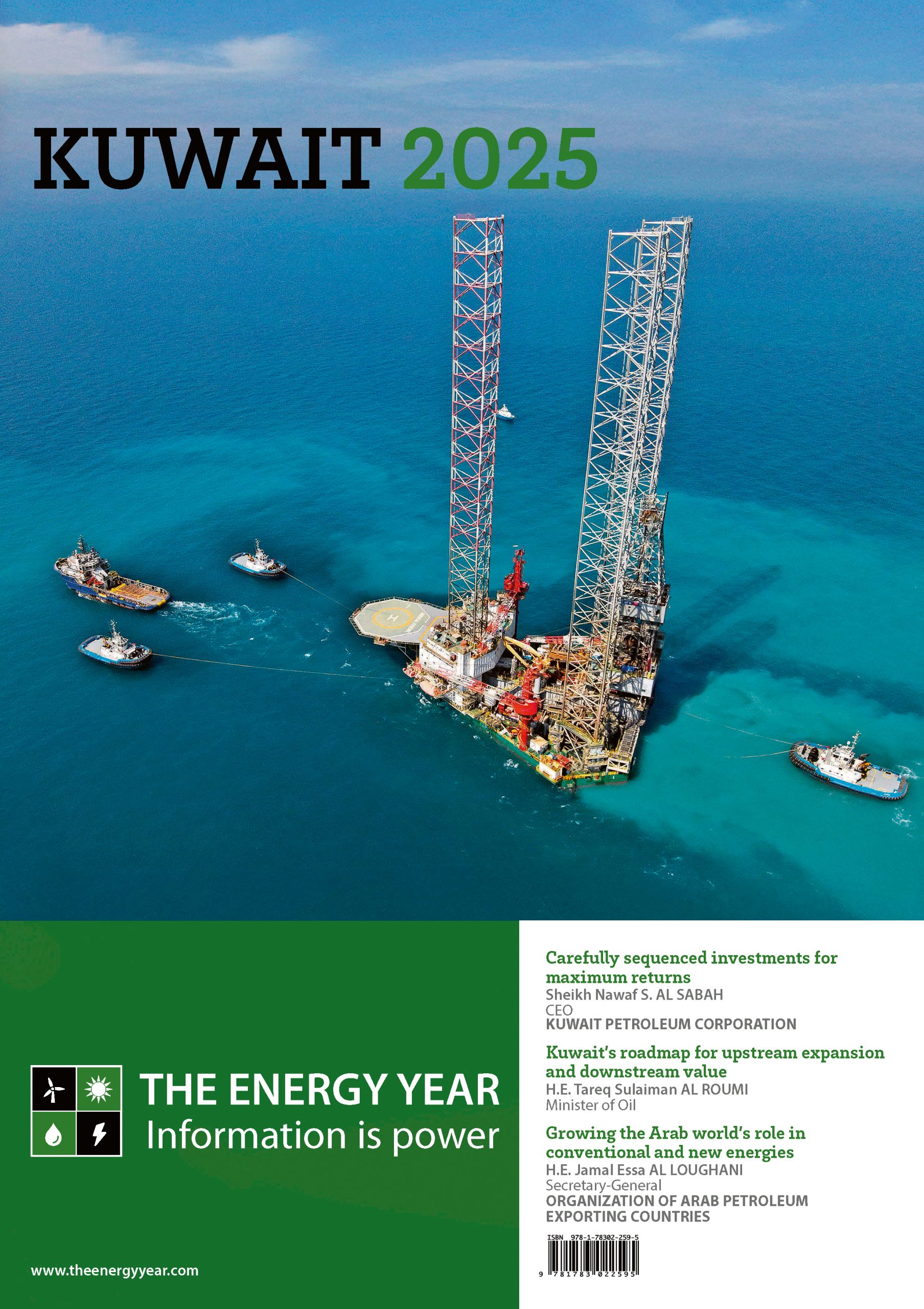
The Energy Year Kuwait 2025
The Energy Year Angola 2025
The Energy Year Nigeria 2025
The Energy Year Saudi Arabia 2025
The Energy Year UAE 2025