

Towards Maputo’s future as a trans-shipment hub
October 24, 2024 Mozambique


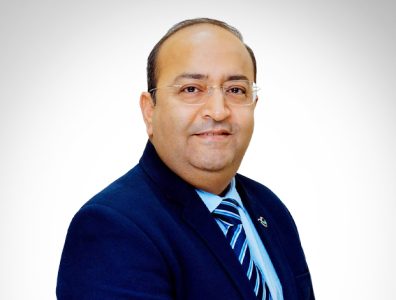
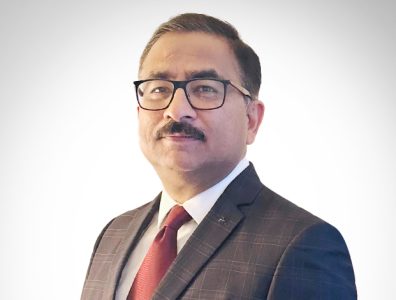
Sumeet Bhardwaj, CEO of DP World Maputo, and Maneesh Goel, chief commercial officer, talk to The Energy Year about planned infrastructure investments at Mozambique's Port of Maputo and the company’s ongoing transformation into an end-to-end logistics provider in Southern Africa. DP World is a multinational logistics company specialising in cargo logistics, port terminal operations, maritime services and end-to-end supply chain solutions.
How would you describe DP World’s position within the Mozambican logistics market?
Maneesh GOEL: In February 2024, our terminal concession was extended until 2058, reflecting the trust the Maputo Port Development Company (MPDC) and Mozambique’s government have in us. Over the past few years, we have evolved from a terminal operator into a comprehensive end-to-end logistics provider. Our global experience spans more than 60 terminals and we can manage the entire supply chain for our clients, from the factory floor to the customer’s door.
DP World has become very digitally agile. We have in-house systems for tracking cargo and conducting complete supply chain analyses, and these capabilities are being offered to our customers so that their transactions become seamless. Large carriers are now becoming our customers to move cargo into the hinterland, on the first mile and the last mile.
We have increased the value of our services for customers in Mozambique. Besides ports and terminals, we have invested in domestic logistics companies that have been pioneers in transportation, warehousing, management and distribution. They add to our network of services and supply chain capabilities, and we work in unison to serve our customers.
What is the role of the Port of Maputo within DP World’s global strategy and your USD 3-billion investment commitment to African ports and logistics infrastructure?
MG: Maputo is currently a small port, but our global head office in Dubai and regional offices in sub-Saharan Africa consider it a very important element for providing services in Mozambique and greater Southeastern Africa. Through it, we are acting as a conduit for customers in Zimbabwe and Eswatini, and we are starting to see growing demand in the Democratic Republic of the Congo.
We utilise our fleet for road transport and we are seeking partnerships with state-owned and private rail operators who can offer connections to Maputo. When cargo crosses borders, there are delays, and we aim to manage the entire chain and make transportation more seamless, ensuring that cargo reaches its destination in the shortest possible time at the lowest possible cost.
Do you have expansions or improvements planned at the Port of Maputo?
Sumeet BHARDWAJ: Maputo’s current container handling capacity is 255,000 teu, and we intend to ramp it up to 530,000. The project outline and tenders have been issued and we are in the final stages of awarding them. We are eager to see progress in this area, as we see Maputo as a strategic location for us to enhance East African trade.
We also intend to enlarge the quay from the current 308 metres to around 650 metres and increase the draft at some berths from 12 metres to 16.5 metres, as well as erect super-post-Panamax automated cranes. The infrastructure will be capable of servicing mother vessels, which currently do not berth at any East African ports besides Sokhna in Egypt, and Maputo will evolve from being a small vessel import terminal into a major trans-shipment hub.
This revamp and the shift from road to rail aims to improve the capacity and efficiency of Mozambique’s logistics system. Ocean shipping lowers transportation costs, and lower costs translate into higher profits for businesses, leading to increased investment and job creation.
Can you share some details about the investment and the timeline for this expansion?
MG: In the first phase, we will invest approximately USD 200 million until 2026. However, the overall expansion plan will continue until around 2058. Terminal capacity will reach 1 million teu and three additional ship-to-shore cranes will be added in the next two phases, bringing the total to six.
What services does DP World provide for companies involved in projects within Mozambique’s energy industry?
MG: We can provide solutions to any industry that contributes to the growth of Mozambique and we have been an integral part of several energy projects. Despite being a container terminal, we have the equipment and expertise to handle break-bulk cargo and we are receiving inquiries now for port-size pieces from various energy projects coming up in Maputo.
What is your vision for the future of DP World in Mozambique?
SB: DP World Maputo is transforming from a pure container terminal operator into an end-to-end logistics provider. This expanded service offering encompasses the procurement of goods, be it for the energy or minerals sector. Through our network of 320 registered businesses across six continents, we can source components and commodities needed for project development or implementation, saving clients from having to approach multiple vendors.
Within the region, we can utilise our transportation and logistics capabilities to transport fuel, as well as minerals and materials to and from mines and processing facilities. This is our strength in Africa. As a Group, DP World will invest USD 3 billion in ports and logistics infrastructure in Africa over the coming years and combine all our services into a cohesive offering. We will have a value proposition for all our clients, including major energy operators, and we will start engaging with them soon to provide seamless supply chain solutions.
Read our latest insights on:
-

Project highlight: Mozambique LNG
PROJECT HIGHLIGHT -
-

Project highlight: Mozambique’s Central Térmica de Temane
PROJECT HIGHLIGHT
More content from Mozambique



Latest Reports


The Energy Year Oman 2026
The Energy Year Kuwait 2025
The Energy Year Angola 2025
The Energy Year Nigeria 2025
The Energy Year Saudi Arabia 2025
The Energy Year UAE 2025