












Back toour markets

Brazil's Energy Industry

Brazil

in figures

Oil reserves11.9 billion barrels

Oil production2.99 million bopd

Gas reserves300 bcm

Gas production24.3 bcm

Brazil: A Model for Offshore Development

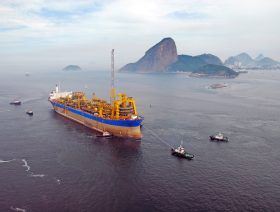
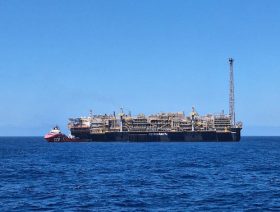
Brazil’s oil and gas industry has grown significantly due to the country’s massive hydrocarbons potential. The nation has the second-largest reserves in South America after Venezuela, with more than 95% of its oil and gas offshore. The nation boasts the largest recoverable ultra-deep oil reserves in the world, with the International Energy Agency forecasting that 50% of the world’s offshore oil could come from Brazil in 2040.

The industry is overseen by the National Agency of Petroleum, Natural Gas and Biofuels, known as ANP, which hands out exploration and production licences and ensures compliance with state regulations. Hydrocarbons are produced predominantly by Brazilian NOC Petrobras. The company held a monopoly on the industry for around 40 years until the market opened up in 1997. Since then, the sector has attracted super-majors such as Shell, BP, Chevron and Exxomobil and local independents.

A rise in production from the prolific Santos and Campos basins has also played a part in attracting IOCs to Brazil’s downstream sector. To attract FDI and participation in the market, Petrobras recently began selling off a predominant part of its refining capacity. While Petrobras remains the largest player in the local downstream sector, it has been joined by international players Repsol, Shell and Chevron.

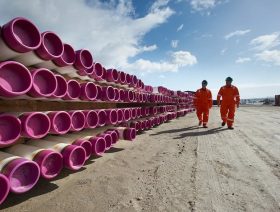
Due to the country’s large size, a vast pipeline infrastructure is necessary to link the various oil-producing regions, refineries, terminals and distribution points. Most of the country’s pipelines are located in the southeast and northeast of the country. The nation’s midstream sector is supervised and controlled by the National Centre for Logistics Management.

While still one of the world’s largest oil and gas producers, Brazil’s renewable energy sector has seen titanic growth and accounts for around 80% of the country’s energy mix, predominantly through its hydropower stations and biofuels and waste facilities. Brazil is the third largest hydroelectricity producer after China and Canada. The government is looking to grow the mix of solar and wind facilities to meet its large potential and avoid losses caused by droughts.

An essential port for Colombian energy TEY_post_-Raúl-PÉREZ-TATIS
Interview
Colombia - September 09, 2024

Raúl Pérez Tatis of Puerto Bahía talks about how the port can support hydrocarbons and clean energy.

READ MORE
KBR wins engineering contract for Brazilian FPSOs
NEWS
Brazil - September 09, 2024

KBR has won engineering contracts from Seatrium for the topsides facilities of two new FPSOs to be deployed by Petrobras in…

READ MORE
Bureau Veritas buys US renewables consultancy
NEWS
USA - September 05, 2024

Bureau Veritas has acquired ArcVera Renewables, a specialised consultancy for wind, solar and battery storage projects.

READ MORE
An engine for Angola’s economy -TELES
Interview
Angola - September 02, 2024

Hugo Teles of Banco BIC talks about the sectors of Angola’s economy that will drive economic growth.

READ MORE
ArcelorMittal inks two solar projects in Brazil
NEWS
Brazil - August 22, 2024

ArcelorMittal will develop two solar energy projects with a combined capacity of 465 MW to power its steel plants in Brazil.

READ MORE

Brazil maps

Exploration and Production in Brazil’s Pre-Salt Polygon 2019

    ALL MAPS
    Drought-stricken Brazil to tap a tight LNG market
    NEWS
    Brazil - August 14, 2024

    Brazil is looking to import greater volumes of LNG in the coming months as drought depletes its hydropower capacity.

    READ MORE
    Equinor exits Suriname, with ExxonMobil also leaving block
    NEWS
    Suriname - August 07, 2024

    Equinor has exited Suriname as it and ExxonMobil transferred stakes in Block 59 to Hess.

    READ MORE


    WHOSE PLATFORM IS THIS?
    ASK US

    • Do you have a question for The Energy Year about oil and gas?
    • If we know, we’ll tell you.
    • If not, we’ll ask the experts in the field.