
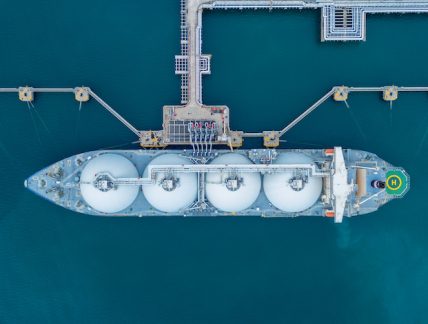








Ahead of LNG Canada's start-up, Petronas has added three LNG vessels to its North America-focused fleet.
READ MORE
Oil reserves2.7 billion barrels
Oil production573,000 bopd
Gas reserves900 mcm
Gas production74.2 bcm
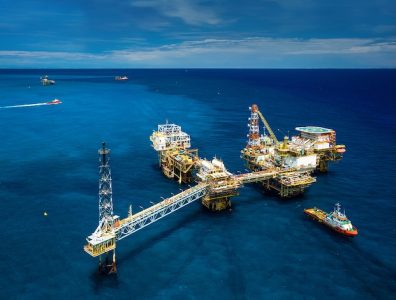
Malaysia’s oil and gas industry is a major pillar of the nation’s economy. The country of more than 23 million citizens is the second-largest hydrocarbons producer in Southeast Asia and the fifth largest exporter of LNG in the world. Malaysia began producing oil in the early 1900s from onshore assets in Sarawak and began moving into shallow-water plays in Peninsular Malaysia, Sarawak and Sabah in the 1960s. New technologies have unlocked new opportunities for more industrious offshore plays in the country’s main producing basins. The government has long pursued development of its maturing and marginal fields and further exploration activities to address a decline in production.
Malaysia’s oil and gas industry is tightly led by its NOC Petronas, which was established in 1974 and holds exclusive ownership rights to all E&P activities. The company’s contributions comprise around 35% of the state’s revenue. State-run upstream watchdog Petroleum Management Unit is responsible for handing out and overseeing production sharing licences in the country. The country has successfully attracted international IOCs interested in taking part in upstream opportunities, including ExxonMobil, Shell, ConocoPhillips, Spain’s Repsol and Japan’s JX Nippon Oil and Gas.
The nation is one of the world’s largest gas producers and exporters. While Malaysia’s NOC is the lead player in gas production and assets, Shell has established itself the second largest producer along with ExxonMobil, Thailand’s PTT Exploration and Production Public Company and Indonesia’s Pertamina having large shares in gas production. The largest domestic destinations for produced gas are the country’s industrial sector, which takes up around 49%, and the power generation sector, which takes up around 50%.
Malaysia boasts an extensive natural gas pipeline network. The majority, known as the Peninsular Gas Utilization network, is located in Peninsular Malaysia. Export of LNG comes from Malaysia’s regasification terminals, which are connected to its major pipeline network and exported to Singapore. LNG is mainly exported to other countries in the Asia Pacific region, with Japan and China being the main importers of Malaysian gas.
The oil pipeline system in the country is limited, and transport of the product remains largely dependent on tankers and onshore vehicles. The country has initiated projects to expand its oil storage capacity based on a capacity shortage in Southeast Asia, particularly in Singapore; Malaysia aims to become a regional storage alternative. Continued investment in refining activity over the last few decades has led to Malaysia generally meeting its domestic requirements. The nation is now looking to expand its refining capacity to supply the region and capitalise on exports.
Hibiscus has farmed in a 30% participating interest in one of the largest exploration blocks offshore Malaysia.
READ MORE
ADNOC, Petronas and Storegga will collaborate on a carbon capture and storage project offshore Malaysia.
READ MORE
Savannah Energy has terminated its planned USD 1.25-billion acquisition of Petronas’s South Sudan operations, the UK company…
READ MORE
Eni will partner with Petronas and Euglena to build a 650,000-bpd biorefinery in Malaysia.
READ MORE
ExxonMobil will transfer operatorship of two key PSCs in Malaysia to Petronas Carigali.
READ MORE
Ahead of LNG Canada's start-up, Petronas has added three LNG vessels to its North America-focused fleet.
READ MORE
TotalEnergies has fully acquired Malaysia's SapuraOMV Upstream.
READ MORE
McDermott has won a contract from a Malaysian PTTEP subsidiary to enable gas delivery to a subsea production system tied back to the Kikeh FPSO.
READ MOREWHOSE PLATFORM IS THIS?
ASK US