








Oil was up on Wednesday morning in Asia, with Brent crude moving back above the $40 mark. Large falls in US inventories, combined with likely supply cuts boosted…
READ MORE
Oil reserves107.8 billion barrels
Oil production10.93 million bopd
Gas reserves37.4 tcm
Gas production701.7 bcm
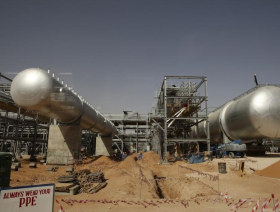
Russia’s oil and gas industry is one of the nation’s largest industrial focuses. The country is now one of the top three hydrocarbons producers worldwide and has the world’s second-largest natural gas reserves. The country is also one of the top five LNG exporters. The oil and gas industry plays a huge part in the country’s economy, traditionally making up around 45% of the federal budget. With its landscape consisting mostly of ageing oil and gasfields, the northern nation is funnelling its efforts to further develop its brownfield assets and raise exploration efforts in its unconventional greenfield options previously not viable due to technological restrictions.
While deposits exist in many areas throughout the country, producing assets are focused mainly in western and eastern Siberia. The Arctic has become increasingly important for hydrocarbons production, particularly gas. Most of Russia’s E&P efforts come from domestic firms. After a long period of mergers, the largest players in the market are Rosneft, Lukoil, Gazprom and Novatek. Following the collapse of the Soviet Union, the nation initially privatised its oil industry, but has since reverted to state control. Russia is a member of OPEC+.
The nation has extensive midstream capabilities for oil and gas, including the world’s longest crude pipeline – the Druzhba pipeline – that carries oil towards the European market. Conventionally around 60% of the country’s oil production was transported to OECD nations in Europe and fed around 20% of Europe’s refinery throughput, though recent conflicts have changed the paradigm. Europe’s reliance on Russian gas had grown over the last decade due to production drops in European countries. Before the war with Ukraine a variety of routes made it possible for Russia to feed European gas consumption without being reliant on transport directly through a single surrounding nation, namely the Nordstream, Blue Stream and Turkstream pipelines. But since the war with Ukraine broke out Russia has had to look to other markets to maintain its exports in the face of economic sanctions.
Russia has made large efforts to diversify its export markets towards Asian nations, including investment in pipelines that pump hydrocarbons directly to China, the latter of which has long remained the largest single buyer of Russian oil.
Moldova has launched its inaugural tender for wind and solar power generation.
READ MORE
The government of Ukraine has approved a USD 20-billion plan to develop renewables.
READ MORE
TotalEnergies has notified South Africa's oil and gas regulator that it plans to exit the 11B/12B offshore gasfield.
READ MORE
Bulgarian officials are seeking an investor to provide seismic studies for a new exploration campaign in the Black Sea.
READ MORE
Gazprom has acquired a 27.5% stake in the Sakhalin-2 LNG project from Shell for around USD 1 billion.
READ MORE
US President Joe Biden has announced new sanctions against Russian entities, including oil shipping giant Sovcomflot.
READ MORE
Hungary has agreed to co-operate with Croatia on increasing the capacity of the Adriatic pipeline.
READ MORE
Oil was up on Wednesday morning in Asia, with Brent crude moving back above the $40 mark. Large falls in US inventories, combined with likely supply cuts boosted…
READ MORE
Oil was down on Tuesday morning in Asia, with the US, presidential elections taking up most of the investor bandwidth. European Covid-19 lockdowns across Europe were a…
READ MORE
James Berya Opiyo, an independent consultant, talks to The Energy Year about why Uganda is an attractive destination for oil and gas investment as the world emerges…
READ MORE
Oğuz Kirkgӧz, executive vice-president of ENKA, talks to The Energy Year about how the company’s projects in Iraq have been affected by the Covid-19 pandemic and…
READ MORE
Femi Abegunde, deputy chairman of Deloitte in Africa and head of energy and resources for Deloitte in West Africa, talks to The Energy Year about how the public and…
READ MORE
Oil was down on Monday morning in Asia, as investors continue to be spooked by the ever-increasing number of global Covid-19 cases.
Brent oil futures slid 0.67% to…
READ MORE
Oil prices were mixed on Monday morning in Asia as the US reached a record high for new coronavirus cases for the 27th day in a row with twelve states reporting new…
READ MORE
Assaf Al Salem, managing director of Al Tharwa Al Muttahida General Trading & Contracting, talks to The Energy Year about the strength of Kuwait’s economy, its…
READ MORE
Oil was down on Friday, giving up its gains from the previous session over uncertainty as to whether OPEC will commit to extending future production cuts after the…
READ MORE
Oil was down on Friday morning in Asia, giving up some of its gains from the previous session.
Brent oil futures were down 0.78% to $35.77 by 9:40 PM ET (2:40 AM…
READ MOREWHOSE PLATFORM IS THIS?
ASK US