





Ziad Jeha, Schlumberger’s president for Saudi Arabia and Bahrain, talks to The Energy Year about how the company has dealt with the challenges of Covid-19 and the…
READ MORE
Oil reserves297.5 billion barrels
Oil production10.94 million bopd
Gas reserves6 tcm
Gas Production117.3 bcm
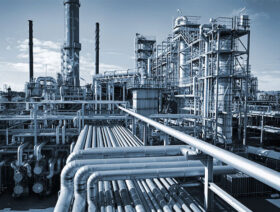
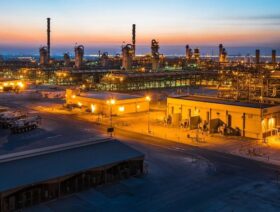
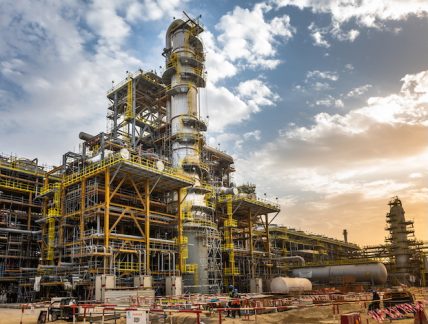
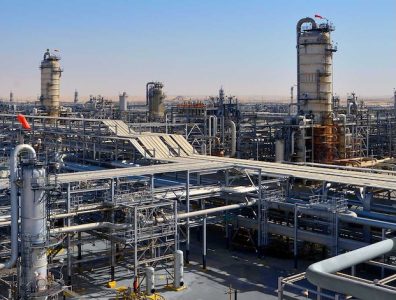
Saudi Arabia’s oil and gas industry has lifted the nation into being one of the richest nations in the Middle East. The country holds around 17% of the world’s hydrocarbons reserves and maintains one of the world’s largest oil production capacities, just behind the US. Saudi Arabia also holds the world’s sixth-largest natural gas reserves after Iran, Russia, Qatar, Turkmenistan and the US. The OPEC member’s oil exports account for 70% of the country’s output and support more than half of the government’s revenues. All areas of Saudi Arabia’s oil and gas industry are driven by NOC Saudi Aramco.
While Saudi Arabia has more than 100 different producing fields, eight of them are responsible for the majority of the country’s oil production. Most notable is the Ghawar field, the world’s biggest oilfield, and the Safaniya field, the world’s largest offshore oilfield. Most of Saudi Aramco’s investments go towards maintaining its upstream operations.
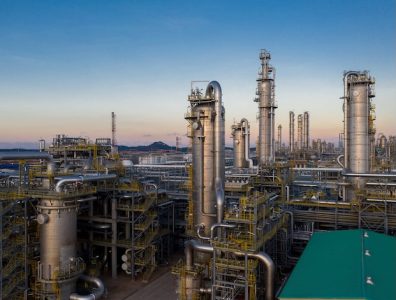
Saudi Arabia’s downstream operations have received massive funding as part of the country’s diversification roadmap. The nation now produces base oils, lubricants and chemicals, such as aromatics, olefins, polyolefins, polyols, isocyanates and synthetic rubber. In 2020, Saudi Aramco acquired 70% equity in Saudi Basic Industries Corporation, a local diversified chemicals company with operations in US, Europe, Middle East and Asia, further consolidating its downstream market.
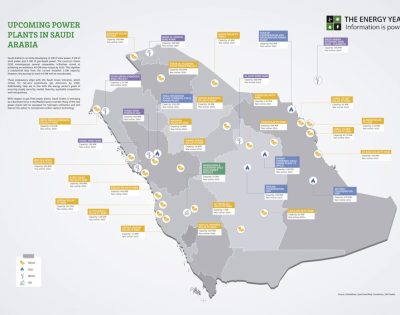
The nation’s target to become carbon neutral by 2060 is being led through heavy financing of renewables developments, including blue and green hydrogen. Investment is backed by Saudi Arabia’s National Development Fund set up in 2017. The country has tremendous solar capacity and aims to harness its potential to have 50% of its power generation coming from green sources by 2030. While developments are underway, the country still relies heavily on hydrocarbons to meet its high energy consumption.
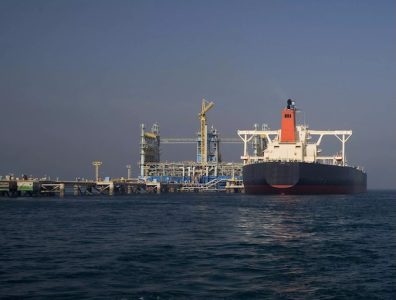
Saudi Arabia's Bahri has agreed to purchase nine very large crude carriers for USD 999 million.
READ MORE
Tareq Aloun of NEST talks about sourcing advanced technology for education and executive training in Kuwait.
READ MORE
Ahmed Abdel Rahman of Clenergy MENA talks about the significance of projects such as the Shagaya Renewable Energy Park.
READ MORE
Aramco will acquire a 50% equity interest in Blue Hydrogen Industrial Gases Company.
READ MORE
Two Chinese companies have signed deals worth USD 3 billion to build solar manufacturing plants in Saudi Arabia.
READ MORE
Saipem has won two contracts from Aramco for projects offshore Saudi Arabia with a total value of USD 500 million.
READ MORE
The Saudi Power Procurement Company has signed PPAs worth USD 3.28 billion with local players that will add 5.5 GW.
READ MORE
Ziad Jeha, Schlumberger’s president for Saudi Arabia and Bahrain, talks to The Energy Year about how the company has dealt with the challenges of Covid-19 and the…
READ MORE
Neil O’Keeffe, energy, utilities and resources lead partner at PwC Middle East, talks to The Energy Year about how GCC states are positioned amid the Covid-19 and oil…
READ MORE
Saudi Aramco has completed the 70% purchase of petrochemicals giant Saudi Basic Industries Corporation (SABIC), the NOC announced on Wednesday.
The move advances…
READ MORE
Ado Oseragbaje, vice-president for sub-Saharan Africa at Baker Hughes, and Francis Oganya, the company’s country director for Nigeria, talk to The Energy Year about…
READ MORE
Assaf Al Salem, managing director of Al Tharwa Al Muttahida General Trading & Contracting, talks to The Energy Year about the strength of Kuwait’s economy, its…
READ MORE
Oil was up Wednesday morning after investors breathed a sigh of relief after the last day of the WTI futures June contract on Tuesday closed without incident.
Brent…
READ MORE
Oil was mixed on Tuesday morning, the last day of trading for the WTI futures June contract in Asia.
Brent oil futures dropped 0.65% to $35.25 by 9:45 PM ET (2:45 AM…
READ MORE
Oil was mixed on Wednesday morning in Asia after the American Petroleum Institute (API) predicted another week of increases in crude oil supply.
The American…
READ MORE
Oil prices were unstable on Tuesday morning in Asia, clawing back losses from the previous session.
Brent oil futures slid 0.33% to $29.89 by 9:32 PM ET (2:32 AM…
READ MORE
Oil ended the week by clawing back its losses from the previous session on Friday morning in Asia.
Brent oil futures rose 1.94% to $29.98 by 9:28 PM ET (02:12 AM…
READ MOREWHOSE PLATFORM IS THIS?
ASK US