
Iran ramps up output at South Pars
 Iran
Iran 


TEHRAN, April 17, 2017 – Iran brought five phases of the super-giant South Pars gasfield on stream on Sunday, adding more than 150 mcm (5.3 bcf) per day to the nation’s gas output capacity.
The project, divided into geographical plots known as phases, saw the inauguration of output from phases 17, 18, 19, 20 and 21.
The new phases bring Iran’s South Pars production to 575 mcm (30.3 bcf) per day, President Hassan Rouhani said.
The country’s total output is now reported to have reached 885 mcm (31.3 bcf) per day, a significant rise over mid-2016 levels of around 700 mcm (24.7 bcf) daily.
Phases 17 and 18 are designed to produce a combined 50 mcm (1.77 bcf) and 80,000 boe of condensate per day. Phase 19 alone is designed to produce 56.6 mcm (2 bcf) and 80,000 boe of condensate per day. Phases 20 and 21 are designed to produce a combined 56.6 mcm (2 bcf) and 75,000 boe of condensate daily.
As of Monday, it was not clear whether the assets were producing at full capacity.
In late January 2017, the first cargo of condensate from phases 20 and 21 was shipped, with Japan as the destination. The cargo totalled 160,000 boe.
Earlier this month, Qatar announced plans to lift its 12-year moratorium on development of the North Field. The new plans will involve the field’s mostly undeveloped southern portion.
In a related development, Iranian officials formally inaugurated production at the South Pars Oil Layer at a rate of 35,000 bopd.
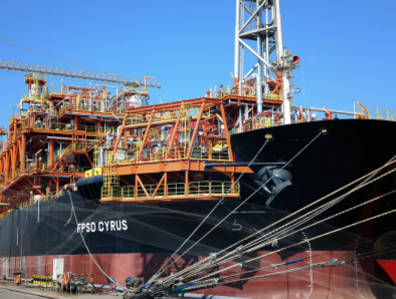
The asset came on line March 20, with output from seven subsea wells tied to the nation’s first FPSO, Cyrus.
The oil layer lies in the same area as the super-giant South Pars gasfield, but is developed separately.
Also on Sunday, four petrochemical projects were officially brought on line.
They include Phase II of the Kavian Petrochemical Plant, the Takht Jamshid Pars Petrochemical Plant, the Entekhab Group Polystyrene Unit and the MEG unit of the Morvarid Petrochemical Plant.
Iranian media reported that the combined investment in the five South Pars phases, together with the oil layer and the new petrochemical plants totalled USD 20 billion.
Read our latest insights on:



Latest Reports


The Energy Year Oman 2026
The Energy Year Kuwait 2025
The Energy Year Angola 2025
The Energy Year Nigeria 2025
The Energy Year Saudi Arabia 2025
The Energy Year UAE 2025