
Gran Tierra’s exploration strategy
February 27, 2025 Colombia


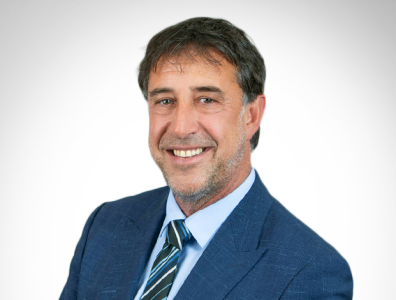
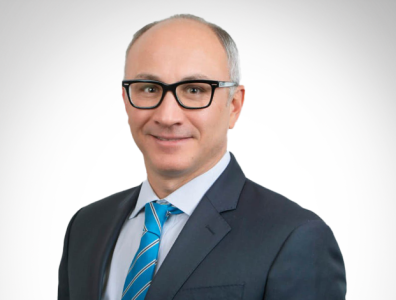
Diego Pérez-Claramunt, Gran Tierra Energy’s vice-president of corporate HSE and sustainability, and president and country manager in Colombia, and Manuel Buitrago, the company’s former president and country manager in Colombia, talk to The Energy Year about Gran Tierra’s high-impact exploration strategy and EOR strategy. Gran Tierra Energy is an oil and gas E&P company focused on Colombia and Ecuador.
Tell us about Gran Tierra Energy’s exploration strategy.
Diego PÉREZ-CLARAMUNT: Gran Tierra Energy is an independent energy company publicly listed on the New York, Toronto and London stock markets. We focus on oil and gas E&P, covering two key markets, Colombia and Ecuador, where we have our operations.
We have been in Colombia for more than 17 years and recently refined our focus in-country while focusing on the border region with Ecuador as well, specifically the Putumayo Basin in Colombia and the Oriente Basin in Ecuador. Geologically speaking, there are no boundaries between the two basins.
We also have a strong presence in the Middle Magdalena Basin, which is one of the most prolific and ancient basins in Colombia. We produce crude oil from our 25 blocks, with 22 blocks in Colombia and three in Ecuador. All of them are 100% operated by us. The company has grown organically through its discoveries and has also expanded in Colombia through several acquisitions.
In the last five years, we have replaced our reserves successfully. Moreover, we have had five consecutive years of 1P reserves growth, which is seen clearly in our top-tier assets: Acordionero, Chaza and South Putumayo.
According to our year-end 2023 reserves figures, we achieved reserve replacements of 154% for 1P, 242% for 2P and 303% for 3P. These figures reflect the highest reserves in the company’s history. We have grown our 1P reserves by 15% and our 2P reserves by 11% since 2020 while producing more than 41 million barrels over the same time period.
We have a long-term vision, as we know that investing in exploration is one of the means by which we are able to replace reserves and be a sustainable business. This is part of our full-cycle strategy in which we reinvest in the company, particularly in exploration activities, to guarantee future production.
How is Gran Tierra aiming to gradually increase its production in Colombia?
Manuel BUITRAGO: We plan to take our 1P growth to 50,000 bopd. We want to achieve this through new development drilling and enhanced oil recovery (EOR). Our 2024 development plan was focused on what we call our core asset corridor. This strategy is based on drilling in Acordionero, which is in the Middle Magdalena Valley; Costayaco, which is in the north of Putumayo; and in Suroriente, which is in the south of Putumayo.
Our capital allocated for 2024 was around USD 210 million-240 million, which was invested in exploration and production development. Our plans for exploration in 2024 included six to nine exploration wells and 13-17 development wells.
We will continue working on our maturing assets to reverse depletion by using secondary and tertiary recovery techniques, such as waterflood technology. Both the government and Gran Tierra recognise this as a great opportunity for Colombia to add new reserves and enhance production levels.
How critical is waterflooding in increasing production and sustainability?
DPC: Enhanced recovery is a critical factor in supporting Colombia’s energy security and protecting the environment. In the hydrocarbons industry, waterflooding is the most widely used method of enhanced recovery.
Using this technique, companies can increase the recovery factor by 10-30% compared to primary recovery. Colombia, through the Ministry of Environment and the Ministry of Energy, has adopted critical regulatory actions and has made great progress in regulating the use of formation water and produced water, promoting its reuse and recirculation.
The country has also done well in regulating the use of industrial liquids for reinjection in enhanced-recovery and pressure-maintenance projects. Gran Tierra wants to become water neutral, and this important corporate objective is aligned with the country’s commitment to promoting and encouraging the reuse and recirculation of water in production processes, which reduces demand for water resources.
Similarly, enhanced recovery using produced water from deep formations not only reduces surface water usage but also contributes to reducing CO2 because less water is transported in tanker trucks. This technique has proven results in terms of recovery rates. For example, in our Suroriente operations, we managed to access high-saline, deepwater reservoirs and started reinjecting water into the field.
Our Cohembi-4 well produced 15,000 bpd of this industrial non-potable water. After installing the corresponding water-treatment facilities, we managed to reinject 42,000 bpd of water back into the reservoir. That increased production from 5,000 bopd to 8,130 bopd in 2019. This clearly shows us the value of waterflooding, and we will continue to utilise EOR methods for this reason, as well as for their sustainability component.
How significant is the Acordionero field, and what chemical-enhanced oil recovery (CEOR) methods is Gran Tierra implementing?
MB: In the Middle Magdalena Valley, we have a block with an ANH [National Hydrocarbons Agency] contract – the Midas contract. It is here where the Acordionero field is located. Since its acquisition in 2016, Acordionero has produced approximately 42 million barrels and generated around USD 2 billion in oil and gas sales.
Moreover, in the same year we acquired this asset, we started with 11 wells. As of Q1 2024, we had drilled 123 wells and had proven reserves in Acordionero of around 37 million barrels.
Acordionero is our highest-producing asset, accounting for nearly 50% of our total crude oil production. Its solid production has been the result of our development drilling and asset management efforts, from waterflooding to EOR. We started 11 well-development drilling programmes in December 2023. All 11 wells have been drilled to date, including nine production wells and two water injection wells.
Currently we are conducting a polymer flood pilot test. This technique is based on the injection of a viscous solution, polymer, that can accelerate oil production compared to injecting only water (i.e., waterflooding). We view CEOR as the next step in EOR for Acordionero.
What recent work have you carried out at your Costayaco asset?
DPC: Costayaco is one of our legacy assets in the north of Putumayo. It is 100% operated by Gran Tierra, with oil concentrated in the T & Kc sandstone reservoirs. This mature asset has favourable conditions for waterflooding. Since December 2023, we have drilled seven wells, of which six are oil producers and one is a water injector.
During Q2 2024, the recently drilled wells (CYC-56, 57, 58, 59, 61 and 62) underwent stimulation and the installation of final artificial lift systems. This allows for a higher total fluid rate. We are already observing increased production in the field and anticipate this positive trend will continue.
By doing this, a mature oilfield such as Costayaco continues not only to produce but to add reserves. This is also proof of our expertise in technically difficult reservoirs and in the implementation of EOR techniques.
What plans does Gran Tierra have for its Suroriente block?
MB: Suroriente is a contract that we have operated since early 2019, with Ecopetrol as our key partner. By obtaining a contract continuation agreement for the block and discovering oil in the Rose evaluation area through our 2022 exploration campaign, we have secured an asset base in the south of Putumayo that offers a strong reserve base with attractive economics.
Moreover, the south Putumayo assets offer exciting development opportunities in the prolific N-Sand zone.
Gran Tierra is on track to complete civil works to commence development drilling in the block’s Cohembi oilfield. These initial wells would be the first we have drilled in this block since 2018. We are very focused on a robust investment programme in this block after obtaining our 20-year contract extension. We have plans to invest USD 123 million in the next three years.
The focus of our drilling programme will be to increase production while also pushing the limits of the existing reservoir towards the north and south of the block. This will allow us to get potential 2P and 3P reserves growth. This is an asset that we know very well and an asset that is also under waterflooding, one of our core competencies.
Tell us about Gran Tierra’s strategic sustainability roadmap for its operations.
DPC: Since 2015, Gran Tierra Energy has implemented a series of concrete actions focused on livelihood improvements through economic development and environmental protection through nature-based solutions and emissions reductions.
Our focus on emissions reductions comprises three key areas. The first one is consistent, transparent and expanded reporting. The second is our nature-based solutions, and the third is gas-to-power projects.
We were one of the first companies to decide voluntarily to report on emissions through the Canadian CDP [Carbon Development Program]. Reporting and quantifying our emissions is an important first step for understanding how to reduce them. Since 2019, we have decreased our Scope 1 and 2 carbon emissions by 29%.
Nature-based solutions are also critical. Our environmental efforts have led to approximately 1,640,000 trees being planted and more than 4,500 hectares [45 square kilometres] of land being conserved, preserved or reforested. Some of these are voluntary projects, while others are contractual obligations involving the capturing and storing of atmospheric CO2. Thanks to these actions, we have managed to eliminate 33,000 tonnes of CO2 equivalent yearly.
Another example of one of our nature-based solutions is our initiative Naturamazonas in Putumayo, done in collaboration with Conservation International. The programme is the largest reforestation programme in the country and has become important economically for communities. This project should capture 8.7 million tonnes of CO2 equivalent in its lifetime.
Our last strategy is based on gas-to-power projects. One of the most important ways we have reduced our CO2 emissions is through gas-to-power projects, which are now implemented at four of our largest fields.
Around 68% of the total energy we use in our operations is generated by gas to power. We capture the associated gas we produce at the wellhead and convert it into electricity for our own consumption. In parallel to this, we have also reduced our flaring emissions by 76% since 2019.
Furthermore, Gran Tierra Energy’s social investments target areas where they can significantly improve the quality of life of the communities next to our operations. In the last five or six years, we have reached out to almost 260,000 beneficiaries.
Lastly, as part of our ESG strategy, safety is elemental for us. We have gone two years without a lost-time incident, meaning concretely that we’ve gone around 22 million hours with zero accidents. This is a record in Latin America.
Read our latest insights on:
-
-

-

O&M leadership in mining and energy
INTERVIEW
More content from Colombia

Latest Reports


The Energy Year Oman 2026
The Energy Year Kuwait 2025
The Energy Year Angola 2025
The Energy Year Nigeria 2025
The Energy Year Saudi Arabia 2025
The Energy Year UAE 2025