

NEWS
Azerbaijan - February 20, 2026
Canada's Gran Tierra Energy has entered Azerbaijan with a SOCAR E&P deal.
READ MORE

Andrés CAMACHO MORALES
Minister of Mines and Energy
REPUBLIC OF COLOMBIA
2024 oil reserves:2.06 billion barrels
2024 oil production:788,000 bopd
2024 gas reserves:67 bcm
2024 gas production:9.82 bcm

Colombia is Latin America’s third-largest oil producer after Brazil and Mexico, and it exports a significant share of its crude production. The sector is overseen by the National Hydrocarbons Agency (ANH), which manages the allocation of exploration and production areas, administers contracts and implements state hydrocarbons policy.
With reserves under pressure, Colombia’s long-term upstream challenge is to sustain exploration success while bringing new resources to market. In recent years, the ANH has promoted competitive allocation processes and a framework aimed at maintaining investment in exploration, including targets set out under the Plan 2040 roadmap. Much of Colombia’s remaining potential lies in technically complex areas, including offshore prospects and frontier basins, where improved seismic imaging, drilling techniques and project execution have made exploration more viable than in the past.
Energy transition policy has become increasingly central under the current administration, with a focus on accelerating renewables and reducing dependence on oil revenues over time. Colombia’s national climate strategy is anchored in its emissions-reduction commitments for 2030 and a net-zero pathway by 2050, while the government is also seeking to expand the role of wind and solar and attract both domestic and international investment into clean energy. La Guajira remains the country’s most prominent renewables frontier due to its exceptional wind resource and strong solar potential, although project delivery continues to depend on grid expansion, permitting and social licence.
Colombia’s refining system is dominated by two Ecopetrol-operated refineries: the Cartagena Refinery and the Barrancabermeja Refinery, which together account for the vast majority of national capacity. These assets underpin domestic fuel supply and have been the focus of upgrades to improve efficiency and product quality.
On the midstream side, infrastructure constraints continue to shape investment priorities. Pipeline capacity is limited in several corridors, and security and permitting challenges can disrupt operations and delay project development. As a result, there is ongoing demand for investment in transportation, logistics and network expansion to support both existing production and any future upstream growth.

Olivier Laurac of Newrest talks about scaling integrated remote-site services for mining and oil and gas projects in Latin…
READ MORE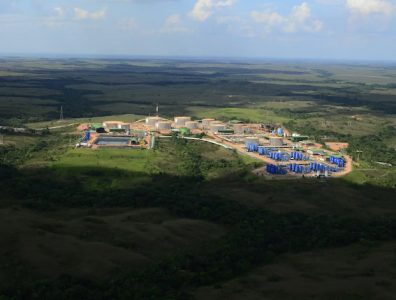
Parex Resources has closed its acquisition of Frontera Energy’s E&P assets in Colombia to become the country’s largest…
READ MORE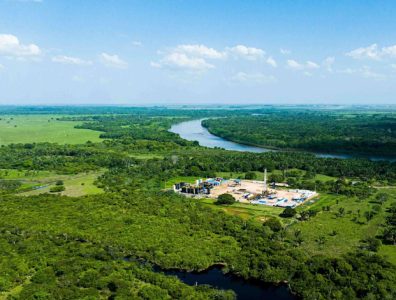
Parex Resources has agreed to acquire a 50% stake in Ecopetrol’s upstream assets in Colombia’s Magdalena Basin.
READ MORE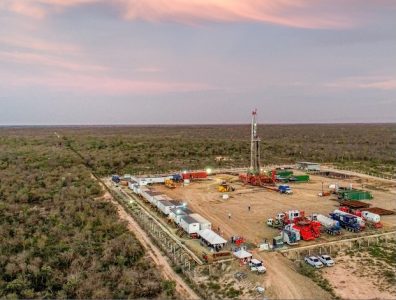
NG Energy has made a significant natural gas discovery in the Hechicero-1X well in Colombia’s Sinu-9 block.
READ MORE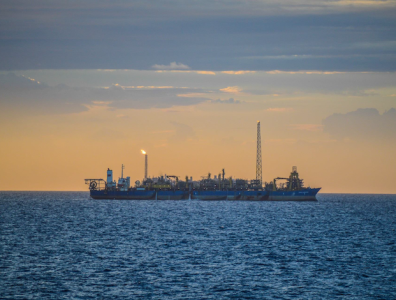
Ecopetrol has agreed to buy 26% of Brava Energia and is planning a tender offer to obtain a controlling stake in the company.
READ MORE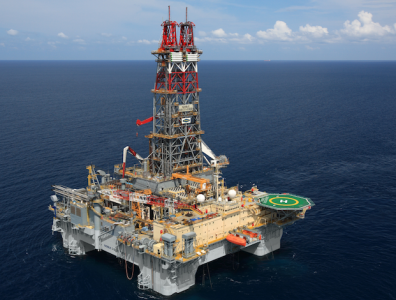
Petrobras has confirmed a new gas discovery in Colombia’s deepwater offshore, strengthening the country’s gas potential and…
READ MORE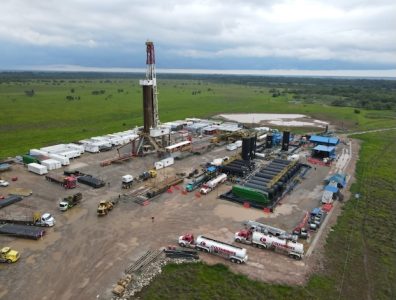
Arrow Exploration has brought two appraisal wells on stream in Colombia’s Llanos Basin.
READ MORE







Canada's Gran Tierra Energy has entered Azerbaijan with a SOCAR E&P deal.
READ MORE
Inside Newrest’s CSR model, where decentralised execution drives measurable impact.
READ MORE
GeoPark has inked a $600-million deal to acquire Frontera Energy’s Colombian upstream portfolio.
READ MOREWHOSE PLATFORM IS THIS?
ASK US