

Colombia’s largest, most efficient port
February 4, 2025 Colombia


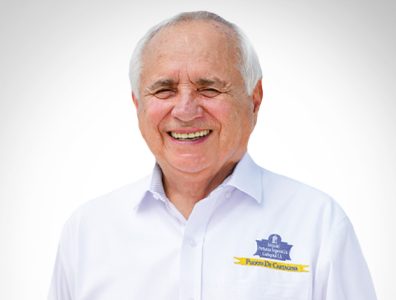
Alfonso Salas Trujillo, general manager of the Port of Cartagena Group, talks to The Energy Year about how competitive the port is in Colombia and the region. The Port of Cartagena Group offers port and logistics services to cargo and cruise ships and moves the largest volume of containers in Latin America.
How competitive is the Port of Cartagena in Colombia and the region?
The Port of Cartagena Group is the third-most efficient port in the world, according to the port efficiency index measured by the World Bank and S&P. It is also the port with the best connectivity in the Latin American and Caribbean region, according to UNCTAD, and the port company that moves the largest volume of containers in Latin America.
This positions us as a reference not only nationally but also internationally and contributes to the competitiveness of Colombian foreign trade.
What is the storage capacity of the port, and what are the products which predominate in terms of exports and imports?
The Port of Cartagena Group, with its terminals Sociedad Portuaria Regional de Cartagena and Contecar, has the capacity to handle 5 million teu per year. And the products which predominate in exports through these terminals are plastics and manufactured goods, plus the country’s star product, coffee. Imports also include, for example, plastics, food preparations and auto parts.
We are pleased to report growing exports of the country’s agro-industrial products, especially avocados, lemons, chrysanthemums and fresh fruit, thanks to our refrigerated infrastructure and the country’s efforts to diversify its export basket.
How are you preparing to handle the increase in maritime traffic and trade in the coming years?
We are constantly investing to stay at the forefront of the sector and always one step ahead of what the industry demands. Our infrastructure master plan incorporates the adaptations needed to meet the new challenges, which is complemented by the acquisition of high-tech and energy-efficient port equipment and the training of talent.
The challenge is more than an increase in maritime traffic and trade. We know that the challenges lie in the ever-increasing size of ships.
What innovative technologies are being used in the port to improve the efficiency and safety of the port?
We have a new inspection platform, which is an important innovation for the organisation. The only comparable innovation in the world is a similar inspection area in Australia. Many models and simulations were reviewed to ensure the success of the new scheme.
We also designed software to control the new gauging platform operations with four modules: one for scheduling; one for the planning, mobilisation and sequencing of containers; one for dispatch and control; and the fourth for registration. All these systems were developed with the organisation’s engineers and have worked successfully, contributing to operational efficiency.
What sustainability and environmental protection initiatives is the Port of Cartagena implementing?
In 2023, we recorded the largest reduction in total CO2 equivalent emissions of the Port of Cartagena Group since we made the first measurement in 2015.
The indicator for emissions per teu for SPRC [Sociedad Portuaria Regional de Cartagena] and Contecar shows that operational and energy efficiency improvements were achieved with the implementation of CO2-reduction projects and the use of cutting-edge technologies to reduce the time and resources used during loading and unloading operations.
The analysis of the main carbon footprint indicators clearly shows that even with the growth in cargo, the port has managed to reduce CO2 equivalent emissions in our terminals. Specifically, while Contecar’s cargo has grown by an average of 5.2% in the last five years, emissions have fallen at a rate of 2.3% per year over the same period. Similarly, SPRC recorded an average increase in cargo of 0.3% and a decrease in emissions of 14% over the period.
All this is the result of multiple investments made over the years in infrastructure, equipment, technology and human talent, together with a culture of corporate responsibility towards the environment, which has enabled us to make significant progress in our commitment to the energy transition and to reducing our carbon footprint.
Read our latest insights on:
-
-

-

O&M leadership in mining and energy
INTERVIEW
More content from Colombia



Latest Reports


The Energy Year Oman 2026
The Energy Year Kuwait 2025
The Energy Year Angola 2025
The Energy Year Nigeria 2025
The Energy Year Saudi Arabia 2025
The Energy Year UAE 2025