
A Colombian veteran of emergency care services
November 4, 2024 Colombia


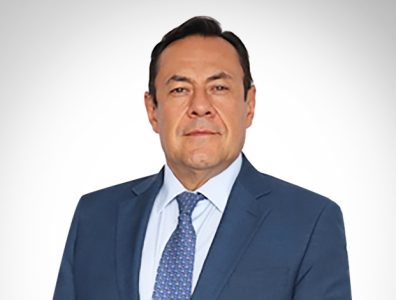
Jaime Herrera, general manager of Varichem, talks to The Energy Year about the reasons why accidents and emergencies derived from oil spills have decreased over time and the importance of the company’s prevention services. Varichem develops methodologies in the prevention, care and mitigation of emergencies generated by hydrocarbons spills and fires.
To what extent have accidents and emergencies decreased due to stricter preventive and reactive measures?
Company standards have increased in recent decades. They have focused not only on prevention but also on the development of process safety. Good risk identification and adequate preparation for identified situations have made emergencies less impactful and less frequent.
It is also necessary to distinguish between emergencies caused by operational damage and those caused by third parties, which tend to decrease with increased risk controls, improved maintenance programmes and training focused on the specific activity, its risks and how to mitigate them.
Companies have developed strategies for preventing and reacting to emergencies, which are essential for preventing damage.
How important are the prevention services offered by Varichem for the industry?
For more than 25 years, we have been working on business models based essentially on the prevention of emergencies under the premise that in this way there will be fewer of them, with less impact, and if they do occur, they will be controlled more effectively and at less cost.
To develop the preventive model, we have a consulting line, which develops the risk management, emergency and oil-spill response plans of companies. This is a very powerful tool for companies that understand the consequences of an emergency.
Additionally, we have a risk management school, where specialised training is provided to prepare personnel at different levels using tools such as simulators, virtual reality and certified training. This training helps companies create contingency plans according to the situations that may arise in different scenarios.
These plans ensure that first responders will be in a position to mitigate any event that arises and coordinate the attention required from the moment an event occurs.
Business reputation is very important, and therefore projects must be very well planned and staff must be highly trained. Project documentation must be in order and communication with stakeholders ought to be fluid to ensure problem-free and efficient operations.
What contracts are you carrying out for oil and gas operators such as Ecopetrol and Petrobras in the onshore and offshore areas?
Ecopetrol opened a tender to incorporate fire and environmental emergency services into its operations in the Middle Magdalena Valley, which we won for the next two years. There we are in charge of the control of fires and oil spills.
We are also working with Petrobras on emergency response in its offshore activities, a project that we achieved through an international tender. We are proud of this because it shows that companies continue to value our services in Colombia as they have done for the last decade.
Our contract with Petrobras is a five-year contract and covers consulting, training, emergency care and medical evacuation.
We also work for the vast majority of the 20 largest oil and gas companies and their service companies, in addition to companies in the mining, port, electricity and airport sectors, among others, across all our lines of business.
We work through direct contracts or by call, as we answer emergency calls from companies that require our services, which entails we must always be available.
How important is it to invest in local talent and have your own team to achieve success?
Our staff is 100% Colombian, and they have been trained and developed locally. Their training includes both a theoretical point of view and real scenarios. Our staff and their training are the most important assets of our business.
In terms of equipment, we have a wide variety of equipment for the containment, evacuation and storage of material recovered in emergencies. Our equipment allows us to ensure continuity of care without depending on third parties. In addition, we are equipment manufacturers and have this equipment in stock.
The combination of human talent and strong technical skills is one of the keys to being successful in our business, as we have been for 28 years.
Tell us about Varichem Offshore Services and Solera, subsidiaries of Varichem.
Varichem de Colombia is a diversified business group under which we have different subsidiaries and business lines. One of our companies is called Varichem Offshore Services, located in the Santa Marta Free Zone, which is in charge of the offshore operation and logistical management of goods and services for emergency care.
Secondly, we have Solera, which is dedicated to waste treatment management. It uses its own bioremediation technology for the treatment of soils and waters affected by hydrocarbons. We carry out a process of accelerating the rate of natural degradation of hydrocarbons by adding nutrients.
The process treats oily waste efficiently and in an environmentally friendly manner and can be carried out on-site in the affected areas or ex situ in our approved areas. We have our own infrastructure in Yondó, Tibú and Barrancabermeja and three other plants operated by our partners in Cartagena, Neiva and Yopal.
What diversified business portfolio does Varichem have under its umbrella?
Varichem has a variety of different lines of business. We have already talked about the first two related to prevention, our consulting line and our risk management school.
Our third line of business is emergency management, where we take our prevention criteria, provide guidelines on how to prevent and react to environmental emergencies and fires. It covers management of response capacities for nearshore and offshore operations and inspections of operational areas, among others.
Another business we have been working on manufacturing equipment required in emergency response, as well as being the representatives of international equipment manufacturers. This equipment includes various containment barriers; fences and curtain barriers; HI-Sprint rapid deployment barriers, hydrocarbon skimmers and industrial hydrocarbon skimmers from Vikoma; temporary storage tanks from Darcy Spillcare; and early warning systems.
We represent international companies from Europe and the United States. We market their products, and in turn, they market ours, which today are sold, for example, in Saudi Arabia, Africa and the United Kingdom.
What opportunities is your “new developments” segment looking to capture?
We saw a great opportunity to work with companies, especially from Spain and Belgium, to bring new technologies to Colombia. These technologies are for the maintenance of wind and photovoltaic turbines and the final disposal of waste from renewable projects.
For example, wind blades have limitations in how they can be recycled. They are made of an extremely strong material because they must withstand the wind, and today, they are placed in a safety cell and stored.
Photovoltaic panels are a plastic alloy in which a series of diodes have been placed to capture solar energy. However, they cannot be broken down for recycling, so we are analysing what technology can be used to recycle or dispose of them in an environmentally safe way.
The same goes for batteries. We are studying how to provide the final disposal of batteries, panels, blades, motors and axles. The opportunities and needs in the near future for these services are enormous.
In short, we are always looking for cutting-edge alternatives and new services to incorporate into our portfolio, which has been a characteristic of this company since its creation.
Read our latest insights on:
-
-

-

O&M leadership in mining and energy
INTERVIEW
More content from Colombia



Latest Reports


The Energy Year Oman 2026
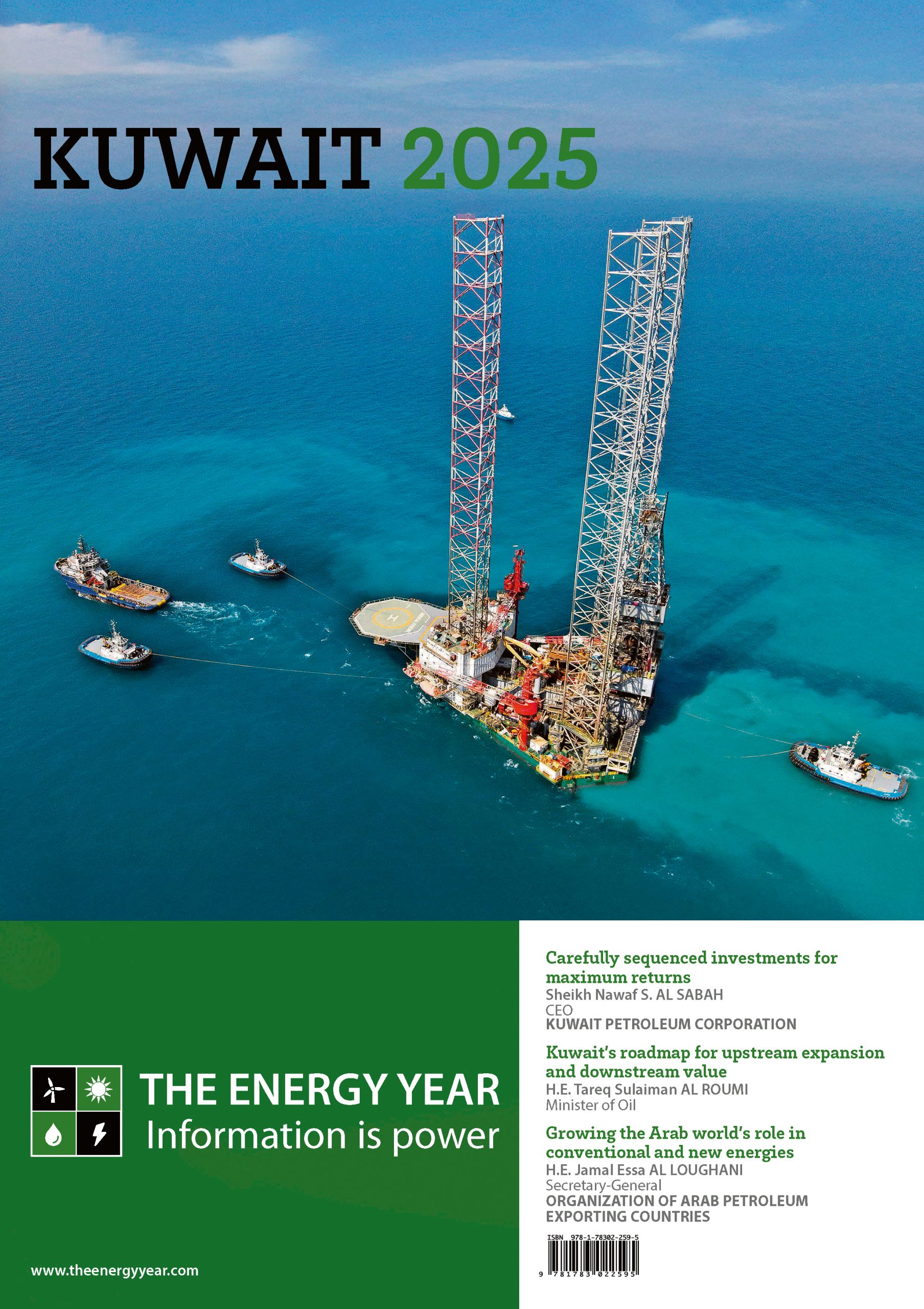
The Energy Year Kuwait 2025
The Energy Year Angola 2025

The Energy Year Nigeria 2025

The Energy Year Saudi Arabia 2025

The Energy Year UAE 2025