
A strategy of modernisation and market diversification
February 4, 2025 Colombia


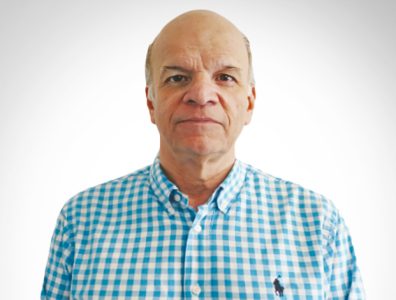
Luis Alberto Gonzalez, general manager of Estrumetal, talks to The Energy Year about how the company positions itself in the Colombian steel structure market and how its corporate structure and partnerships contribute to its market position. Estrumetal specialises in the design and construction of steel structures.
How does Estrumetal position itself in the Colombian steel structure market, and what is the company’s production capacity?
We are leaders in the sector. Our production capacity ranges from 12,000-14,000 tonnes annually, divided between two strategically located plants. Our main facility is in Palmaseca, Palmira (near Cali), situated just 130 kilometres from the port of Buenaventura, which is crucial for our raw material imports and structures exports. Our secondary plant is in Cartagena, which is particularly advantageous for exports to Central America, the Caribbean and the United States.
We produce both heavy and light metal structures, catering to various sectors, including retail, heavy industry, power generation and transportation infrastructure. This versatility allows us to serve diverse market needs, from large industrial complexes to specialised projects. Our expertise spans conventional structures and more complex, customised solutions, enabling us to meet a wide range of client requirements.
How does Estrumetal’s corporate structure and partnerships contribute to its market position?
Our corporate structure is designed to maximise our capabilities across different market segments. While Estrumetal is the flagship company known for heavy metal structures, we have several affiliated companies that complement our offerings.
Acertek, located in Cartagena’s free trade zone, essentially functions as an extension of Estrumetal, focusing on exports and providing additional production capacity.
Almatec specialises in light structures and logistics, allowing us to cater to markets such as solar energy, which require lighter support systems.
ALE [Aluminios Extruidos] is a joint venture with Fanalca, a major Colombian industrial group, focusing on aluminium extrusion. This partnership expands our material expertise beyond steel.
Kingspan, located in Cartagena, is a joint venture with the Irish world leader in panels for roofs and facades.
While these companies operate as separate entities, they share common shareholders, allowing for a high degree of coordination and synergy. This structure enables us to offer integrated solutions, from heavy structural elements to lightweight components and finishing materials.
How do you leverage your engineering capabilities to maintain a competitive advantage?
Our engineering team is a cornerstone of our competitive advantage. Among our 500 employees, 30 are structural design engineers because we have a strong focus on design optimisation and innovation. This ratio is particularly high for a company of our size, reflecting our commitment to engineering excellence.
Colombia does not produce hot rolled plates, so we import approximately 85% of our raw materials directly, primarily from Asian countries such as Korea, Japan and China. The remaining 15% is sourced from local distributors. This direct importing strategy gives us a significant advantage in terms of cost and supply chain control.
We often review and improve designs provided by clients, typically achieving a 5-15% reduction in structure weight while maintaining or enhancing safety and stability. This optimisation capability not only reduces costs but also improves the overall efficiency and performance of the structures we produce.
Our engineers work in close collaboration with our manufacturing and construction teams, ensuring that designs are not only theoretically sound but also practical for production and assembly. This integrated approach allows us to identify potential issues early in the design process, leading to smoother production and construction phases.
We use advanced software and technology in our design process, but we don’t rely on these tools blindly. Our experienced engineers, including our main shareholders, who have more than 50 years of industry experience, review computer-generated designs to ensure they meet our high standards of efficiency and practicality.
How are you planning to increase your presence locally and internationally?
Currently, we operate at about 70% of our total capacity, primarily serving the local Colombian market with two shifts. This leaves us with a 30% unused capacity that we’re actively looking to utilise through expansion into international markets. Our goal is to increase our exports from the current 5-10% of total production to around 30%, with the potential to reach 50% if market conditions are favourable.
We’re actively exploring opportunities in Central America, the Caribbean and the United States. To support this expansion, we’ve recently created a dedicated business development position focused on these regions.
Our representative has been conducting market research and building relationships in countries such as the Dominican Republic, El Salvador, Guatemala, Costa Rica and Panama. For instance, we’re currently involved in exporting structures for Panama’s metro system, which has opened up new possibilities in the infrastructure sector.
Our Cartagena plant plays a crucial role in our export strategy, particularly for projects in the US. Its location in a free zone provides logistical advantages for international shipments. We’ve had instances where the Cartagena plant has been dedicated entirely to serving important US contracts, showcasing our ability to adapt our production to meet specific market needs.
What investments are you executing in technology and plant modernisation?
Currently we’re in the midst of a two-year plant modernisation project. This initiative focuses on automating more conventional structure production while maintaining flexibility for custom projects. We’re introducing new equipment with advanced digital controls that not only improve efficiency and productivity but also allow for greater precision in our manufacturing processes.
We are investing approximately 2-3% of our revenue in technology, including software licensing, platform maintenance and new equipment. While this percentage might seem small compared to some industries, it represents a significant investment in the context of heavy industry and metal structures in our country.
Our modernisation efforts extend beyond machinery. We’re also updating our software platforms for manufacturing and assembly processes. This digital transformation allows for better integration between our design, manufacturing and construction phases, further enhancing our overall efficiency and competitiveness, ensuring quality and compliance for our customers.
Read our latest insights on:
-
-

-

O&M leadership in mining and energy
INTERVIEW
More content from Colombia

Latest Reports


The Energy Year Oman 2026
The Energy Year Kuwait 2025
The Energy Year Angola 2025
The Energy Year Nigeria 2025
The Energy Year Saudi Arabia 2025
The Energy Year UAE 2025