
Colombia’s ANH shapes an expanding energy industry
August 8, 2024 Colombia


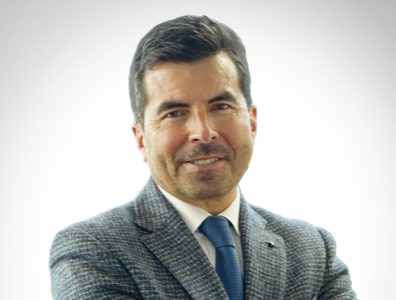
Orlando Velandia Sepúlveda, president of Colombia's National Hydrocarbons Agency (ANH), talks to The Energy Year about how the agency is encouraging exploration, the steps needed to increase oil and gas production, and its role in the country’s accelerating energy transition. The ANH is responsible for promoting the optimal and sustainable use of Colombia’s hydrocarbons resources.
This interview is featured in The Energy Year Colombia 2025
What strategy does the ANH have in place to encourage and unlock exploration activities in Colombia?
The fact that no new contracts will be awarded does not mean that exploration activities will cease. The objective of this administration is to manage the reserves we currently have in existing contracts and focus on the most affordable opportunities.
The key issue is efficiency. Why sign new E&P licences if there are many existing contracts whose investments have not yet materialised?
Since 2023, the agency has put in place a number of mechanisms to allow companies to transfer their investments to other assets and to reassess some of their exploration commitments. We are now looking at mechanisms to deal with the various circumstances that could have led to the suspension of a given contract or postponement of commitments. We have already prevented many contracts from being suspended. This is an important effort, but there is still a long way to go.
Another important objective is to improve relations between E&P companies and the regions in which they operate. The main cause of contract suspensions is conflicts in certain oil-rich regions. In general, there remains a complex relationship between operators and the communities living in these regions.
This has forced us to look for better strategies to engage with communities by working directly with them; making them feel part of these projects and developments is important. Secondly, we have worked to improve co-ordination and dialogue between government, industry players, territorial governments and communities. It is important to manage differences and open channels for fluid dialogue.
Thirdly, we have also sought ways for the agency to engage with environmental agencies, for rapid environmental licensing. These have been barriers to developing exploratory work.
We are confident that with better articulation between all the actors involved, and if we change the way we have historically managed outreach to oil regions and communities, the sector as a whole will benefit.
Many companies have not been able to start their projects because of social or environmental issues. We are now working towards a legal framework in which a given contract can be terminated if there are justified reasons which show that there has been no negligence or wilful default.
What mechanisms are needed to maintain and increase production in Colombia?
In Q1 2024, production was on the verge of 800,000 bopd. We are studying different ways to reach and maintain this target. Of course, this will depend on international oil prices. In 2016-2018, we reached 900,000 bopd. Today, we are adopting the same approach, as we believe we have to be efficient in exploiting the contracts we have in place.
In the process of maximising our reserves, we are creating a legal instrument that will allow small and medium-sized indigenous, independent and junior E&P companies with experience in exploiting small fields to help develop assets that large companies might not be interested in. These companies could take advantage of certain contractual circumstances of the many fields that currently have suspended or expired development areas and start working on them.
Another key mechanism is to improve our recovery factor. We take enhanced oil recovery (EOR) very seriously, as we see it as essential to reverse depletion and increase production.
However, one of the main drivers of increased production flows will be our continued support to the industry in oil-rich regions. As the ANH, we are placing a great emphasis on a strategy of creating stronger links with these territories. We are actively engaged in going to certain regions and interacting with their governors and community leaders to see how we can alleviate protests that impede oil and gas activities and production. Every barrel counts, and this territorial approach is having a positive effect for producers and production as a whole.
What steps need to be taken to accelerate natural gas development in the Caribbean region?
The offshore gas potential in the Caribbean Sea is a great opportunity for Colombia. We are now working on how to produce and commercialise this gas in the most viable and timely manner. It is important that we move forward on the regulatory aspects surrounding these offshore activities, which will define market structures and prices.
Another issue we need to consider is infrastructure: how to get the gas to the main centres of domestic consumption. In this regard, Cenit is working with the government to see how it can convert part of its existing network to multiphase pipelines so that they can also transport gas. This involves building or converting flowlines and connecting them to important ports such as Tolú and Coveñas.
At the same time, this must be accompanied by efforts made by regional governments. They need to improve the service infrastructure in coastal areas such as Barranquilla and Cartagena – i.e., the capacity to receive the product and manage it. These cities will have to be prepared for this gas boom in order to benefit from it.
Another important element is the economic equation: the economic viability of these projects for the companies. They are now evaluating the economic aspects because the initial investments are very high for this type of project. Finally, it is important to carefully structure the contracts. The gas industry relies heavily on the effective signing of sales and purchase contracts, and we are making progress in this area of regulation.
Unfortunately, in the last six years, we have not been able to make much progress on these fronts, but we are now accelerating our efforts because we know that gas will help us move towards the energy transition. The last 19 months [preceding May 2024] have brought the highest number of gas discoveries in exploration wells that we have seen in almost 20 years. There have been 15 gas discoveries: 12 onshore and three offshore.
This is a joint venture with the companies. We have millions of hectares that can be explored, millions of dollars of exploration that have not yet materialised and that are in contracts already signed. We will make the companies fulfil their obligations, and we will accompany and support them in doing so. It is a win-win scenario.
What options does Colombia have for importing gas to meet its growing demand?
In the UPME [Mining and Energy Planning Unit] gas supply plan, several scenarios are contemplated. The reality is that we have been importing gas for several years through the Cartagena regasification plant. Given the El Niño phenomenon, we needed thermally generated energy to make up for the drop in hydroelectric generation while water was scarce. This made it necessary to increase LNG imports and led to higher electricity costs. LNG import costs are relatively high.
This is where the alternative of importing gas from Venezuela, at a lower cost, comes into play. We need to guarantee Colombians the availability and affordability of gas. Gas has no political colour. It is a necessity for our daily lives. Colombians need gas at the lowest possible price. And that is what the government must guarantee. That is why, in our gas supply plan, we consider and are open to all options to guarantee our energy security.
How is the ANH participating in Colombia’s accelerated energy transition?
The ANH will soon become the National Energy Agency (ANE). The first steps in this direction have already been taken. In 2023, the ministry, through resolution 40234, gave us the responsibility to support and develop policies that promote geothermal energy, wind energy, hydrogen, and the potential for CO2 capture and storage.
We are also in the process of merging with IPSE, which has extensive experience and knowledge in photovoltaic generation sources. We are putting together the structure that institutionally will be in charge of leading the entire energy transition in Colombia.
It is no secret that our geographical location gives us natural attributes, as seen in the wind and solar potential of the Guajira region. But we cannot take advantage of this potential if we do not connect it to the market and invite companies to come and exploit it. That is why we have already planned the country’s first wind and geothermal round. We also continue to make progress in the construction of solar parks.
For now, the construction of renewable energy projects is led by private companies, and we are working so that new projects can be interconnected to the national grid. All this is a commitment in which the government is involved and in which the private sector is very important. We have to make our country’s potential in renewable sources better known in order to attract more investors and companies to this scenario.
Tell us about the importance and progress of Colombia’s first wind energy round.
We are optimistic about the wind round for our offshore zone in the Colombian Caribbean. The event is attracting a lot of attention and interest, with more than seven companies interested in the process. We hope that most of them will be able to participate. In addition, we have been assisted in this effort by the World Bank and the governments of Canada, Denmark and the United Kingdom, who are providing important support to make this round a success. We are now making the necessary adjustments in terms of timing and technical and financial conditions for participants.
We are confident that the process will allow us to allocate several areas in the Caribbean. Later, in a second round, we will auction areas in the northern part of our Caribbean waters. It is like a pilot test: these first processes will generate lessons for several rounds in the future. We are open to learning to ensure that we maximise the wind potential in this part of the country.
How is the ANH channelling its expertise and resources towards a rapid energy transition?
Our goal is to leverage revenues from the hydrocarbons and mining industries to finance the energy transition. We have to understand that dependence on the oil and gas sector is not only in Colombia, but worldwide, and will have a downward curve.
Colombia aims to gradually decrease its dependence on oil and gas, while accelerating its energy transition. We need to quickly and intelligently harness hydrocarbons revenues in the coming years to accelerate the energy transition. For the ANH, much of the knowledge, resources and efforts dedicated to the hydrocarbons sector is now channelled towards exploiting our renewable energy potential.
Read our latest insights on:
-
-

-

O&M leadership in mining and energy
INTERVIEW
More content from Colombia



Latest Reports


The Energy Year Oman 2026
The Energy Year Kuwait 2025
The Energy Year Angola 2025
The Energy Year Nigeria 2025
The Energy Year Saudi Arabia 2025
The Energy Year UAE 2025