

Expanding natural gas usage in Colombia
December 9, 2024 Colombia


Andrés Santiago Morales, CEO of Gas Natural Industrial de Colombia, talks to The Energy Year about the company’s pioneering role in Colombia’s CNG market and how it serves its main customer segments. Gas Natural Industrial purchases, compresses, distributes and retails natural gas.
How has the CNG market developed over recent years, and how has Gas Natural Industrial positioned itself in it?
Gas Natural Industrial de Colombia has been a pioneer in the CNG market since 2006, establishing itself as a key player across the entire natural gas chain. We operate three strategic compression plants, located in Valle del Cauca, Meta and Cundinamarca, and each has a capacity of around 2,000 million Btu per day.
Our services extend beyond CNG distribution, encompassing the entire process, from purchasing gas at wellheads to compressing and distributing it to end consumers through TGI [Transportadora de Gas Internacional]. Our range of services includes gas compression, decompression trains for backup supply and NGV [natural gas vehicle] refuelling stations.
Our strategic locations near major cities provide advantages in terms of distribution efficiency and cost savings. Gas Natural Industrial de Colombia has positioned itself as a versatile partner in the industry, working with both large distributors and end consumers, and is adapting to various needs in the market.
What are the company’s main customer segments, and how do you serve them?
In the industrial sector, we provide compressed natural gas to companies for waste incineration and offer backup supply solutions to major corporations. These backup solutions, known as decompression trains, are crucial for industries that cannot afford downtime due to gas supply interruptions. We currently own five of these trains.
In the transportation sector, Gas Natural Industrial has been expanding its services to cater to the growing NGV market, supplying gas for light vehicles such as taxis and increasingly supplying it for heavy transport vehicles, such as buses and semi-trailer trucks. The company owns and operates three NGV refuelling stations, strategically located on main roads – Panamerica, Llanos Orientales and Cundinamarca.
Additionally, we are a key partner for other gas distributors, offering compression and transportation services. This diversified customer base allows us to maintain a balanced portfolio, with current operations split roughly 60/40 between NGV and industrial clients.
How do you manage operations and what technological advantages do you leverage?
We operate a fleet of 10 owned gas transport modules, which are supplemented by subcontracted units as needed. We are continually investing in advanced technology, using both standard steel cylinders and carbon-fibre technology for higher compression capacity.
These compression plants are equipped with high-range compressors from manufacturers such as Aspro and Safe, allowing us to compress gas quicker than many of our competitors. This technological edge, combined with our strategic locations and years of experience, gives us a significant advantage in the market. This ambitious approach towards technology and operations has allowed us to maintain high safety standards and reliability, which has been crucial in building trust with major industry players.
What are the current challenges and future opportunities for Gas Natural Industrial?
While we see significant growth potential in the CNG and NGV markets, particularly with the potential reduction of diesel subsidies, we are currently cautious about major investments due to political uncertainty in Colombia. However, we are exploring new opportunities, particularly in the LNG market.
We are evaluating the possibility of importing LNG and setting up small-scale LNG plants for end customers, targeting large industries and thermal power plants in particular. This could be a tremendous growth area, particularly given the concerns about future domestic gas supply in Colombia, which has declined to six years.
We are also focusing on strengthening our partnerships with major gas distributors, becoming a valuable ally rather than a competitor. Namely, we are leveraging our existing infrastructure and expertise to help larger companies reach end customers more efficiently. Despite the challenges, we remain very optimistic about the future of natural gas in Colombia because it is a clean fuel with significant growth potential.
How does the company view its role in the broader context of Colombia’s energy landscape?
We are facilitators, helping to bridge gaps in the gas distribution network and providing flexible solutions for both large distributors and end consumers. Our services are essential for the transition to cleaner energy sources, particularly with respect to industrial applications and transportation.
As I mentioned before, we are, and intend to continue being, collaborators and partners rather than a competitor of larger distributors. This collaborative approach, combined with our technical expertise and strategic infrastructure, allows us to contribute significantly to the expansion of natural gas usage across various sectors in Colombia.
Read our latest insights on:
-

-

-

O&M leadership in mining and energy
INTERVIEW
More content from Colombia



Latest Reports


The Energy Year Oman 2026
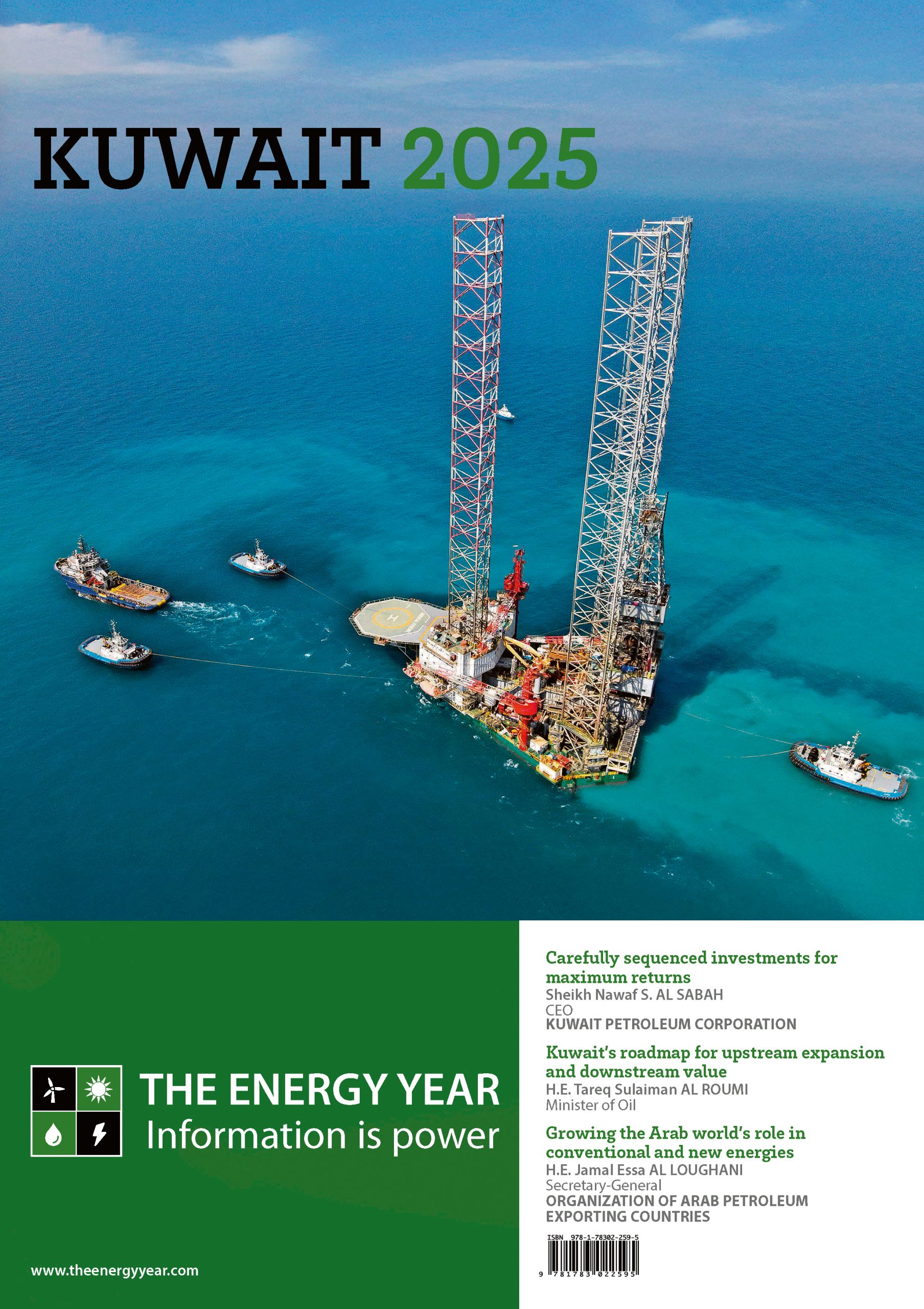
The Energy Year Kuwait 2025
The Energy Year Angola 2025
The Energy Year Nigeria 2025
The Energy Year Saudi Arabia 2025
The Energy Year UAE 2025