
Reinventing retail in Colombia
October 2, 2024 Colombia


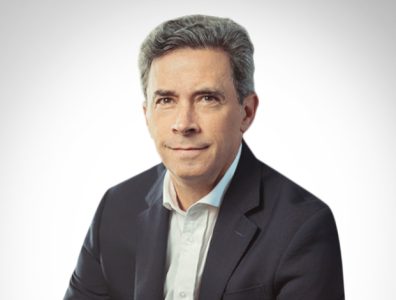
Oscar Bravo, president of Terpel, talks to The Energy Year about the company’s key to success in Colombia’s downstream market, new elements that it has incorporated to grow its market presence and its investment in electromobility in Colombia. Terpel provides liquid fuels, lubricants, natural gas for vehicles and convenience services.
What have been Terpel’s main keys to success in maintaining market leadership in Colombia?
We have been leaders in Colombia’s downstream market for more than 20 years, and we continue to consolidate that position. First, we have an extensive network. We are present in every municipality in Colombia, with more than 2,000 retail stations nationwide, and have more than 40% of the market share in the country based on the volume of gallons sold.
Secondly, we have upgraded the image, lighting, quality of services and structure of our stations. We have made substantial investments to upgrade the image and infrastructure of our stations. They have become the benchmark in the industry, and our approach has been followed by our competitors. If your stations are not well lit, located and cared for, customers will not stop there. Thus, our infrastructure, services and coverage have given us a leading position.
What novel elements has Terpel incorporated to grow its market presence?
The downstream market in Colombia is going through a complex situation where petrol prices have gone up close to 60%. In addition to this, we must consider the very high inflation, which has reached more than 13%, and high interest rates. This combination of factors has impacted fuel consumption. We see more cars being shared, more public transport being used and more bikes on the road as a consequence of high petrol prices.
Despite current market trends, we have aimed at maintaining our network. In addition to this, we are taking a more comprehensive approach to sales. For instance, we are now building convenience stores, called Altoque, in our station networks. We have close to 140 stores across the country, and our aim is to grow our convenience store network in the years to come.
Whoever stops at one of our stations will find – in addition to well-lit facilities and impeccable services – a value proposition from the point of view of food. In other words, we are becoming a one-stop shop.
Another innovative element we have incorporated is electromobility. For those electrical vehicles, we have complemented our stations with electric chargers. We have about 30 fast-charging electric chargers. If you have an electric car, you can drive all over the country. Every 150-180 kilometres, you can find a Terpel station with a fast EV charger.
Tell us about Terpel Voltex and its strong bet on electromobility in Colombia.
Voltex is one of our main business lines. It has a first segment which involves electrical chargers for EVs. We currently have installed 30 fast-charging electrical chargers in some of our stations. The station that charges the most has 90-95 vehicles per month. The EV scene in Colombia is still pretty green but presents plenty of opportunities for the future. We have started to implement EV chargers outside the stations as well, in shopping centres and so on.
Secondly, we are covering public transport. We serve more than 650 electric buses in Bogotá, more or less 60% of the market, with Voltex charging infrastructure. Bogotá has made a great effort to decarbonise its public transport fleet, with the TransMilenio being a great example.
We also cover last-mile freight transport, which refers to small trucks of 7-10 tonnes. We have opened several electric hubs to cater to the growing demand of trucks that run on electric engines.
Companies want to implement EVs in their fleets to become more sustainable and reduce their emissions. Many firms are trying EV trucks out. Accordingly, we have opened around eight charging hubs in Colombia, in different cities, to currently serve more than 300 heavy EVs.
We are seeing a significant increase in EVs, and we want to start seeding our network. At the end of the day, we think that the greatest value a company can have if it wants to get into electromobility is to have a charging network. We are the only player in electromobility.
In what ways is Terpel Voltex innovating with its two-wheeled electromobility system?
We recently launched electromobility on two wheels in Colombia with a Taiwanese company called Gogoro. In Colombia, approximately 60% of the vehicle fleet is made up of motorbikes, so we identified an interesting niche of opportunity there.
As part of this initiative, we have a commercial partner called Motored that imports the motorbikes and sells them. The motorbikes do not come with batteries, as we supply the batteries. These scooter-type vehicles are available in different models and offer a power of 6.4 kW with zero CO2 emissions.
As for the modus operandi, the user goes to one of our stations, which will have a battery rack with more than 20 batteries always charged. You come in with your bike, take the discharged battery out of it, put a new charged one in and leave. The aim is that the owner of the bike doesn’t have to worry about the battery. We work closely with Motored, as it’s an important agreement for us both, a win-win situation.
Batteries bring concerns such as how to keep the battery charged, what happens to it when it loses its warranty and how do you get rid of it when it’s no longer useful. With this new system, we take care of all these issues. We take care of the disposal of these after 8-10 years’ time.
Our main niches now are Bogotá and Medellin because that is where there is more purchasing power and motorbikes. By Q4 2024, we aim to have 12-14 charging stations, and by 2025, around 30-40.
Tell us how the company is capturing more clients through its ViveTerpel programme?
Two years ago, we launched a loyalty programme called ViveTerpel, which now has over three million customers, making it one of the largest loyalty programmes in the country. It is a programme where, with each use of one of our petrol stations or Altoque shops, one accumulates points that one can then redeem on the same products or on other products that comprise the catalogue we have.
As part of this catalogue, we also have alliances with two of the largest airline loyalty programmes, lifemiles and LATAM; a couple of banks; and more to come in the upcoming months. We are currently working to generate a much more attractive catalogue so that those points can be spent on goods beyond just fuel, lubricants and groceries, and vice-versa, one can spend LATAM or lifemiles points on Terpel products.
Through programmes such as ViveTerpel, we compile useful data that we then use to reach our customers in a more personalised way.
What technologies is Terpel implementing to improve customer service and loyalty?
We are applying technology on different fronts. The first has to do with points of sale, where for the last two years, we have been investing heavily to renovate our POS [point-of-sale] system. This system is ours, and it has been implemented in approximately 500 of our stations.
Thanks to this system, we are able to deploy a good part of the loyalty schemes we have. It changes the experience of the customers, making it much easier for them to move around the station and receive means of payment, such as electronic wallet and non-cash payments.
Secondly, in more than 300 of our stations, we have implemented RFID [radio frequency identification] technology via tags. This tag technology is the same concept applied at pay tolls and parking at shopping centres. We have a partnership with a company called GoPass.
We also have an app that identifies points of sale, stations with the best prices, their location, the nearest Altoque shops, etc. We are upgrading the app so that the customer can pay with it using a barcode. We try to make life easier for our customers.
In this regard, we are also looking at the possibility of customers preordering Altoque products before even arriving at a station. Once they arrive, customers can simply claim their order. We have just opened the first convenience store in the country with a drive-through. With technology, you can order through the app and don’t have to get out of the car.
In parallel to this, we want to improve the connectivity of our service stations and shops. Without connection to the internet, our technologies do not work. Connectivity is critical for us. In this regard, some of our stations already work with Starlink, especially those in remote areas of the country. Satellite internet works at a very good speed.
Finally, we are working on data analytics. We have a large data pool coming from customers using our stations. About one and a half million people visit Terpel every day. However, how do we know who they are unless they are members of the loyalty programme? What can we offer them with this data?
We are now investing in data analytics to understand customer patterns and habits. Based on our algorithms, we can contact clients with targeted promotions to lure them to come back and refuel with us. We have started to personalise information in our promotions.
How is Terpel venturing into solar energy through its subsidiary Sunex?
Sunex is a subsidiary of Terpel, and it represents our bet in solar self-generation. The cost of energy in Colombia is very high, and self-generation is a viable option not only to reduce energy consumption but also to be more sustainable. We now have more than 25 points we have covered with solar panels. For example, the roof at our lubricants factory in Cartagena is covered with PV panels. 45-50% of the energy consumed by the whole factory will be solar.
We are applying the same strategy with our storage plants and some of our stations that have high energy consumption. Normally stations that have a higher energy consumption rate are located in hot regions, as they need 24/7 air-conditioning. That’s where we’ve started to use solar panel infrastructure. In some stations in rural areas, we have plenty of land. We are now considering setting up small solar parks of up to 1 MW.
Sunex is also offering these solar solutions to customers, especially industrial customers: cement companies, vehicle manufacturing companies, small refineries, supermarkets and sugar mills, among others. We offer the same clients we sell fuel and lubricants to integrated solutions of self-generation or solar panels. We provide an analysis that tells the customer what potential we see in installing PV panels, and we also offer them two alternatives.
The first one is where Sunex carries out the whole EPC and then we sign a PPA [power purchase agreement] contract with the customer. We guarantee that we will sell the energy to the customer for less than what he or she currently buys it for. We give the customer a fixed cost though the PPA.
The other option is that we do the EPC, and then the customer owns, operates and maintains the infrastructure. Around 50% of Sunex’s business is for self-consumption, and the other 50% is for customers. The firm is growing at a very good pace, and it is dedicated to serving distributed generation in Colombia.
How key is the lubricants sector for Terpel, and which clients does it service?
The lubricants line is very important for Terpel. It currently accounts for 25% of our business. In Colombia, we have two very important brands: Mobil and its entire portfolio, and the Terpel brand of lubricants. Today we are market leaders.
In 2023, we closed with just over a 42% market share, and we continue to grow our lubricant business. What’s more, we also have the most important lubricants factory in this country, which we bought from ExxonMobil. Since 2018, we represent, distribute and manufacture ExxonMobil lubricants in Colombia, Peru and Ecuador and are the largest distributor of their products.
On the one hand, we serve B2B large industrial customers – our largest consumers – such as coal-mining, transport and manufacturing companies. On the other hand, we have B2C customers and have over 30,000 points of sale in the country.
Customers take their vehicle to lubricant centres or oil-change stations where our lubricants are sold, or in our own service stations, we also sell a significant percentage of our lubricants. Around 20% of our lubricants are sold in our stations.
Our lubricant business is critical for us and has a strong presence in Colombia, Peru and Ecuador. The assets we bought from ExxonMobil in 2018 are in all three countries. In Peru, for instance, we have a lubricants factory similar to the one we have in Cartagena.
Read our latest insights on:
-
-

-

O&M leadership in mining and energy
INTERVIEW
More content from Colombia



Latest Reports


The Energy Year Oman 2026
The Energy Year Kuwait 2025
The Energy Year Angola 2025

The Energy Year Nigeria 2025

The Energy Year Saudi Arabia 2025

The Energy Year UAE 2025