
Reversing Colombia’s gas supply shortage
October 16, 2024 Colombia


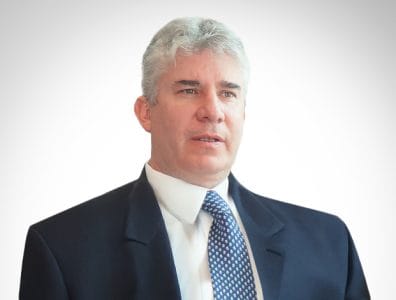
Jorge Fonseca, CFO of NG Energy, talks to The Energy Year about the company’s projects in Colombia’s gas market, how it is looking to increase the capacity of the María Conchita block and the importance of the Sinú-9 block in addressing Colombia’s gas supply shortage. NG Energy is a natural gas exploration and production company.
What projects is NG Energy taking on in Colombia’s gas market?
NG Energy has three blocks in Colombia: our flagship Sinú-9 block; our first producing block, María Conchita; and Tiburón, which provides a blue-sky exploration upside. As a company, we understand Colombia’s need for natural gas, as the country currently faces a dire supply shortage. This need is only going to increase in the coming years.
The gas reserves-to-production ratio in Colombia has decreased to 6.1 years, while historic gasfields such as Chuchupa and Ballena are depleting rapidly, a situation which contrasts with the increasing demand for more natural gas in-country.
We see a great opportunity in the Colombian gas market, with average spot prices continuing to steadily trend upwards, currently trading at around USD 8 per million Btu. This trend provides the platform to build a high-margin business. Our strategic vision is to build a portfolio producing more than 200 mcf [5.67 mcm] of gas per day, with 1 tcf [28.3 bcm] of gas in 1P, 2P and 3P reserves.
We have made sure to take firm steps when developing our portfolio. We already have the current reserves certified by Sproule, with 304.8 bcf [8.63 bcm] in 3P reserves after drilling only four wells. We have also secured financing with Macquarie Bank, which granted us USD 50 million, which includes a second potential credit facility of up to USD 100 million. Lastly, we have a clear business plan.
We already have the required permits from ANLA [National Environmental Licensing Authority] to drill 22 wells in our Sinú-9 block, which means that everything is in place to start working without undergoing unnecessary risk or delays. Not only do we want to be Colombia’s largest gas producer, but we also want to be important actors in the country’s quest for gas self-sufficiency and energy security.
Tell us about the María Conchita block’s production capacity and how you aim to ramp it up.
Our first producing block is María Conchita, in La Guajira, where we have been very successful. We are currently producing 18-20 mcf [509,400-566,600 cubic metres] per day of gas.
We have a gas treatment and compression plant at the field that can process up to 20 mcf per day and a 14-kilometre pipeline that connects María Conchita with the network of TGI [Transportadora de Gas Internacional], which takes gas to the centre of the country. Today we sell and market up to 20 mcf [566,600 cubic metres] per day in Colombia.
We currently have two producing wells named Aruchara-1 and Aruchara-3. In our short-term plans, we aim to drill Aruchara-4 in Q1 2025. We are looking at an additional investment of USD 8 million-10 million to carry out the drilling of this well. With this new development, we aim to produce 25-35 mcf [707,500-990,500 cubic metres] per day at María Conchita.
The new well will also entail the expansion of our pipeline and plant infrastructure. Later we will also look into the drilling of Tinka-1.
When it comes to commercialising our gas, we work with the country’s main gas offtakers, such as Promigas, Vanti, EPM, Gases del Caribe and Gases de Occidente. We are aware of the current situation where there is a high demand for natural gas. The gas we produce is sold to the best offtakers in Colombia. We have offtake contracts for three to five years. That gives us financial stability, with a stable cashflow at prices of USD 7.5-9 per million Btu.
How critical is your Sinú-9 block, and what recent developments has it seen?
The Sinú-9 block is located in Córdoba and includes 311,353 acres [1,260 square kilometres] adjacent to the Jobo Station. Boasting gross 3P reserves of approximately 245.3 bcf [6.95 bcm], Sinú-9 is one of the most prolific gasfields in the Lower Magdalena Basin.
We currently have two discoveries: the Brujo-1X well and the Mágico-1X well. Both wells had 100% drilling success, with Brujo-1X testing at 51 mcf [1.44 mcm] per day, while Mágico-1X tested at 15 mcf [424,500 cubic metres] per day. The potential of this block is huge, as we have not even explored 20% of it. We have planned a seismic campaign in 2025 to understand the true potential.
We are now focusing on setting up key infrastructure in this block. In August 2024, we commissioned a 28-kilometre pipeline that connects the Brujo Central Processing Facility to the Jobo Station.
From this station, the gas is piped via Promigas’s network to different parts of the country. The new pipeline has a capacity of 40 mcf [1.13 mcm] per day, and its construction was carried out by our partners Infraes and Kronos, who conducted the EPC and commissioning works for this greenfield pipeline.
In September 2024, we commissioned our Brujo Central Processing Facility, which also has a capacity of 40 mcf [1.13 mcm] per day. In this venture, we have worked hand in hand with Surenergy, which will operate and treat the gas at this new facility. In this business model, we extract the gas and deliver it directly to the plant. Surenergy processes and treats the gas before delivering it to the pipe. We then market the gas to the offtakers.
What will the second phase of the Sinú-9 block development plan entail?
We are already working on the second phase of development for Sinú-9. This involves the drilling of at least four or five additional wells, four of which are already programmed for 2025. The Hechicero-1X well will be drilled in Q1 2025 in the same area where Brujo-1X and Mágico-1X are. The rest of the planned wells, such as Milagroso and Mago, will be drilled further north.
We are already working on the development plan, the certification process and the necessary permits from the ANH [National Hydrocarbons Agency].
As part of our second phase, in collaboration with our infrastructure partners, we plan to build two new pipelines, each with a capacity of 40 mcf [1.13 mcm] per day, and two new gas processing plants, which will also each have a per-day capacity of 40 mcf [1.13 mcm]. By the end of 2025, we will add an additional 80 mcf [2.26 mcm] of gas per day into the system. The idea is to drill the wells and at the same time build the required infrastructure so that we can commercialise the gas as fast as possible.
By the end of 2025, we aim to produce 120 mcf [3.4 mcm] of gas per day from Sinú-9 in addition to 25-35 mcf [707,500-990,500 cubic metres] of gas from María Conchita, which will put us at 145-155 mcf [4.1-4.39 mcm] of gas per day. This represents a 15-16% share of the gas production market in Colombia.
What potential does the Tiburón exploration block have?
The Tiburón block is located in La Guajira, on the border with Venezuela. This area is an exploratory bet for us, which could have the potential of La Perla in Venezuela. That field has 7 tcf [198.1 bcm] of certified gas.
Close to this block, we have the Chuchupa and Ballena fields, two of the most prolific gas blocks in the country. Working in La Guajira is not easy due to community-related issues. However, we are tackling these matters in the correct way to advance work in the region.
Read our latest insights on:
-
-

-

O&M leadership in mining and energy
INTERVIEW
More content from Colombia


Latest Reports


The Energy Year Oman 2026
The Energy Year Kuwait 2025
The Energy Year Angola 2025
The Energy Year Nigeria 2025
The Energy Year Saudi Arabia 2025
The Energy Year UAE 2025