
Thermal power brings stability
February 4, 2025 Colombia


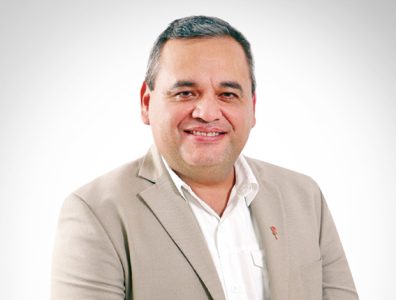
Wilmer Fabián Barahona Romero, general manager of Termo Mechero Morro, talks to The Energy Year about the relevance of thermal power in Colombia’s energy mix and the Termo Mechero plant’s capacity and modus operandi. Termo Mechero Morro is a natural gas-fired power plant located in Yopal (El Morro), Casanare.
Considering the energy status quo and trends in Colombia, how key is thermal power?
Thermal generation is essential for backing up Colombia’s energy mix to provide system reliability.
Thermal plants provide stable energy, which is injected into the system. Hydroelectric power plants are relatively reliable until we have droughts or periods such as the El Niño phenomenon, where generation from hydroelectric plants falls and thermal energy kicks in. During these periods, thermal energy has met up to 55% of the country’s energy demand.
We are also having a renewable energy boom, which will be important for the near future, but we must not forget that it is intermittent energy, which cannot be guaranteed to meet the high demand of energy consumption during peak hours. Wind energy is also an important area to consider and even more so when we acknowledge the favourable wind conditions in certain areas of the country, such as La Guajira.
This area has constant, stable and high wind-speed levels that are favourable for wind energy projects. Yet even the power from these projects would be intermittent, and conversely, thermal generation guarantees constant and uninterrupted energy supply.
Tell us about Termo Mechero’s plant, including its capacities and modus operandi.
Termo Mechero is located in Yopal (El Morro), Casanare, and started operations in February 2018. The plant consists of three modules, each one with a nominal power of 19.4 MW. The total generation capacity is 58.3 MW, which is injected into the National Interconnected System.
The location is strategic, as there are two gasfields operated by Ecopetrol nearby. Despite the gas potential of the region, these are minor gasfields which are not interconnected to the national gas transmission system. We take advantage of that gas and we transform it into electricity.
There is a 1.98-kilometre pipeline that connects the wellhead to our plant. We own, operate and maintain this pipeline, which is essential because it transports the gas we buy from Ecopetrol and feeds the plant. We have a gas supply contract.
Our connection is through a 16-kilometre, high-voltage, 115-Kv line connecting the plant to the National Interconnected System. Our connection contract is with the local grid operator, Enerca. Our electricity dispatch is 24/7 to the system. The plant’s availability rate has been 96-97% since the start of operations, with occasional shutdowns related to maintenance or external factors.
What equipment and technologies allow the firm to achieve operational excellence?
We work with six state-of-the-art engines, Wärtsilä W20V34SGs. These engines are highly efficient, with an average heat rate of 7.819 Btu per kWh and an efficiency rate of 43%. We have an annual production rate of 490 GWh.
The construction of the plant was modular, and each module has its own bridge crane for maintenance, which allows for doing the maintenance in a modular way, rendering it unnecessary to take the whole plant out of operation. The entire instrumentation system runs on compressed air, but additionally, we have transformers, an oil-engine transfer system, a fire system and a water treatment system. This last system is needed for the overall cooling of the plant.
The functioning of the plant’s engines is managed remotely from a Wärtsilä proprietary control system called sWOIS. Wärtsilä’s know-how is very important and allows us to deliver added value to the market.
What expansion and diversification plans does Termo Mechero have for the next few years?
By Q4 of 2027, we expect to add 40 MW of additional capacity. We aim to build two 19-MW units and complete five smaller plants. We have already presented a connection study, but Casanare’s infrastructure for exporting more energy is a significant limitation.
At the moment, the electricity infrastructure in this department is limited to what we have, but there are some projects under development to interconnect the Casanare regional system to the national system. This expansion plan requires an investment of USD 40 million.
In addition to this, we are betting on small-scale self-generation. We have five sites at five airport terminals in Colombia: Bucaramanga, Cúcuta, Barrancabermeja, Riohacha and Valledupar. These projects will not exceed 1 MW each. The largest one is the PV project in Cúcuta, at 917 kW. The total capacity of these projects is almost 2.2 MW.
We want to offer our customer, at any given moment, reliable energy with a mix of renewable energy and thermal energy – this being a diversified and reliable energy service where we provide renewable energy during the day, while at night we provide thermal energy.
We know that thermal energy means reliability, but we also want to focus on the energy transition. Thus, we would like to be one of the first companies capable of selling dual energy – renewable and thermal within one portfolio.
Our objective is to reach 100 MW in the next five years. We are already looking at small farms of 10 MW and 20 MW to achieve our aims.
Read our latest insights on:
-
-

-

O&M leadership in mining and energy
INTERVIEW
More content from Colombia

Latest Reports


The Energy Year Oman 2026
The Energy Year Kuwait 2025
The Energy Year Angola 2025

The Energy Year Nigeria 2025
The Energy Year Saudi Arabia 2025

The Energy Year UAE 2025