





Back toour markets

Iraq's Energy Industry

Iraq

in figures

Oil reserves145 billion barrels

Oil Production4.1 million bopd

Gas reserves3.5 tcm

Gas production9.4 bcm

Iraq: Emerging from Uncertainty

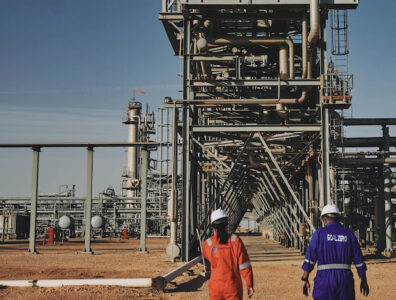
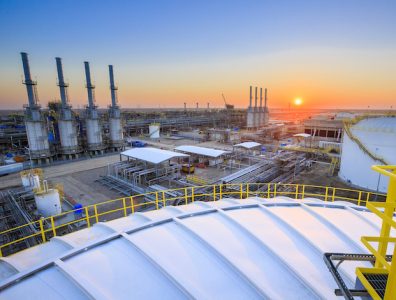
Iraq’s oil and gas industry has remained stable during the country’s ongoing challenges and conflicts. The country remains the fourth-largest producer of hydrocarbons and the second-largest producer in OPEC. Iraq’s impressive reserves are the third largest in the world behind Saudi Arabia and Iran. The national oil and gas industry is overseen by the Ministry of Oil. The government is involved in E&P activities through the following state-owned entities: North Oil Company, Midland Oil Company, Dhi Qar Oil Company, Basrah Oil Company and Missan Oil Company.

The majority of the country’s hydrocarbons are found in the country’s eastern edge near its border with Iran. The super-fields in the southeast near Kuwait form the greatest concentration of such finds worldwide and contain more than 70-80% of the country’s reserves. About 20% of its reserves are found in the northern region. Production comes predominantly from the nation’s NOCs. The country is looking to up production from its maturing assets, which will require fresh-water injection. Given that fresh water is a rare commodity in Iraq, opportunities exist in building related infrastructure. Iraq’s impressive gas potential has also been largely overlooked, with Iraq relying on gas imports to meet demand. Work continues to bring down gas flaring and develop related transport infrastructure.

Iraq has significant refining capacity, but assets have largely become antiquated and function at around 50% capacity. The aged facilities produce more heavy fuel oil than refined products, which does not match the nation’s demand requirements. The state has discussed imposing measures to move investment focus from its oil and gas production towards developing its downstream capacities to spur direct economic growth for the country.

Another requirement for upping production on Iraq’s oil and gas fields is a rise in power generation capacity. The hydrocarbons industry traditionally takes up 10% of total energy demand in the country, which is expected to rise as output increases. Despite an almost entirely resistant hydrocarbons industry, political turmoil has taken a toll on investment in its power generation sector. Efforts to curb consumption have been made by the government, but further investment is needed to meet the country’s industrial targets.

A-technology-leader-in-Kuwait-and-beyond-Anas-MEERZA-NTEC
Interview
Kuwait - September 03, 2024

Anas Meerza of National Technology Enterprises Company talks about introducing renewables technologies in Kuwait.

READ MORE
BP signs Iraq MoU on developing Kirkuk
NEWS
Iraq - August 01, 2024

BP has signed an MoU with the government of Iraq to develop oil and gas, power generation and solar in the Kirkuk region.

READ MORE
OPEC+ extends oil production cuts into 2025
NEWS
Multinational - June 03, 2024

OPEC+ has decided to extend oil production cuts into 2025.

READ MORE
Wartsilas-visionary-role-in-the-energy-transition
Interview
Multinational - May 09, 2024

Alexandre Eykerman of Wärtsilä talks about the company’s pioneering role in adapting its solutions to the energy transition.

READ MORE
Iraq signs gas supply contract with Iran
NEWS
Iraq - March 27, 2024

The Iraqi government has signed a deal for the supply of up to 50 mcm per day of gas from Iran.

READ MORE
Iran awards contracts in move to add 400,000 bopd
NEWS
Iran - March 18, 2024

The National Iranian Oil Company has awarded contracts to local players for projects aiming to boost output by up to 400,000 bopd.

READ MORE
OPEC+ members extend voluntary output cuts to Q2 2024
NEWS
Multinational - March 04, 2024

Several OPEC+ members have extended voluntary oil production cuts of 2.2 million bpd into Q2 2024.

READ MORE
Iraq plans Wasit refinery project
NEWS
Iraq - September 21, 2016

Iraq’s Ministry of Oil has signed off on plans to build a refinery in Wasit province, a local official was quoted as saying on Tuesday.

According to Amal Al Akili,…

READ MORE
Iraq lists conditions for joining freeze
NEWS
Iraq - September 08, 2016

While not opposed to the idea of freezing oil production as a means to stabilise global oil markets, Iraq does have certain conditions that need to be met, a top…

READ MORE
Iran to back OPEC moves
NEWS
Iran - September 06, 2016

Iranian Minister of Petroleum Bijan Namdar Zangeneh on Tuesday said his country would back OPEC efforts geared towards the stabilisation of the global oil…

READ MORE
Interview
Kuwait - September 5, 2016

TOGY talks to Mick Stephen, country manager of Novomet, about starting to work with the Kuwait Oil Company (KOC), the new opportunities for services with the increase…

READ MORE
Baghdad, KRG reach Kirkuk deal
NEWS
Iraq - August 31, 2016

Iraq and the Kurdistan Regional Government (KRG) have reportedly reached a deal on crude exports from Kirkuk, a Kurdish official was quoted as saying on…

READ MORE
Saudi Arabia goes with flow
NEWS
Saudi Arabia - August 31, 2016

Saudi Arabia on Wednesday rejected allegations that it strives to achieve a certain level of production, saying it works to meet demand instead, be it domestic or…

READ MORE
Oil opens lower
NEWS
- August 22, 2016

Oil prices were down in the early hours of Monday, as traders reacted to higher Chinese exports of refined products and the prospect of increased output from…

READ MORE
Iraq’s NOC resumes flows via KRG pipe
NEWS
Iraq - August 19, 2016

The Iraqi Ministry of Oil’s North Oil Company (NOC) has resumed transporting oil from its northern fields via a pipeline controlled by the Kurdistan Regional…

READ MORE
Iraq confirms new oil minister
NEWS
Iraq - August 15, 2016

In a series of parliamentary shifts, Iraq’s government approved Jabar Ali Al Luaibi, former head of state-run South Oil Company, as new oil minister today.

Prime…

READ MORE


WHOSE PLATFORM IS THIS?
ASK US

  • Do you have a question for The Energy Year about oil and gas?
  • If we know, we’ll tell you.
  • If not, we’ll ask the experts in the field.